How to Start a Lawn Care Business: 8-Step Guide
March 8, 2026 · Updated October 18, 2026 · 15 min read
8-Step Startup Roadmap
From idea to first paying customer in 30–60 days
Choose Services
Week 1
Business Plan
Week 1-2
Register LLC
Week 2
Get Licensed
Week 2-3
Get Insured
Week 3
Buy Equipment
Week 3-4
Set Prices
Week 4-5
First Customers
Week 5-8
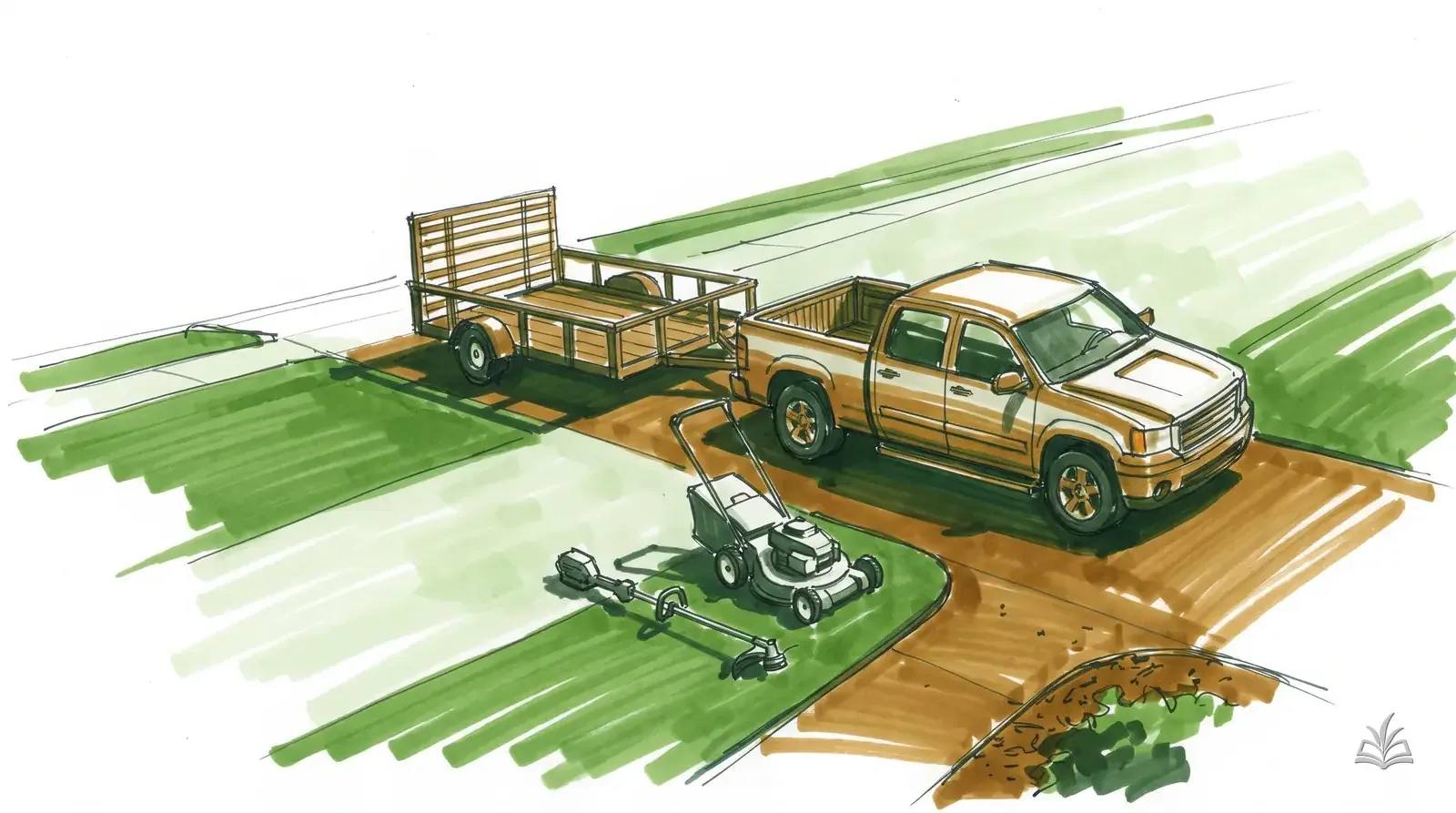
Every neighborhood needs its grass cut, and lawn care is one of the easiest service businesses to start. You can go from zero to your first paying customer in under 30 days with as little as $1,500 in startup capital. No degree required. No storefront. No employees (at first). This guide walks you through every step — with real numbers, real timelines, and the mistakes that kill most first-year operators.
Choose Your Services
Lawn care is a spectrum. A solo operator with a push mower and a truck can clear $50,000–$80,000 per year doing nothing but weekly mowing. A full-service landscaping company with crews running hardscaping, irrigation, and tree removal is a different business entirely. Decide where you want to start.
Mowing Only
Weekly mowing, edging, trimming, blowing
$1,500-$3,000
Lowest barrier to entry
Lawn Care
Mowing + fertilization, aeration, weed control, seeding
$3,000-$8,000
Higher per-customer revenue
Full Landscaping
All above + design, planting, hardscape, irrigation
$15,000-$50,000
Highest margins, needs experience
Tip: Start with mowing-only, then add services as you build a customer base. Most successful operators start narrow and expand. Check our equipment list to see exactly what each service level requires.
Write a Business Plan
You don't need a 50-page MBA-style document. You need a one-page plan that answers: what services, what area, what prices, how many customers to break even, and how you'll get them. If you're seeking financing, expand to 5–10 pages with financial projections.
| Section | What It Covers |
|---|---|
| Services & Area | What you offer, service radius (15-25 mile range typical) |
| Target Market | Residential vs. commercial, neighborhood income level |
| Pricing Strategy | Per-visit, monthly contract, or hourly — and your rates |
| Startup Costs | Equipment, truck, insurance, marketing, working capital |
| Revenue Projections | Weekly customers x avg price x season length |
| Marketing Plan | How you'll get your first 20 customers |
Get started faster with our free landscaping business plan template
Register Your Business
You need a legal structure before you open a business bank account, get insurance, or sign your first contract. For most lawn care startups, the choice comes down to two options.
Sole Proprietorship
- • Free to start (just file DBA, $10–$75)
- • Simplest taxes (Schedule C)
- • No liability protection
- • Fine for testing the waters
LLC (Recommended)
BEST- • $50–$500 to form (varies by state)
- • Personal assets protected from lawsuits
- • More credible with commercial clients
- • Easy to add partners later
After forming your entity, get a free EIN (Employer Identification Number) from the IRS — takes 5 minutes online. You'll need it for your business bank account, taxes, and hiring employees. Open a separate business checking account immediately — never mix personal and business funds.
Get Licensed
Licensing requirements vary wildly by state and service type. Basic mowing often needs nothing more than a general business license. Chemical applications (fertilizer, weed control, pesticides) almost always require a separate applicator license and state certification.
| License Type | When Required | Typical Cost |
|---|---|---|
| General Business License | All businesses | $50-$200 |
| Pesticide Applicator | Weed control, fertilization | $50-$300 + exam |
| Contractor License | Hardscaping, irrigation | $100-$500 |
| Home Improvement License | Some states for residential work | $50-$400 |
| Commercial Vehicle Registration | Trucks over a certain weight | Varies by state |
Warning: Operating without required licenses can result in fines of $500–$10,000 per violation. Some states will shut down your business entirely. Read our complete licensing guide for state-by-state requirements.
Get Insured
One broken window. One damaged sprinkler head. One slip on a client's wet walkway. Without insurance, that's your truck and your mower gone. Insurance is not optional — most commercial clients won't hire you without a certificate of insurance.
General Liability
$400-$800/yrProperty damage, bodily injury, advertising claims
Commercial Auto
$1,200-$3,000+/yrAccidents with work vehicles, equipment in transit
Workers' Comp
$800-$2,000/yr per employeeEmployee injuries on the job (required if you have employees)
Inland Marine
$300-$600/yrEquipment theft, damage while in transit or stored off-site
Budget $1,600–$3,800 for your first year of essential coverage (general liability + commercial auto). Get detailed cost breakdowns and provider comparisons in our lawn care insurance guide.
Buy Equipment
Equipment is your biggest upfront cost after a truck. Buy the minimum to deliver quality work, then upgrade as revenue justifies it. Used commercial equipment from Facebook Marketplace or operators selling their businesses can cut costs 40–60%.
Budget Solo
$1,000-$3,000
- • 21" push mower ($300-$700)
- • String trimmer ($150-$250)
- • Handheld blower ($100-$200)
- • Edger ($100-$200)
- • Hand tools ($100-$200)
Mid-Range Solo
$5,000-$10,000
- • 36" walk-behind ($3,000-$5,000)
- • Commercial trimmer ($250-$400)
- • Backpack blower ($300-$500)
- • Stick edger ($250-$350)
- • Trailer ($500-$1,500)
Crew Setup
$15,000-$30,000
- • 52"+ zero-turn ($7,000-$12,000)
- • Walk-behind backup ($3,000)
- • 2x trimmers ($600)
- • 2x blowers ($700)
- • Enclosed trailer ($3,000-$6,000)
Tip: Don't finance a $12,000 zero-turn before you have 20 weekly accounts. Start with a reliable push or walk-behind, prove the business works, then upgrade. See our full lawn care equipment list for brand recommendations and buyer's tips.
Set Your Prices
Pricing is where most new operators leave money on the table. Charging too little to “get customers” is the fastest path to burnout. You need to cover costs, pay yourself, and still have margin for equipment replacement and growth.
| Service | Typical Range | Pricing Method |
|---|---|---|
| Weekly Mowing (1/4 acre) | $35-$60 | Per visit |
| Weekly Mowing (1/2 acre) | $50-$85 | Per visit |
| Weekly Mowing (1+ acre) | $75-$150+ | Per visit |
| Aeration & Overseeding | $100-$250 | Per service |
| Fertilization (per app) | $50-$150 | Per 5,000 sq ft |
| Leaf Cleanup | $150-$400 | Per visit |
| Mulch Installation | $50-$80 | Per cubic yard |
“The guy charging $25 per lawn isn't your competition — he'll be out of business by August. Price for profit, not volume.”
Tip: Calculate your minimum hourly rate first. Add up all monthly costs (truck, insurance, fuel, equipment payment, phone), add your target salary, divide by billable hours. Most solo operators need $45–$65/hr minimum to be sustainable. Use our lawn mowing cost calculator and pricing guide to dial in your numbers.
Get Your First Customers
Your first 10–20 customers are the hardest. After that, referrals start compounding. Here's what actually works for new lawn care businesses — ranked by cost and effectiveness.
Door Knocking & Flyers
Hit 200 doors in your target neighborhood. Bring a flyer with your price, phone number, and a first-visit discount. Personal contact converts 3-5x better than a flyer alone.
Google Business Profile
Set up immediately. Add photos of your work weekly. Get reviews from every customer. This becomes your #1 lead source by month 6.
Nextdoor & Facebook Groups
Post in local neighborhood groups. Offer a free estimate or first-mow discount. Respond to every "looking for lawn care" post within minutes.
Yard Signs
Place a sign in every customer's yard while you work. Neighbors see you, neighbors call you. 25 signs can generate 2-5 leads per week.
Read our full customer acquisition guide for 15+ proven strategies, and grab our free lawn care flyer template to start door-knocking this weekend.
Startup Cost Breakdown
Lawn care has one of the lowest startup costs of any service business. A solo operator can be mowing lawns for under $3,000 — less if you already own a truck and buy used equipment.
| Category | Solo Operator | Crew Setup |
|---|---|---|
| Equipment (mower, trimmer, blower, edger) | $1,000-$3,000 | $15,000-$30,000 |
| Truck / Vehicle | $0 (use personal) | $5,000-$30,000 |
| Trailer | $0-$500 | $1,500-$6,000 |
| Insurance (first year) | $400-$800 | $2,500-$5,000 |
| Business registration & licenses | $100-$500 | $200-$1,000 |
| Marketing & signage | $50-$200 | $500-$2,000 |
| Uniforms & safety gear | $50-$150 | $300-$600 |
| Software & phone | $0-$50/mo | $100-$300/mo |
| Working capital (2-3 months) | $500-$1,000 | $3,000-$8,000 |
| Total Range | $1,500-$5,000 | $15,000-$50,000 |
Solo Mowing
$1.5–5K
lowest entry point
Solo Full-Service
$5–10K
with chemical application
Crew Operation
$15–50K
truck, trailer, crew gear
Reality check: These numbers don't include your living expenses. Most new operators don't take a full salary for the first 2–3 months while building their route. Make sure you have personal savings or a part-time income to cover rent and groceries.
Your First 90 Days: Week-by-Week Plan
Here's a realistic timeline from “I want to start a lawn care business” to “I have 20 weekly accounts.” Most solo operators can reach profitability by week 8–10.
Foundation
Week 1-2- Choose services and target area
- Write your one-page business plan
- Form LLC and get EIN (same day)
- Open business checking account
- Research local licensing requirements
Legal & Equipment
Week 3-4- Apply for business license
- Get general liability + auto insurance quotes
- Buy or source equipment (new or used)
- Order yard signs and 500 flyers
- Set up Google Business Profile
Launch
Week 5-6- Set your pricing (use calculator)
- Knock 200+ doors with flyers
- Post in 5+ local Facebook/Nextdoor groups
- Mow your first 5-10 lawns
- Ask every customer for a Google review
Build Route
Week 7-8- Follow up with all estimates within 24 hours
- Place yard signs at every job site
- Target 15-20 weekly accounts
- Create estimates and contracts for each client
- Set up recurring billing (Jobber, LawnPro, or invoices)
Optimize
Week 9-12- Route optimization (cluster jobs by neighborhood)
- Track time per lawn — adjust pricing if needed
- Upsell existing customers on add-on services
- Ask for referrals (offer $10-$25 referral credit)
- Evaluate: stay solo or start hiring?
Legal Requirements Checklist
Missing a legal requirement can mean fines, lawsuits, or losing the right to operate. Print this checklist and check each item off before you mow your first paid lawn.
For state-specific licensing details, read our landscaping license guide and insurance guide. Need contracts? Grab our free landscaping contract template and estimate template.
7 Mistakes That Kill New Lawn Care Businesses
About half of new businesses close within five years (BLS Business Employment Dynamics). Lawn care is no exception — these common mistakes still take out plenty of first-year operators.
Don't guess your pricing — calculate your costs now
Revenue Potential: What Can You Actually Make?
Lawn care income varies dramatically based on your service area, pricing, and how many accounts you can handle. Here are realistic numbers for different stages.
Part-Time Solo
$20–40K
10-15 weekly accounts
3-4 days per week
Full-Time Solo
$50–80K
25-40 weekly accounts
5-6 days per week
Owner w/ 1-2 Crews
$100–250K+
60-120+ weekly accounts
Managing, not mowing
The math is straightforward: a solo operator mowing 30 lawns per week at an average of $55/visit over a 32-week season grosses $52,800. After expenses (fuel, insurance, equipment, maintenance), net income is typically 60–70% of gross for a solo operator — so $31,000–$37,000 net. Add upsells (aeration, overseeding, cleanups, mulch) and you're into the $50K–$60K range.
For detailed salary data, regional breakdowns, and growth trajectories, read our full guide on how much landscapers make.
Quick Reference: Startup Cheat Sheet
Save This Summary
Startup Cost
$1,500–$5,000 (solo)
Time to First Customer
2–4 weeks
Break-Even Point
15–20 weekly accounts
Year 1 Income (solo)
$30,000–$60,000
Essential Free Tools
8 Steps in Order
- 1Choose services
- 2Write business plan
- 3Register LLC + EIN
- 4Get licensed
- 5Get insured
- 6Buy equipment
- 7Set prices
- 8Get customers
Ready to run the numbers? Compare the best lawn care software to manage scheduling, invoicing, and routing as you scale.