Lawn Care Equipment List: What You Need at Every Level
March 8, 2026 · Updated October 18, 2026 · 14 min read
Equipment Investment by Crew Size
Buy what matches your current workload — not your dream
Solo Operator
$3K–$5K
10–20 yards/week
2-Person Crew
$8K–$15K
25–45 yards/week
Full Crew (3–4+)
$20K–$40K+
50–100+ yards/week
The difference between a profitable lawn care operation and one that bleeds cash often comes down to buying the right equipment at the right time. A solo operator running 15 residential yards per week doesn't need a $12,000 zero-turn mower — and a 4-person crew can't survive on a single 21" push mower. This guide breaks down exactly what you need at three growth stages, with real prices, specific brand recommendations, and the math to prove it. If you're still in the planning phase, start with our startup guide and business plan template.
Tier 1: Solo Operator ($3K–$5K)
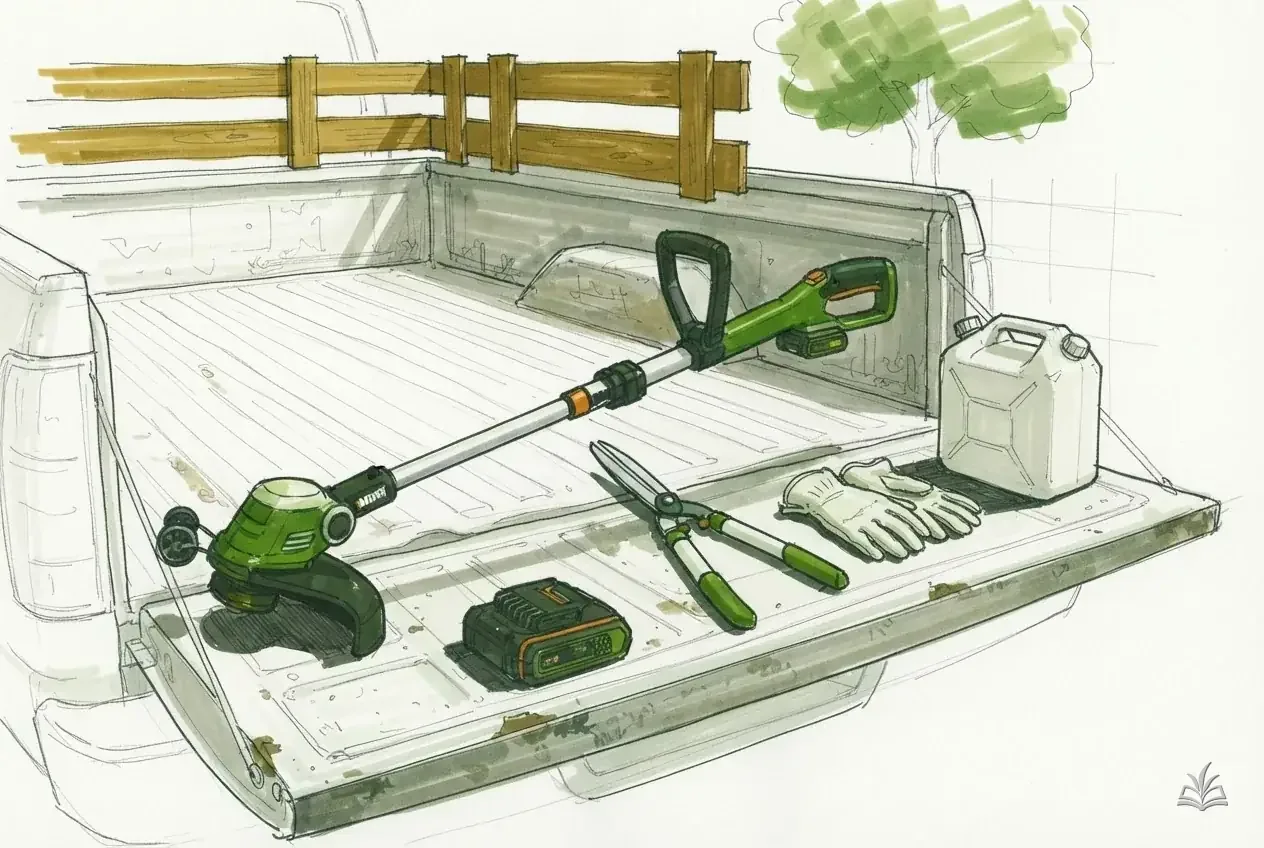
You're doing 10–20 residential lawns per week from the back of your truck or a small open trailer. At this stage, reliability matters more than speed. Buy commercial-grade where it counts (mower, trimmer, blower) and save on everything else. Most successful lawn care businesses started exactly here.
Solo Operator Checklist
Mowers
Power Tools
Hand Tools & Supplies
Safety Gear
Budget reality check: You can start mowing lawns for under $1,500 with a residential-grade push mower and basic hand tools. But commercial equipment lasts 3–5x longer under daily use. Spending an extra $200–$400 on a commercial mower saves you $1,000+ in replacements over your first two years. See our pricing guide to make sure your rates cover equipment costs.
Tier 2: 2-Person Crew ($8K–$15K)
You've hired your first employee (or brought on a partner) and you're running 25–45 yards per week. The biggest upgrade at this level is a commercial walk-behind mower that cuts your mowing time in half and a proper trailer to haul it all. A 2-person crew can do roughly 2x the work of a solo operator but costs far less than double, making this the most profitable stage for many businesses.
2-Person Crew Checklist
Mowers
Power Tools
Trailer & Transport
Extras & Safety
“The jump from a 21″ push mower to a 36″ walk-behind is the single biggest productivity gain in lawn care. You'll cut the same yard in half the time.”
Don't forget: adding an employee means doubling your safety gear, getting workers' comp insurance, and budgeting for equipment maintenance that scales with usage hours. A two-person crew puts roughly 1,500–2,000 hours on a mower per season versus 800–1,200 for a solo operator.
Tier 3: Full Crew ($20K–$40K+)
You're running 3–4 crew members, servicing 50–100+ properties per week, and offering add-on services like aeration, hedge trimming, and fall cleanups. At this level you need a zero-turn mower, a bigger trailer, redundant equipment (breakdowns can't kill a whole day's route), and fleet management basics. Track your costs with our landscaping cost calculator.
Full Crew Checklist
Mowers
Power Tools
Trailer & Transport
Fleet & Specialty
Rent vs. buy tip: Equipment like aerators and bed edgers sit idle 10+ months per year. At $75–$100/day rental, you need 20–40 uses to break even on a purchase. If you're doing fewer than 30 aeration jobs per season, renting is almost always cheaper. Track the breakeven in your business plan.
Cost Comparison Across Tiers
Here's every category side-by-side so you can see where the money goes at each level. Notice that hand tools barely change — the real cost escalation is mowers and specialty equipment.
| Category | Solo | 2-Person | Full Crew |
|---|---|---|---|
| Mowers | $300–$700 | $5,800–$7,800 | $10,800–$19,800 |
| Power Tools | $490–$580 | $1,380–$1,950 | $3,250–$6,650 |
| Hand Tools | $110–$190 | $110–$190 | $110–$190 |
| Safety Gear | $115–$220 | $230–$440 | $460–$880 |
| Trailer | $0* | $1,200–$2,500 | $2,500–$5,000 |
| Transport Racks | $0 | $140–$280 | $310–$570 |
| Specialty | $0 | $185–$360 | $4,000–$10,500 |
| Total Equipment | $3,000–$5,000 | $8,000–$15,000 | $20,000–$40,000+ |
*Solo operators typically haul gear in a truck bed. Totals include an estimated truck-bed setup cost ($200–$400) for the solo tier.
Typical Total Investment by Tier
Trailer Setup Guide
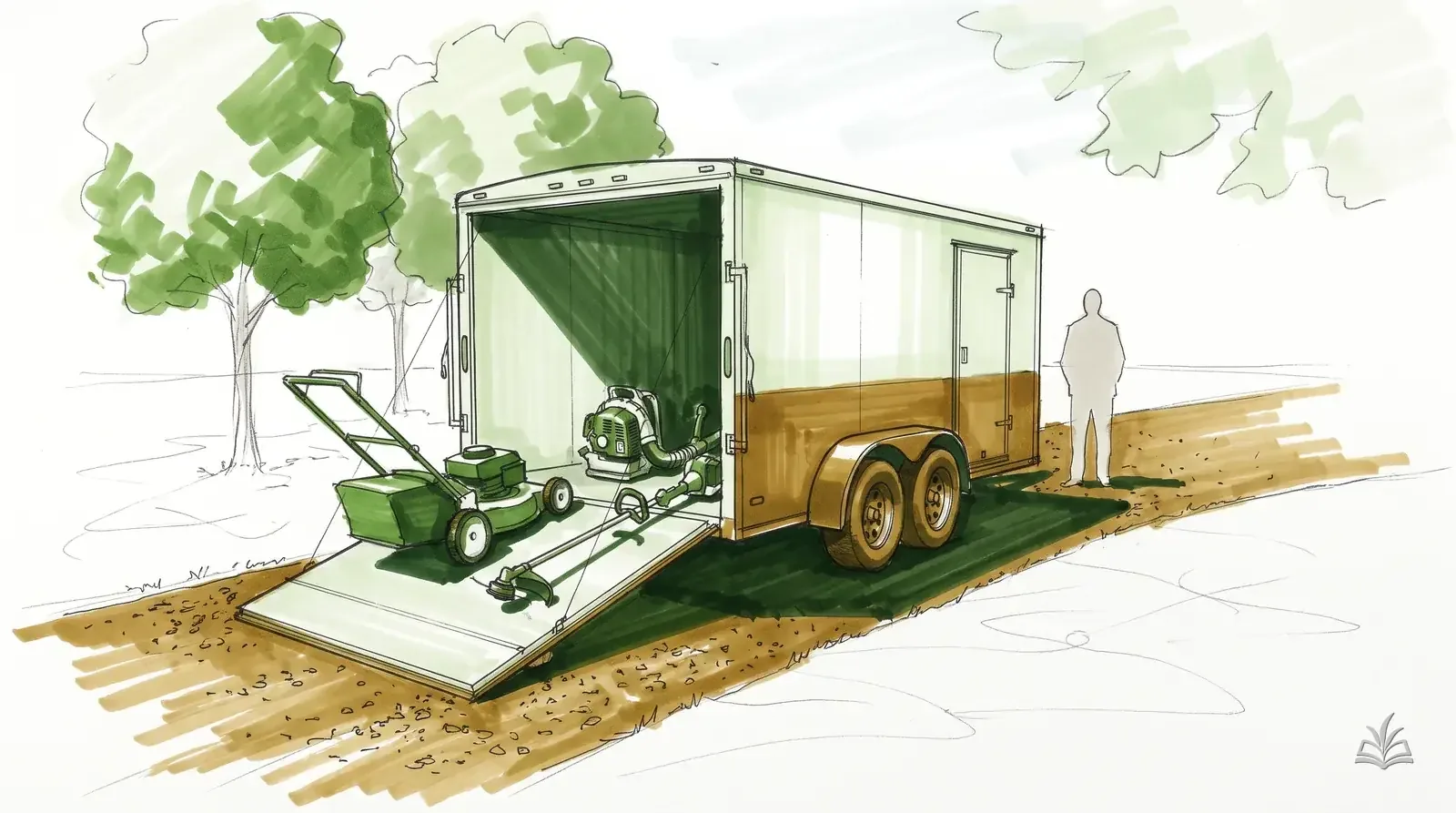
Your trailer layout directly affects how fast your crew can unload, work, and reload. A well-organized 6′×12′ open trailer saves 5–10 minutes per stop, which adds up to an extra yard (or two) per day. Here's how to lay it out.
Trailer Zone Layout (front to back)
Front (tongue end)
Lockable toolbox, fuel cans, small hand tools
Heaviest items forward for stable towing
Center
Walk-behind or zero-turn mower (strapped down)
Weight centered between axles
Left rail
Trimmer rack (2–4 slots), edger mount
Quick grab-and-go without moving mower
Right rail
Blower rack, hedge trimmer hooks
Mirrors trimmer side for balanced weight
Rear gate
Mower ramp, wheelbarrow (lashed upright)
First off, last on — ramp stays accessible
Open Trailer
- + Lower cost ($1,200–$3,000)
- + Faster loading/unloading
- + Better airflow (dries wet mowers)
- − Equipment exposed to weather/theft
- − No storage for supplies overnight
Enclosed Trailer
- + Theft protection (lockable)
- + Weather protection year-round
- + Mobile billboard (wrap with your brand)
- − Higher cost ($3,500–$7,000)
- − Heavier, harder to maneuver
Theft Prevention Checklist
- Chain-lock the tongue coupler when parked
- Use trimmer rack locks (not just gravity holders)
- Install a GPS tracker ($100–$200 + $10–25/mo)
- Park trailer in a lit, visible area overnight
- Engrave or stamp your business name on all power tools
- Take photos of serial numbers — store in the cloud
Equipment Maintenance Schedule
Commercial equipment takes a beating — 1,000–2,000+ hours per season versus 50–100 for a homeowner mower. Follow this schedule to maximize lifespan and avoid mid-route breakdowns. For blade maintenance, see our detailed guide on how to sharpen mower blades.
Daily
- Clean mower deck underside (scrape + hose)
- Check tire pressure on mower and trailer
- Inspect trimmer line — refill spool if low
- Drain fuel from equipment if storing overnight in heat
Every 25 Hours
- Sharpen or replace mower blades
- Clean or replace air pre-filter
- Grease mower spindles and wheel bearings
- Check trimmer spark arrestor screen
Every 50 Hours
- Change engine oil (mower, blower, trimmer)
- Replace or clean air filter element
- Inspect and gap spark plugs
- Check belt tension and condition on walk-behinds
Every 100 Hours
- Replace spark plugs on all 2-stroke and 4-stroke engines
- Change fuel filter
- Inspect hydro drive belt (walk-behind / zero-turn)
- Grease all zerks on zero-turn frame
Every 200–500 Hours
- Change hydraulic oil + filter (zero-turn)
- Replace mower deck belt
- Full tune-up: carb clean, valve adjustment
- Inspect trailer wiring, bearings, and brakes
Annual (End of Season)
- Drain or stabilize all fuel
- Full blade sharpening set (keep 2–3 spare sets)
- Grease all bearings — store equipment elevated
- Inspect and repack trailer wheel bearings
Cost of skipping maintenance: A dull blade tears grass instead of cutting it, leaving brown tips that make your work look amateur. A seized hydro pump costs $800–$1,500 to replace versus $40 for oil and a filter every 200 hours.
Buy New vs. Used: Where to Save
Buying 100% new is a fast way to blow your startup budget. Buying 100% used is a fast way to spend your first season fixing equipment instead of mowing. The right strategy: buy new where failure costs you money (primary mower, trimmers), buy used where it doesn't (trailer, hand tools, backup equipment).
Buy New
Mower (primary)
Warranty covers hydro/engine failures. 500–1,000+ hrs/yr of use demands reliability.
String trimmers
Under $300 new. A used trimmer with worn clutch/shaft isn’t worth the $80 savings.
Safety gear
Compromised PPE is a liability. Boots, glasses, and hearing protection are personal — buy new.
Buy Used & Save
Trailer
Steel trailers last decades. Check floor, axles, and lights. Save 40–60% off new.
Hand tools
Rakes, shovels, and pruners are nearly indestructible. Estate sales and auctions are goldmines.
Backup mower
Your second mower doesn’t need to be perfect — just functional for gate yards and emergencies.
Wheelbarrow
A used 6 cu ft wheelbarrow at $20 works exactly like a new one at $100.
Specialty equipment
Aerators, dethatchers, bed edgers — low annual hours make used a smart choice.
30–50%
Typical Savings
A smart new/used mix cuts your Tier 1 startup budget from $4,000 to under $2,500 without sacrificing reliability on the equipment that matters most.
Best Sources for Used Equipment
Brand Recommendations by Category
These picks are based on dealer availability, parts supply, resale value, and real-world reliability from commercial operators. We intentionally stick to brands with nationwide dealer networks — when your mower goes down on a Tuesday, you need parts by Wednesday.
Push Mowers
Budget Pick
Honda HRN216 (used)
Honda ended gas mower production in 2023 — buy used, or the battery HRN-BV ($899 MSRP)
Pro Pick
Toro Timemaster 30"
Check dealer pricing — 30" deck in a walk-behind, about 40% more width per pass than 21"
Walk-Behind Mowers
Budget Pick
Scag SW Belt-Drive
$5,349–$6,499 MSRP — 32–52" decks, Kawasaki FS engine
Pro Pick
Scag SWZT Hydro-Drive
$6,499–$7,999 MSRP — hydrostatic drive, Kawasaki FS engine
Zero-Turn Mowers
Budget Pick
Husqvarna Z254F
Check current pricing — residential/light commercial crossover
Pro Pick
Scag Tiger Cat II
$11,729–$14,299 MSRP — industry workhorse, Velocity Plus deck
String Trimmers
Budget Pick
Echo SRM-225
$279.99 MSRP — lightweight, easy to maintain
Pro Pick
STIHL FS 91 R
$379.99 MSRP — low emissions, bike handle for all-day comfort
Backpack Blowers
Budget Pick
Echo PB-580T
$449.99 MSRP — solid CFM for the price
Pro Pick
STIHL BR 600
$549.99 MSRP — gold standard, lowest vibration in class
Edgers
Budget Pick
Echo PE-2620
$449.99 MSRP — 25.4 cc ECHO X Series edger
Pro Pick
STIHL FC 91
$429.99 MSRP — dedicated stick edger, cleaner lines
Dealer tip: Build a relationship with one dealer for your primary brand (STIHL or Echo for handhelds, Scag or Exmark for mowers). Multi-brand shops are convenient, but single-brand dealers usually offer better trade-in value, faster warranty service, and seasonal financing. If you're tracking your equipment ROI, plug the numbers into our landscaping cost calculator.
Quick Reference: Equipment Cheat Sheet
Save This Summary
Solo Operator
$3K–$5K
10–20 yards/week
2-Person Crew
$8K–$15K
25–45 yards/week
Full Crew (3–4+)
$20K–$40K+
50–100+ yards/week
Must-Have for Every Tier
Commercial mower
String trimmer
Blower
Edger
Safety gear (full set)
Hand tools (rake, shovel, pruners)
Key Maintenance Intervals
Blades
Every 25 hrs
Oil Change
Every 50 hrs
Spark Plugs
Every 100 hrs
Hydro Oil
Every 200–500 hrs
Top Brand Picks
Mowers: Honda, Scag, Exmark · Trimmers/Blowers: STIHL, Echo · Zero-Turns: Scag Tiger Cat II, Exmark Lazer Z
Free Planning Tools
Ready to put your equipment list into action? Follow our step-by-step startup guide, lock in the right insurance coverage, and start building your route with our customer acquisition strategies.