Spring Lawn Care Checklist: Your Week-by-Week Game Plan
March 8, 2026 · Updated October 18, 2026 · 14 min read
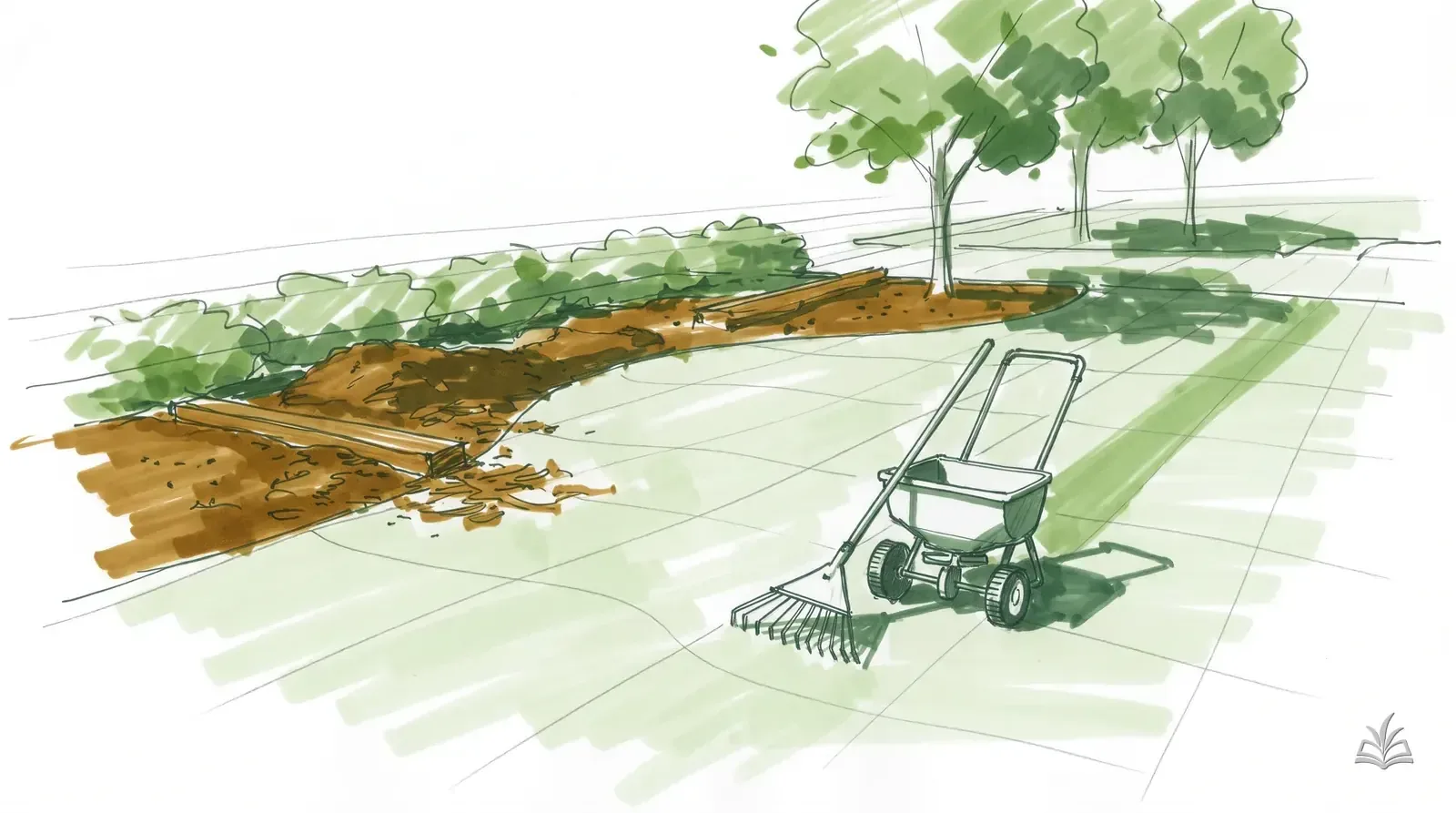
8 Weeks
to a thriving lawn
The first 8 weeks of spring determine whether your lawn thrives or fights weeds all summer. This interactive checklist covers every task in order — from the first rake to the first fertilizer application.
Spring lawn care isn't complicated, but the sequence matters. Apply pre-emergent too late and crabgrass wins. Fertilize too early and you feed weeds instead of grass. This week-by-week checklist puts every task in the right order so nothing falls through the cracks. Need to calculate quantities? The fertilizer calculator and grass seed calculator handle the math.
Pre-Emergent Timing: The Most Critical Window
Pre-emergent herbicide is your first line of defense against crabgrass, foxtail, and annual bluegrass. Apply it too early and it degrades before weed seeds germinate. Too late and weeds are already growing — pre-emergent only stops seeds, not established plants.
Soil temperature
55°F+
Measure at 4 inches deep for 3 consecutive days
Natural signal
Forsythia blooming
When forsythia turns yellow, crabgrass is about 2 weeks away
Pre-emergent vs. overseeding conflict
Most pre-emergent herbicides block grass seed as well as crabgrass. If you plan to overseed this spring, skip standard pre-emergents like prodiamine or dithiopyr in those areas (Purdue puts prodiamine at 60 days after seeding or the second mowing, whichever is longer) and use siduron or mesotrione, which are labeled for use at seeding. Always check the product label.
Pre-Emergent Application Window
Also avoid aerating for 3–4 months after application. The aerator punctures the chemical barrier, creating gaps where weeds break through.
Key Tasks: Deep Dive
Each of these tasks deserves extra attention. Getting them right determines whether your lawn thrives or struggles through summer.
First Mow: Height & Blade Check
The first mow sets the tone for the entire season. Cutting too short (“scalping”) exposes the soil to sunlight and invites weed seeds to germinate. Cutting too high allows disease-prone conditions in the dense canopy.
| Grass Type | First Mow Height | Season Height |
|---|---|---|
| Kentucky Bluegrass | 2.5–3" | 3–3.5" |
| Tall Fescue | 3–3.5" | 3.5–4" |
| Perennial Ryegrass | 2–2.5" | 2.5–3" |
| Bermuda | 1–1.5" | 1.5–2" |
| Zoysia | 1.5–2" | 2–2.5" |
| St. Augustine | 2.5–3" | 3–4" |
Always follow the one-third rule: never remove more than one-third of the blade length in a single mowing. If the grass has gotten long over winter, lower the deck gradually over 2–3 mowings. Keep blades sharp — our blade sharpening guide walks you through it in 15 minutes.
Soil Testing & pH Adjustment
Most lawn problems start in the soil. A $10–$25 soil test from your county extension office tells you exactly what your lawn needs — and what it doesn't. Testing every 2–3 years keeps you from wasting money on fertilizer the lawn can't use.
Target pH
6.0–7.0
Most turfgrasses
Low pH fix
Lime
Takes 3–6 months
High pH fix
Sulfur
Apply in fall ideally
Read our complete soil pH testing guide for step-by-step instructions, or use the fertilizer calculator to determine how much product to apply based on your results.
Overseeding Thin Spots
Spring overseeding fills in bare patches caused by winter damage, disease, or heavy traffic. It works best when combined with light aeration to improve seed-to-soil contact. Keep in mind: most pre-emergent herbicides stop grass seed too, so on ground treated with prodiamine, dithiopyr, or pendimethalin, seeding usually waits until fall. Siduron and mesotrione are labeled for use at seeding.
Seeding rates: Use the grass seed calculator for exact quantities. General overseeding rate is 1–2 lbs per 1,000 sq ft for bluegrass, 3–4 lbs for tall fescue.
For complete instructions on seed selection, prep, and watering, see our grass seed planting guide.
Irrigation System Startup
If you winterized your sprinkler system in the fall, spring startup requires a careful, zone-by-zone approach to avoid cracking pipes or damaging valves.
Close all drain valves that were opened during winterization
Slowly open the main water valve — 1/4 turn every 30 seconds
Turn on each zone individually and walk the yard checking for leaks
Adjust spray heads for proper coverage (no dry spots, no sidewalk watering)
Set your controller: 1 inch per week in spring, increasing to 1.5 in summer
Regional Timing Adjustments
“Spring” starts in February in Atlanta but not until late April in Minneapolis. Use these zone-specific windows to calibrate the checklist above to your climate.
Northern Zone
Cool-seasonMN, WI, MI, NY, New England, Pacific NW
| Task | Timing |
|---|---|
| Cleanup & first mow | Late March – mid April |
| Pre-emergent | Mid April – early May |
| First fertilizer | Late April – May |
Grasses: Kentucky Bluegrass, Fescue, Ryegrass
Transition Zone
Cool or warm-seasonVA, KY, TN, NC (Piedmont), MO, KS, southern IN/OH
| Task | Timing |
|---|---|
| Cleanup & first mow | Early – mid March |
| Pre-emergent | Late March – mid April |
| First fertilizer | April |
Grasses: Tall Fescue, Bermuda, Zoysia
Southern Zone
Warm-seasonFL, GA, AL, MS, LA, TX, SC, AZ
| Task | Timing |
|---|---|
| Cleanup & first mow | Late February – early March |
| Pre-emergent | Late February – mid March |
| First fertilizer | April – May (after 50%+ green-up) |
Grasses: Bermuda, St. Augustine, Zoysia, Centipede
Microclimate tip: South-facing slopes and urban areas warm up 1–2 weeks earlier than north-facing slopes or rural areas. Adjust accordingly — your neighbor's timing might not match yours.
Quick Reference Card
Bookmark this. Everything you need for spring in one place.
Spring Lawn Care — Cheat Sheet
Rake & clean up
As soon as ground thaws; remove debris before growth starts
Sharpen mower blades
Before the first cut; dull blades tear grass and invite disease
Soil test
Every 2–3 years; target pH 6.0–7.0 for most grasses
Pre-emergent herbicide
Soil temp 55°F for 3+ days (forsythia bloom = go signal)
First mow
1/3 rule; 3–3.5" cool-season, 1.5–2" warm-season
First fertilizer
After 2–3 mowings; slow-release N (e.g., 20-5-10)
Overseed thin spots
After a standard pre-emergent, wait for fall; siduron or mesotrione allow seeding
Aerate (if needed)
Spring = warm-season only; cool-season lawns aerate in fall
Irrigation startup
Open valves slowly, zone by zone; target 1"/week
Spot-treat weeds
Post-emergent only on breakthrough weeds; don’t broadcast
Tasks to Complete
12
Across 8 weeks
Most Critical Task
Pre-Emergent
Timing is everything
Target Mow Height
3–3.5"
Cool-season grasses
Ready to tackle your spring lawn? Calculate how much fertilizer and grass seed you need, then follow your fertilizer schedule through the rest of the season.