How to Test Soil pH for a Healthier Lawn
March 8, 2026 · Updated October 18, 2026 · 10 min read
6.0–7.0
Ideal pH range
Most lawn grasses thrive between pH 6.0 and 7.0. Outside this range, your lawn can't absorb nutrients — even if you fertilize on schedule. A $10 test tells you exactly where you stand.
Soil pH is the single most overlooked factor in lawn care. It controls whether nutrients in the soil are available to your grass roots or locked up in chemical bonds. This guide covers three testing methods (with costs), how to collect proper samples, how to read your results, and exactly how to fix soil that's too acidic or too alkaline. Whether you're starting a new lawn or troubleshooting brown patches, start here.
What Is Soil pH & Why It Matters
Soil pH measures how acidic or alkaline your soil is on a scale of 0 to 14. A pH of 7.0 is neutral. Below 7 is acidic; above 7 is alkaline. For lawns, pH directly controls nutrient availability—the ability of grass roots to absorb nitrogen, phosphorus, iron, and other essential elements from the soil.
Nutrient lockout: When pH drops below 5.5 or rises above 7.5, key nutrients become chemically bound to soil particles. Your grass starves even if the soil is full of fertilizer. Fixing pH first can be more effective than adding more product.
The pH Scale: Find Your Lawn's Sweet Spot
Lawn ideal range: 6.0–7.0
Nutrient Availability by pH Range
Green means the nutrient is readily available to roots at that pH range.
| Nutrient | Low pH (<6) | pH 6–7 | High pH (>7) |
|---|---|---|---|
| Nitrogen (N) | |||
| Phosphorus (P) | |||
| Potassium (K) | |||
| Iron (Fe) | |||
| Calcium (Ca) |
“You can pour fertilizer on a lawn with the wrong pH and watch it do nothing. Test first, amend second, fertilize third.”
3 Testing Methods Compared
There's no single best method. Use a lab test for your annual baseline, and a digital meter or DIY kit for spot checks throughout the season. Here's how they compare.
DIY Test Kit
$10–$15
Moderate
Digital pH Meter
$15–$50
Good
Lab Test (Extension Office)
$10–$25
Excellent
DIY Test Kit
$10–$15 · 10 minutes
Color-changing liquid or strip tests. Mix soil with water and the provided solution, then match the color to a pH chart. Available at any garden center.
Collect soil from 4–6 inches deep
Mix soil with distilled water in the provided container
Add the indicator solution and shake
Wait 60 seconds, then match color to the included chart
+ Cheapest option
+ Instant results
+ No waiting for mail
− ±0.5 pH accuracy at best
− Color matching is subjective
− No nutrient breakdown
Best for: Quick spot checks, confirming a known issue
Digital pH Meter
$15–$50 · 5 minutes
Electronic probe you insert directly into moist soil. Better models measure pH to ±0.1 accuracy. Reusable for years with proper care.
Water the test area lightly and wait 30 minutes
Clean the probe with distilled water
Insert probe 4–6 inches into soil
Wait for the reading to stabilize (30–60 seconds)
+ Reusable — pays for itself after 2–3 tests
+ More precise than color kits
+ Test multiple spots quickly
− Cheap meters ($10) are unreliable
− Requires calibration
− No nutrient data
Best for: Regular monitoring, testing multiple lawn zones
Lab Test (Extension Office)
$10–$25 · 1–3 weeks
Mail a soil sample to your county extension office or a private lab. You get exact pH plus a full nutrient breakdown with specific amendment recommendations.
Collect samples from 8–10 spots across your lawn
Mix all samples together in a clean bucket
Fill the provided bag with 1–2 cups of mixed soil
Mail to the lab and wait for results (1–3 weeks)
+ Most accurate option
+ Full nutrient profile (N, P, K, Ca, Mg)
+ Specific amendment recommendations included
− Takes 1–3 weeks for results
− Must mail sample
− One-time snapshot (not reusable)
Best for: Annual baseline testing, new property assessment, persistent problems
Our recommendation: get a lab test through your extension office once per year and keep a digital meter for quick checks. Pair results with the fertilizer calculator to dial in exactly what your lawn needs.
How to Collect Soil Samples Properly
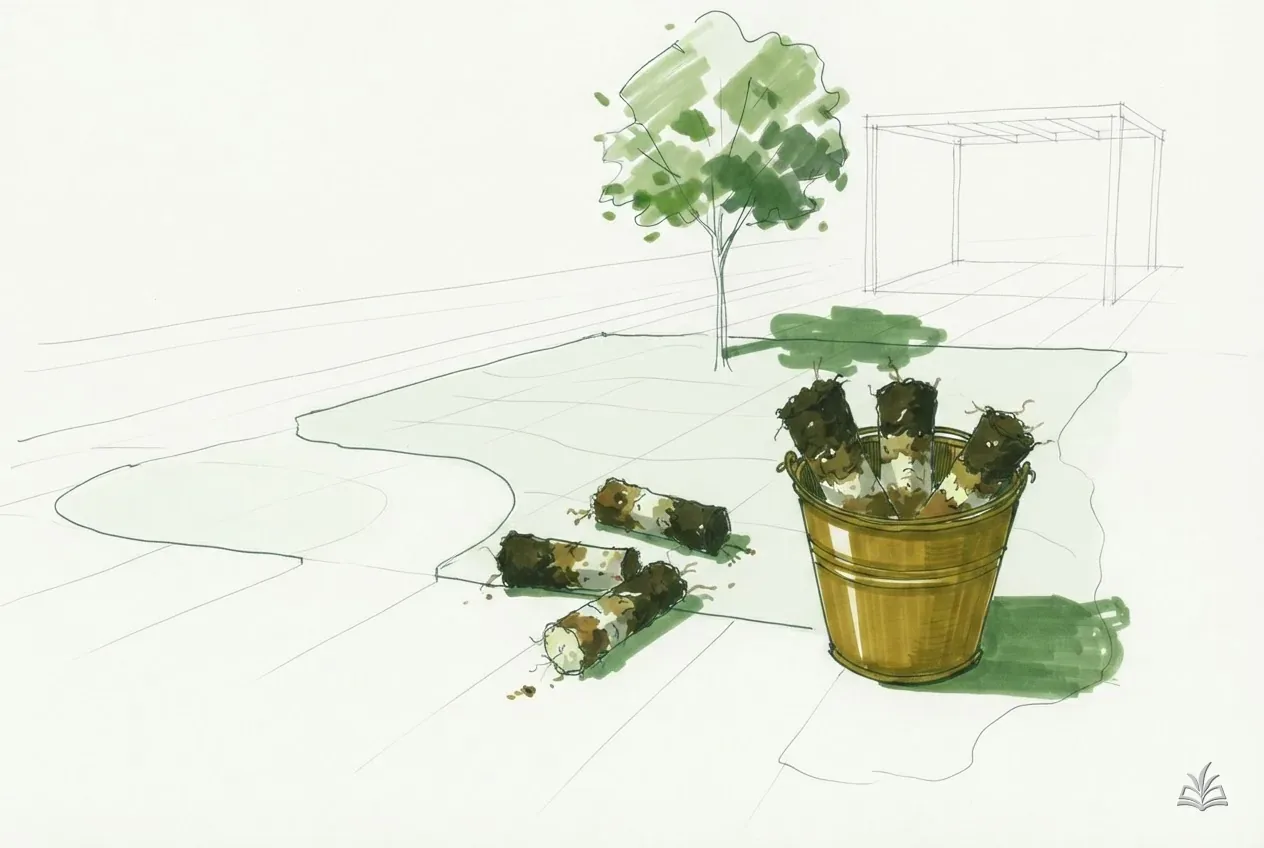
Bad samples give bad results. The most common mistake is testing only one spot — pH can vary by a full point across a single yard. Here's how to do it right.
Don't test near concrete. Driveways, sidewalks, and foundations leach calcium carbonate into surrounding soil, pushing pH up by 1–2 points. Sample at least 3 feet away from any hardscape.
Wait for the right conditions
Test when soil is moist but not waterlogged — 2 to 3 days after rain or watering. Avoid testing frozen ground or during drought. Spring and fall give the most representative readings.
Choose 8–10 spots across your lawn
Walk a zigzag pattern and take samples from different areas: front yard, back yard, shady spots, sunny areas, and any problem zones. Avoid edges near driveways, sidewalks, or foundations — concrete leaches calcium and skews pH high.
Remove surface debris
Brush away grass clippings, thatch, and mulch from each spot. You want bare soil contact. A thick thatch layer can give false readings — if thatch is over ¾ inch, consider dethatching first.
Dig to the right depth
Use a garden trowel, soil probe, or even a sturdy screwdriver to reach 4 to 6 inches deep. This is where most grass roots live. Shallow samples (top 1–2 inches) don't reflect true root-zone pH.
Collect a consistent slice
At each spot, take a core or wedge of soil from the full 4–6 inch depth. Drop it into a clean plastic bucket. Avoid metal containers — they can react with soil and alter readings.
Mix all samples together
Combine the 8–10 samples in the bucket and mix thoroughly. This gives you a composite sample that represents your entire lawn, smoothing out natural variation between spots.
Let the sample air-dry (for lab tests)
If mailing to a lab, spread the soil on newspaper and let it dry for 24 hours. Remove stones and roots. Fill the lab's bag with 1–2 cups of dried, crumbled soil. For DIY kits and meters, test immediately with moist soil.
If you have distinct problem areas (e.g., a shady patch that won't grow), collect and test those spots separately. You may need different amendments for different zones. After aerating your lawn, wait at least 2 weeks before testing — aeration temporarily disrupts soil chemistry at the surface level.
Interpreting Your Results
Once you have a number, here's what it means for your lawn and what to do about it.
pH Below 5.0 — Strongly acidic
Aluminum and manganese become toxic to grass roots. Phosphorus is completely locked up. Most lawn grasses will not survive.
Action: Heavy lime application needed — consult a lab report for exact rates.
pH 5.0–5.5 — Moderately acidic
Phosphorus availability drops significantly. Iron and manganese may become excessive. Grass thins out and weeds like moss and sorrel thrive.
Action: Apply pelletized lime at 50–75 lbs per 1,000 sq ft. Retest in 6 months.
pH 5.5–6.0 — Slightly acidic
Most nutrients still available but phosphorus is starting to lock up. Fine fescues and centipedegrass do well here, but Kentucky bluegrass struggles.
Action: Light lime application — 25–50 lbs per 1,000 sq ft.
pH 6.0–7.0 — Ideal range
Maximum nutrient availability. All major and minor nutrients are accessible to grass roots. This is where fertilizer gives you the best return on investment.
Action: No amendment needed. Maintain with annual testing.
pH 7.0–7.5 — Slightly alkaline
Iron and manganese start to become unavailable, causing yellowing (chlorosis). Phosphorus availability dips. Buffalograss and bermudagrass tolerate this.
Action: Apply elemental sulfur at 5–10 lbs per 1,000 sq ft total, split so no single application tops 5 lbs.
pH Above 7.5 — Strongly alkaline
Iron, zinc, and manganese are severely limited. Grass shows iron chlorosis (yellow blades with green veins). Common in arid climates and near concrete.
Action: Sulfur application + iron sulfate for quick greening. May need repeated treatment over 1–2 years.
pH Preferences by Grass Type
Different grasses have different tolerances. Before adjusting pH, check what your specific grass variety prefers. If you're planting new grass seed, choose a variety that matches your native soil pH — it's easier than fighting chemistry.
| Grass Type | Ideal pH | Season |
|---|---|---|
| Kentucky Bluegrass | 6.0–7.0 | Cool-season |
| Perennial Ryegrass | 6.0–7.0 | Cool-season |
| Tall Fescue | 5.5–6.5 | Cool-season |
| Fine Fescue | 5.5–6.5 | Cool-season |
| Bermudagrass | 6.0–7.0 | Warm-season |
| Zoysiagrass | 6.0–7.0 | Warm-season |
| St. Augustinegrass | 6.0–7.5 | Warm-season |
| Centipedegrass | 5.0–6.0 | Warm-season |
| Buffalograss | 6.5–7.5 | Warm-season |
“Centipedegrass is the exception. It actually prefers acidic soil (5.0–6.0) — liming a centipede lawn is one of the most common mistakes in the Southeast.”
How to Raise or Lower Soil pH
Changing soil pH is a slow process — expect 3 to 6 months for noticeable change. Never try to shift pH more than 1 point per application. Multiple smaller applications beat one heavy dose.
Raising pH (Soil Too Acidic)
Apply pelletized lime (calcium carbonate). Pelletized is easier to spread than powdered and less dusty. Dolomitic lime adds magnesium too — useful if your soil test shows low Mg.
Lime Application Rates (lbs per 1,000 sq ft)
| Soil Type | +0.5 pH | +1.0 pH | +1.5 pH |
|---|---|---|---|
| Sandy soil | 25 lbs | 50 lbs | 75 lbs |
| Loam soil | 40 lbs | 75 lbs | 100 lbs |
| Clay soil | 50 lbs | 100 lbs | 150 lbs |
Best timing: Apply lime in fall so winter rain and freeze-thaw cycles work it into the soil. Spring application works too, but results take longer.
Lowering pH (Soil Too Alkaline)
Use elemental sulfur (granular). Soil bacteria convert sulfur to sulfuric acid over time, gradually lowering pH. Aluminum sulfate works faster but can burn grass if over-applied — use it only for quick fixes.
Elemental Sulfur Rates (lbs per 1,000 sq ft)
| Soil Type | −0.5 pH | −1.0 pH |
|---|---|---|
| Sandy soil | 5 lbs | 10 lbs |
| Loam soil | 8 lbs | 15 lbs |
| Clay soil | 12 lbs | 25 lbs |
Best timing: Apply sulfur in early spring or fall. Never exceed 5 lbs per 1,000 sq ft in a single application on established lawns — split larger amounts into 2–3 applications 8 weeks apart.
After Amending pH
- •Water thoroughly to begin dissolving the amendment
- •Wait 6–8 weeks to apply fertilizer — changing pH affects nutrient uptake timing
- •Retest in 3–6 months to measure progress
- •Aerate before applying lime or sulfur for faster penetration
Quick Reference Card
Bookmark this. Everything you need to remember in one place.
Soil pH Testing Cheat Sheet
Test annually
Once per year is enough for most lawns. Test more often if actively amending.
Best season to test
Early spring or fall. Avoid mid-summer (dry) and deep winter (frozen).
Ideal lawn pH
6.0–7.0 for most grasses. Centipedegrass prefers 5.0–6.0.
Too acidic? Apply lime
Pelletized lime in fall. 25–100 lbs per 1,000 sq ft depending on soil type.
Too alkaline? Apply sulfur
Elemental sulfur in spring or fall. Max 5 lbs per 1,000 sq ft per application.
Lab test > DIY kit
Lab tests (typically $10–$25) give exact pH plus full nutrient breakdown. DIY kits are for spot checks.
Sample depth: 4–6 inches
That's where grass roots live. Shallow samples don't reflect true root-zone pH.
pH change takes time
Expect 3–6 months for results. Never shift more than 1 point per application.
Recommended Frequency
1×/year
Spring or fall testing
After Amending pH
Every 3 mo
Until target is reached
New Property
Test first
Before any fertilizer
When to Test: Annual Calendar
Spring
Mar–May
Primary test window
Summer
Jun–Aug
Skip (too dry)
Fall
Sep–Nov
Best amendment window
Winter
Dec–Feb
Skip (frozen)
Now that you know your soil pH, put the results to work. Use the fertilizer calculator to dial in the right amounts, follow the fertilizer schedule for proper timing, and check the spring lawn care checklist to make sure you haven't missed anything this season.