Lawn Fertilizer Schedule: When, What & How to Fertilize
March 8, 2026 · Updated October 18, 2026 · 10 min read
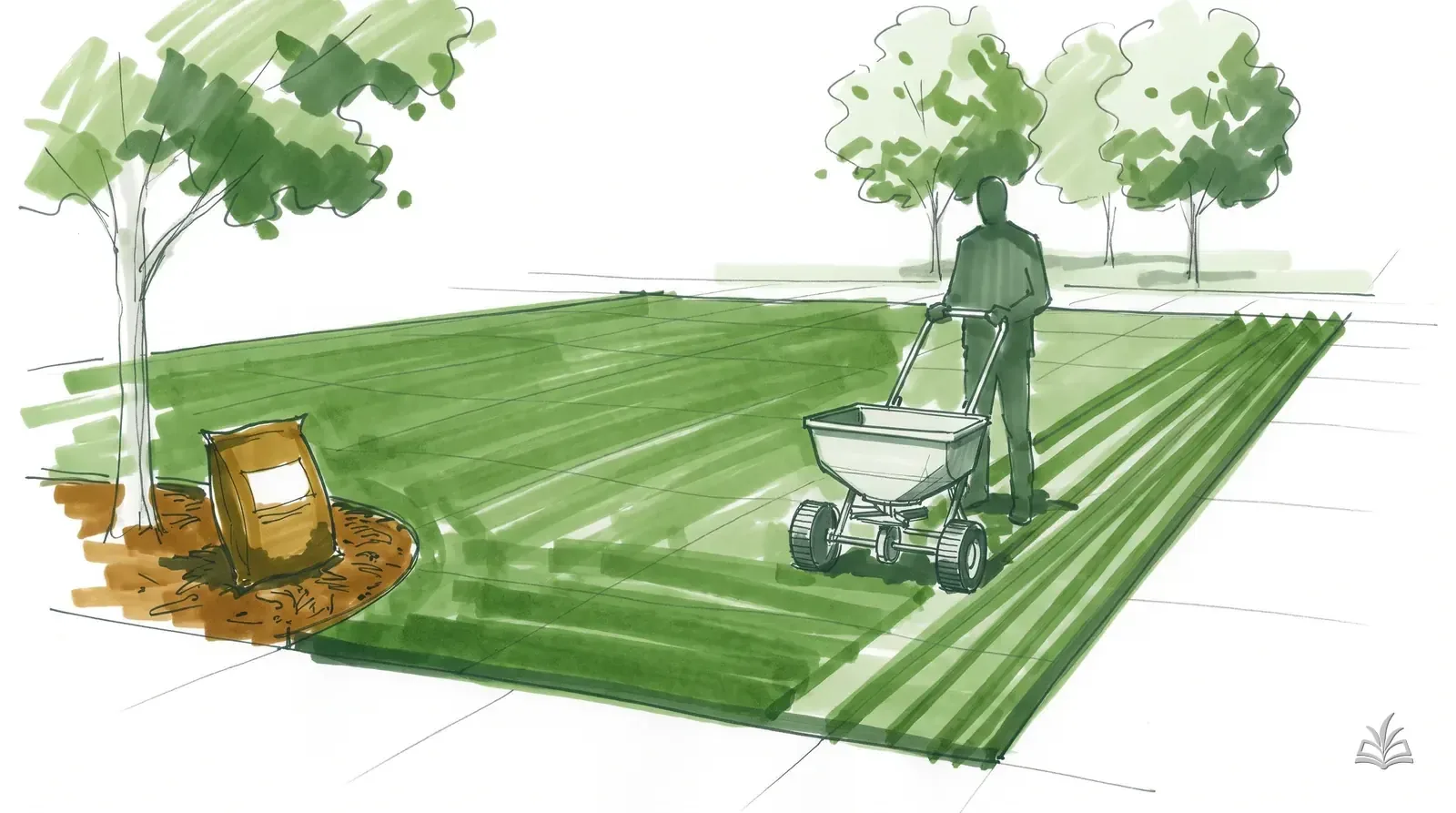
4–5×
Applications per year
A properly timed fertilizer program produces a lawn that's 50% thicker and greens up 2–3 weeks earlier in spring compared to unfertilized turf. Timing matters more than product choice.
“When should I fertilize my lawn?” is the most common question in lawn care — and the answer depends entirely on your grass type and climate zone. This guide gives you a month-by-month schedule for both cool-season and warm-season grasses, explains fertilizer types and NPK ratios, and covers application rates so you know exactly how much to put down. If you need to calculate quantities, the fertilizer calculator handles the math instantly.
Month-by-Month Fertilizer Schedule
Timing is everything. The single biggest fertilization mistake homeowners make is feeding at the wrong time for their grass type. Cool-season grasses need fall emphasis; warm-season grasses need spring and summer emphasis.
Cool-Season Grasses
Common types: Kentucky Bluegrass, Tall Fescue, Perennial Ryegrass, Fine Fescue
| Timing | Action | NPK | Notes |
|---|---|---|---|
| Mar | Pre-emergent + light feed | 20-0-5 | Apply when soil hits 55°F |
| Apr–May | Balanced spring feeding | 20-5-10 | After 2nd mowing of the season |
| Jun–Jul | Light or skip | 10-0-5 | Reduce rate 50% in heat; optional |
| Aug–Sep | Heavy fall feeding | 24-4-12 | Most important application of the year |
| Oct–Nov | Winterizer | 22-0-14 | High K for root reserves before dormancy |
| Dec–Feb | Dormant — no fertilizer | — | Grass is not actively growing |
Warm-Season Grasses
Common types: Bermuda, Zoysia, St. Augustine, Centipede, Bahia
| Timing | Action | NPK | Notes |
|---|---|---|---|
| Mar–Apr | Green-up feed after last frost | 16-4-8 | Wait until grass is 50%+ green |
| May–Jun | Peak growth feeding | 24-4-12 | Apply every 6–8 weeks during active growth |
| Jul–Aug | Maintenance feed | 15-0-15 | Reduce N if drought-stressed |
| Sep | Final feed (optional) | 12-0-12 | Skip for centipede/bahia to avoid winterkill |
| Oct–Nov | Potassium-only (optional) | 0-0-20 | Hardens grass for winter in transition zone |
| Dec–Feb | Dormant — no fertilizer | — | Brown and dormant; do not fertilize |
Key rule: Fertilize only when grass is actively growing. For cool-season lawns that means soil temps above 55°F. For warm-season lawns, wait until the grass is at least 50% greened up after winter dormancy.
Types of Lawn Fertilizer Compared
Walk into any garden center and you'll face dozens of options. Here's how to think about them. Every fertilizer falls into three either/or categories: granular vs. liquid, slow-release vs. fast-release, and organic vs. synthetic.
Form
Granular
- + Easy to spread evenly
- + Slow-release options last 6–12 weeks
- + Less risk of burn
- − Needs watering in within 24 hours
- − Slower visible results
Best for: Most homeowners and pros
Liquid
- + Fastest green-up (3–5 days)
- + Even coverage via sprayer
- + Can mix with other treatments
- − Needs reapplication every 2–4 weeks
- − Higher burn risk if over-applied
Best for: Quick touch-ups, foliar feeding
Release Rate
Slow-Release
- + Feeds for 6–12 weeks
- + Minimal burn risk
- + Less frequent applications
- − Costs 20–40% more
- − Slower initial response
Best for: Primary feedings (spring, fall)
Fast-Release
- + Visible results in days
- + Lower cost per bag
- + Good for quick fixes
- − Lasts only 2–4 weeks
- − Higher burn risk
- − Promotes surge growth
Best for: Spot treatments, post-aeration boost
Source
Organic
- + Improves soil biology over time
- + Nearly impossible to burn
- + Eco-friendly
- − Lower NPK concentration
- − Slower results
- − Can smell initially
Best for: Long-term soil health, pet-safe yards
Synthetic
- + Precise NPK ratios
- + Fast-acting
- + Cheaper per unit of N
- − No soil biology benefit
- − Salt buildup over time
- − Runoff risk
Best for: Targeted nutrient correction
Most pros use a slow-release granular synthetic for their main feedings and keep a liquid on hand for quick fixes. If you're building soil health long-term, consider alternating organic and synthetic applications. Use our fertilizer calculator to figure out how much product you need for your yard.
NPK Ratios: What the Numbers Mean
Every fertilizer bag shows three numbers (like 24-4-12). These represent the percentage by weight of each macronutrient. A 50-lb bag of 24-4-12 contains 12 lbs of nitrogen, 2 lbs of phosphorus, and 6 lbs of potassium.
Nitrogen
Blade growth, green color
Drives top growth and that deep green color. Too much causes surge growth, thatch buildup, and disease. Too little and your lawn looks pale and thin.
When to emphasize: Spring & fall (cool), late spring & summer (warm)
Phosphorus
Root development, seedling establishment
Critical for new lawns, overseeding, and root growth. Mature lawns rarely need extra P — most soils already have enough. Many states restrict P in lawn fertilizers unless a soil test shows deficiency.
When to emphasize: At seeding or sodding only
Potassium
Stress tolerance, disease resistance
Strengthens cell walls, improves drought and cold tolerance. Essential in fall winterizer applications. Think of potassium as your lawn’s immune system.
When to emphasize: Fall (cool), late summer/fall (warm)
“Don't guess — soil test. A $15 test tells you exactly what your lawn needs instead of throwing money at the wrong ratio.”
Before buying fertilizer, get a soil pH test through your local extension office. It costs $10–$25 and tells you exactly which nutrients your soil needs.
Which NPK Ratio for Each Season
| Season | Ratio | Why |
|---|---|---|
| Early Spring | 20-0-5 or 20-5-10 | Moderate N for green-up, low P unless overseeding |
| Late Spring | 24-4-12 or 30-0-4 | Higher N for peak growth, K for summer prep |
| Summer | 10-0-5 or 15-0-15 | Reduced N to avoid stress, K for heat tolerance |
| Fall | 24-4-12 or 22-0-14 | High N + K for root storage before winter |
| Winterizer | 22-0-14 or 18-0-18 | High K to harden grass, moderate N for color |
Application Rates by Grass Type
“How much fertilizer do I need?” depends on your grass type. Rates are measured in pounds of nitrogen (N) per 1,000 sq ft per year. Here's what each grass type actually needs:
| Grass Type | N / Year | Apps | Per App | Notes |
|---|---|---|---|---|
| Kentucky Bluegrass | 3–4 lbs | 3–4 | 0.75–1.0 lb | Heavy feeder; benefits from fall emphasis |
| Tall Fescue | 2–3 lbs | 2–3 | 0.75–1.0 lb | Moderate; too much N reduces drought tolerance |
| Perennial Ryegrass | 2–4 lbs | 3–4 | 0.75–1.0 lb | Responds well to fall feeding |
| Bermudagrass | 3–5 lbs | 4–6 | 0.5–1.0 lb | Heaviest feeder; thrives with frequent apps |
| Zoysiagrass | 2–3 lbs | 2–3 | 0.75–1.0 lb | Over-fertilizing causes thatch |
| St. Augustinegrass | 2–4 lbs | 3–4 | 0.5–1.0 lb | Reduce N in shade to prevent weak growth |
| Centipedegrass | 1–2 lbs | 1–2 | 0.5–1.0 lb | Light feeder; excess N causes decline |
| Fine Fescue | 1–2 lbs | 1–2 | 0.5–1.0 lb | Low-maintenance; too much N invites disease |
All rates are per 1,000 sq ft. To find how much product to buy for your lawn, divide your lawn's square footage by 1,000, then multiply by the per-app rate. Or skip the math and use the fertilizer calculator.
Spreader Calibration Tip
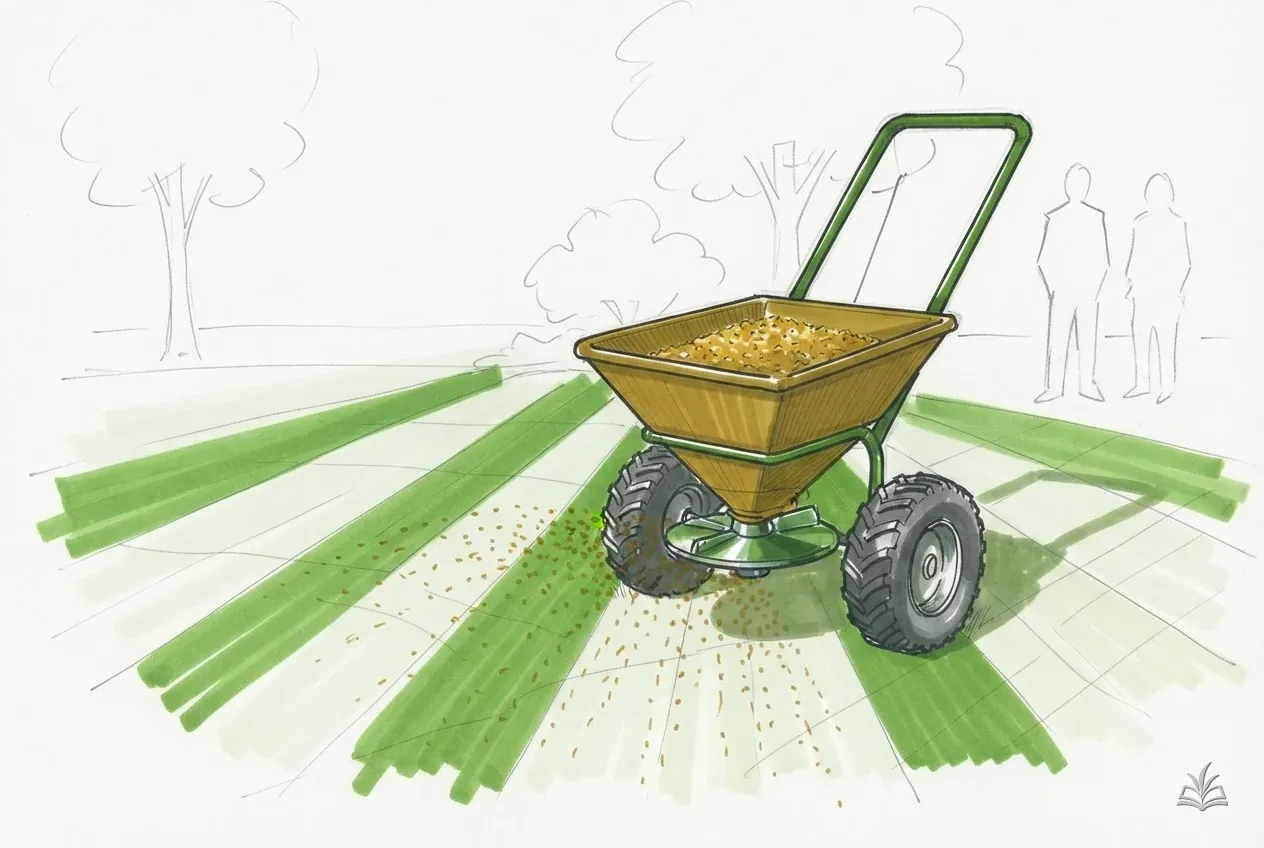
Apply half the product in one direction, then the other half in a perpendicular pass. This two-pass technique prevents visible stripes and ensures even coverage. Most broadcast spreaders need a 2–3 foot overlap between passes.
Need to know how much seed, too? Grass Seed Calculator
6 Common Fertilizing Mistakes
These mistakes cost homeowners hundreds of dollars a year in wasted product and lawn damage. Every one is avoidable.
Pair fertilizing with proper lawn aeration and dethatching for best results. Aerating before your fall feeding lets nutrients reach the root zone directly.
Quick Reference Cheat Sheet
Bookmark this. Everything you need to remember in one place.
Lawn Fertilizer Cheat Sheet
Soil test first
Every 2–3 years via county extension ($10–$25)
Cool-season priority
Fall > early spring > late spring. Skip or reduce summer.
Warm-season priority
Late spring > summer > early fall. Never fertilize dormant.
Max per application
1 lb N per 1,000 sq ft (0.5 lb for fast-release)
Water after applying
0.25–0.5 inches within 24 hours of granular apps
Spreader technique
Two perpendicular passes at half rate for even coverage
Mow first, then fertilize
Cut grass 1–2 days before so product reaches soil
Don’t fertilize stressed lawn
Drought, disease, or extreme heat = skip the feeding
Best Cool-Season Month
September
Fall feeding = strongest spring
Best Warm-Season Month
May–June
Peak growth = peak absorption
Soil Temp to Start
55–65°F
Measure at 4 inches deep
Ready to put this schedule into action? Start with the spring lawn care checklist or calculate exactly how much fertilizer you need with the fertilizer calculator. If you're overseeding this season, coordinate your seeding and fertilizing schedules for the best results.