When to Overseed Your Lawn: Timing, Prep & Watering
March 8, 2026 · Updated October 18, 2026 · 13 min read
6–8
weeks before frost
Overseeding is the fastest way to thicken a thin lawn, but timing is everything — seedlings need 6–8 weeks of active growth before dormancy, so seed 2 weeks too late and they may not survive winter. This guide locks in the exact windows by grass type, region, and soil temperature.
Overseeding is the fastest way to thicken a thin lawn, fill bare spots, and introduce tougher grass varieties — all without tearing up your existing turf. But drop seed at the wrong time or skip soil prep and you'll waste money on seed that never germinates. This guide covers exactly when to overseed by grass type, how to prepare the soil, which seed to buy, and a day-by-day watering plan. If you're starting from bare dirt rather than existing turf, see our how to plant grass seed guide instead.
Why Overseed? 4 Reasons It's Worth the Effort
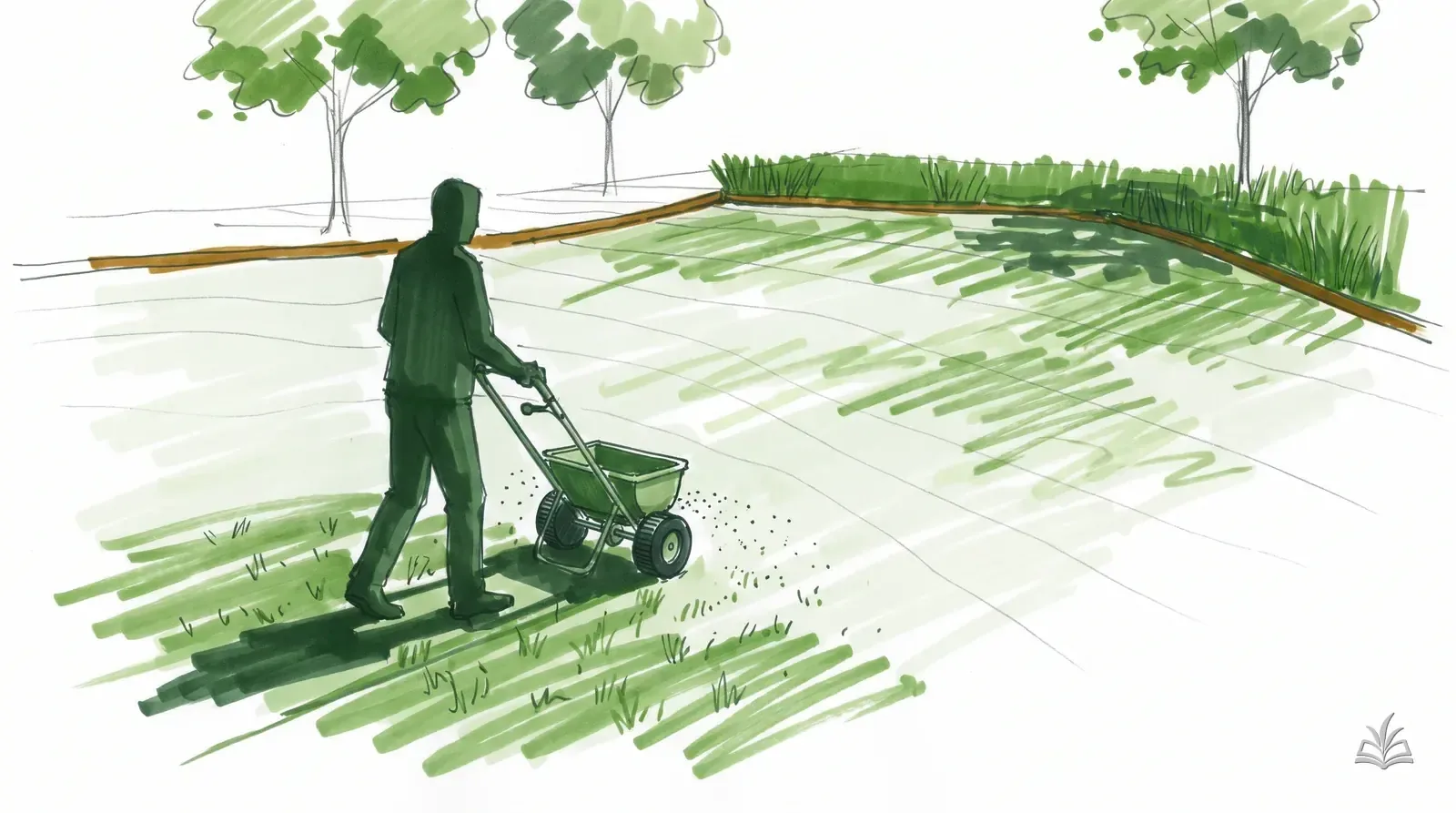
Overseeding is planting grass seed directly into an existing lawn without tearing up the turf first. It's cheaper than laying sod, faster than full renovation, and the results compound each year as new seedlings mature.
Fill thin and bare spots
New seed fills gaps left by drought, disease, or foot traffic without tearing up and re-laying the entire lawn.
Crowd out weeds naturally
A thick stand of grass is the best weed barrier. Dense turf blocks sunlight from reaching weed seeds at the soil surface.
Introduce improved varieties
Newer cultivars are more drought-tolerant, disease-resistant, and darker green than seed planted 10+ years ago.
Recover from pest or disease damage
Grub damage, fungal dieback, and insect injury all leave voids that only fresh seed can close permanently.
When to Overseed by Grass Type
The golden rule: overseed during peak growth. Seedlings need 6–8 weeks of active growing conditions to establish roots before dormancy. Miss the window by even two weeks and seedlings go into winter too small to survive.
Cool-Season Grasses
Types: Kentucky Bluegrass, Tall Fescue, Perennial Ryegrass, Fine Fescue
| Window | Rating | Soil Temp | Why |
|---|---|---|---|
| Late Aug – Mid Sep | Best | 55–65°F | 6–8 weeks of growth before first frost; warm soil + cool nights = ideal germination |
| Early Aug | Good | 60–70°F | Slightly early; may need extra watering through remaining heat |
| Early Spring (Mar–Apr) | Fair | 50–60°F | Backup window if you missed fall; heavier weed competition and crabgrass pressure |
| Summer / Winter | Avoid | — | Heat stress or dormancy kills seedlings; wasted seed and effort |
Warm-Season Grasses
Types: Bermuda, Zoysia, St. Augustine, Centipede, Bahia
| Window | Rating | Soil Temp | Why |
|---|---|---|---|
| Late May – Jun | Best | 65–75°F | Peak growing season; seedlings establish quickly in warm soil |
| Early May | Good | 60–70°F | Just greened up; soil warming but nights may still be cool |
| Jul – Aug | Risky | 75–85°F | Extreme heat dries seedlings fast; triple your watering effort |
| Fall / Winter | Avoid | — | Warm-season grasses entering dormancy; seeds won’t survive winter |
“Overseed when the soil thermometer reads 55–65°F for cool-season and 65–75°F for warm-season. Air temperature means nothing — soil temp is what triggers germination.”
Pro tip: Check soil temperature with a $12 probe thermometer at 2″ depth, taken in the morning for 3 consecutive days. Once the average hits the target range, seed that weekend. Pair overseeding with core aeration for the best seed-to-soil contact.
Soil Prep: 5 Steps Before You Seed
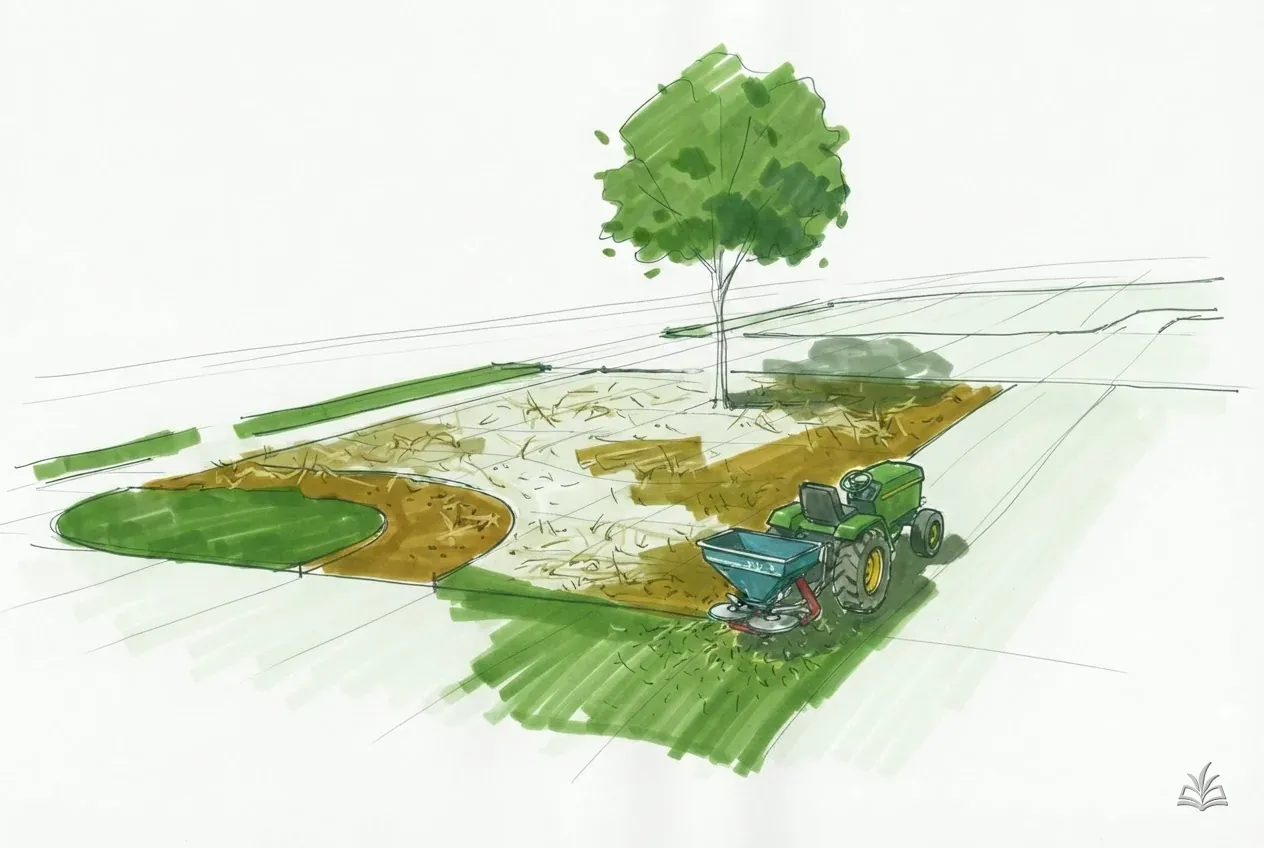
Skipping soil prep is the number one reason overseeding fails. Seed needs three things to germinate: soil contact, consistent moisture, and warmth. These five steps guarantee all three.
Mow low
Cut your existing grass to 1.5–2 inches — about half its normal mowing height. This lets sunlight reach the soil surface and prevents existing turf from shading out seedlings. Bag the clippings so seed makes direct contact with soil.
Dethatch if needed
If your thatch layer exceeds ½ inch, remove it before seeding. Seed sitting on top of thatch won’t germinate — it needs soil contact. A power rake or dethatching rake works for most lawns. See our dethatching guide.
Core aerate
Aeration is the single biggest factor in overseeding success. The plugs pulled from the soil create pockets where seed drops directly into the ground, gets covered naturally, and stays moist longer. Aerate in two passes at perpendicular angles for full coverage. See our full aeration guide.
Test and amend the soil
Grab a soil test before seeding. You’re looking for a pH between 6.0 and 7.0 for most grasses. If pH is below 6.0, add pelletized lime (50 lbs per 1,000 sq ft). If above 7.5, add sulfur. Fix it now — you won’t be able to work amendments in once seed is down. See our how to test soil pH.
Rake and level
Lightly rake the surface to break up aeration plugs and smooth out any low spots. You want a loose, crumbly seedbed — not packed dirt. Fill depressions with a thin layer of topsoil or compost (no more than ¼ inch).
Time estimate: For a 5,000 sq ft lawn, plan on 3–4 hours for the full prep (mow + dethatch + aerate + rake). Rent equipment from Home Depot or a local rental center the morning of. Many places offer half-day rates for aerators.
Seed Selection & Overseeding Rates
Use the same grass type already in your lawn unless you're intentionally transitioning to a different variety. Mixing warm-season and cool-season seed is a recipe for a patchy lawn with two different textures and colors. For exact quantity calculations, use our grass seed calculator.
| Grass Type | Season | Rate / 1,000 ft² | Germ. Days | Best For |
|---|---|---|---|---|
| Kentucky Bluegrass | Cool | 1–2 lbs | 14–21 | Full sun, high-traffic yards; self-repairs via rhizomes |
| Tall Fescue | Cool | 3–4 lbs | 7–12 | Heat-tolerant cool-season option; great for transition zone |
| Perennial Ryegrass | Cool | 5–8 lbs | 5–7 | Fastest germination; often mixed with bluegrass for quick cover |
| Fine Fescue | Cool | 3–5 lbs | 10–14 | Shade-tolerant; low-maintenance and drought-resistant |
| Bermuda | Warm | 1–2 lbs | 7—14 | Full sun, high traffic; aggressive spreader fills gaps fast |
| Zoysia | Warm | 1–2 lbs | 14–21 | Dense, carpet-like turf; tolerates moderate shade |
Overseeding vs. new lawn rates: The table above shows overseeding rates, which are roughly half the rate for a bare-soil new lawn. You already have established turf providing coverage — you only need to fill gaps, not build a lawn from scratch.
Seed Quality Checklist
- +Weed seed < 0.5% — check the label. Cheap seed is loaded with annual ryegrass and weed seed.
- +Germination rate ≥ 85% — listed on every certified seed label. Below 85%, buy fresher seed.
- +NTEP-tested varieties — the National Turfgrass Evaluation Program tests cultivars for disease resistance and performance by region.
- +Coated vs. uncoated — coated seed retains moisture longer but costs more per pound. Worth it for dry climates.
Watering Schedule After Overseeding
Watering is where most overseeding projects fail. Too little and seeds dry out before germination. Too much and you wash them away or create fungal problems. Follow these four phases exactly.
Keep top ½ inch of soil consistently moist. Seeds must never dry out during this phase or they die.
Reduce frequency, increase depth. Seedlings are up but roots are shallow. Water in the early morning only.
Deeper, less frequent watering pushes roots down into the soil. Start letting the surface dry slightly between sessions.
Transition to your normal watering schedule. Aim for 1–1.5 inches of water per week total (rain included). Deep, infrequent soaking builds drought-tough roots.
Sprinkler tip: If you don't have in-ground irrigation, buy a $25 hose-end timer. Set it to run 8 minutes at 6 AM, 12 PM, and 5 PM for the first 10 days. Before winter, read our sprinkler winterization guide to protect your investment.
Overseeding Windows by Region
These dates are starting points — always confirm with a soil thermometer. A warm fall can push your window later; an early cold snap can close it sooner.
| Region | States | Cool-Season | Warm-Season | Notes |
|---|---|---|---|---|
| Northeast | NY, PA, NJ, CT, MA, ME, VT, NH, RI | Aug 15 – Sep 15 | — | Cool-season only. Fall is the single best window; spring is risky due to late frosts. |
| Midwest | OH, MI, IL, IN, WI, MN, IA, MO | Aug 15 – Sep 20 | — | Slightly longer window than Northeast. Watch for early cold snaps in northern tier states. |
| Southeast | GA, FL, SC, NC, AL, MS, LA | — | May 15 – Jun 30 | Warm-season grasses dominate. Bermuda and Zoysia overseed in late spring for best results. |
| Transition Zone | VA, KY, TN, AR, OK, KS, parts of NC/MO | Sep 1 – Sep 30 | May 20 – Jun 15 | Both grass types grow here. Choose based on what’s already in your lawn. Tall Fescue is king here. |
| Southwest | TX, AZ, NM, Southern CA | — | Apr 15 – Jun 15 | Bermuda thrives. Overseeding Bermuda with ryegrass in fall (Oct) keeps lawns green through winter. |
| Pacific NW | WA, OR, Northern CA | Sep 1 – Oct 1 | — | Cool-season grasses. Extended fall window thanks to mild winters and consistent rain. |
For a complete spring prep workflow that includes overseeding timing, see the spring lawn care checklist. If you're planning to seed a brand-new lawn from scratch instead, our how to plant grass seed guide covers the full process.
8 Overseeding Mistakes to Avoid
Every one of these kills germination rates. Read through the list before you start — most are easy to avoid once you know about them.
Seeding at the wrong time
Wrong: Overseeding in mid-summer (cool-season) or late fall (warm-season) because “it’s the only weekend I have.”
Right: Wait for the correct soil temperature window. Two weeks early beats two weeks late — but the wrong season wastes 100% of your seed.
Skipping soil prep entirely
Wrong: Throwing seed on top of an unmowed, un-aerated lawn and hoping for the best.
Right: Mow low, dethatch, core aerate, and rake. Seed-to-soil contact is non-negotiable for germination.
Using too much seed
Wrong: Doubling the rate on the bag because “more seed = more grass.”
Right: Overcrowded seedlings compete for water, light, and nutrients. They grow weak and thin out. Stick to the recommended overseeding rate.
Applying weed killer with new seed
Wrong: Putting down a pre-emergent herbicide or weed-and-feed before or right after overseeding.
Right: Pre-emergents kill grass seedlings the same way they kill weed seedlings. Wait 60–90 days after overseeding before any herbicide application.
Watering wrong (too much or too little)
Wrong: One deep soak and then forgetting, or running sprinklers non-stop and flooding the seed.
Right: Follow the 4-phase watering schedule: light and frequent at first, then gradually deeper and less often as roots develop.
Mowing too soon
Wrong: Mowing new grass before it reaches 3–4 inches because the lawn "looks shaggy."
Right: Wait until seedlings reach 3–4 inches, then mow on the highest setting (remove no more than ⅓ of the blade). Use a sharp blade to avoid pulling up seedlings.
Walking on new seed
Wrong: Letting kids, dogs, or foot traffic cross the newly seeded areas.
Right: Stay off new seedlings for 3–4 weeks. Foot traffic compacts soil and crushes tender shoots. Rope off the area if needed.
Using the wrong fertilizer
Wrong: Applying a high-nitrogen established-lawn fertilizer right after seeding.
Right: Use a starter fertilizer high in phosphorus (look for a middle number like 10-18-10). Phosphorus drives root development in new seedlings.
The short version: Prep the soil, seed at the right rate, water consistently, and leave the lawn alone for a month. That's it. For a complete seasonal plan, check our lawn fertilizer schedule to time your feeding around overseeding.
Quick Reference Card
Bookmark this. Everything you need at a glance.
Overseeding — Cheat Sheet