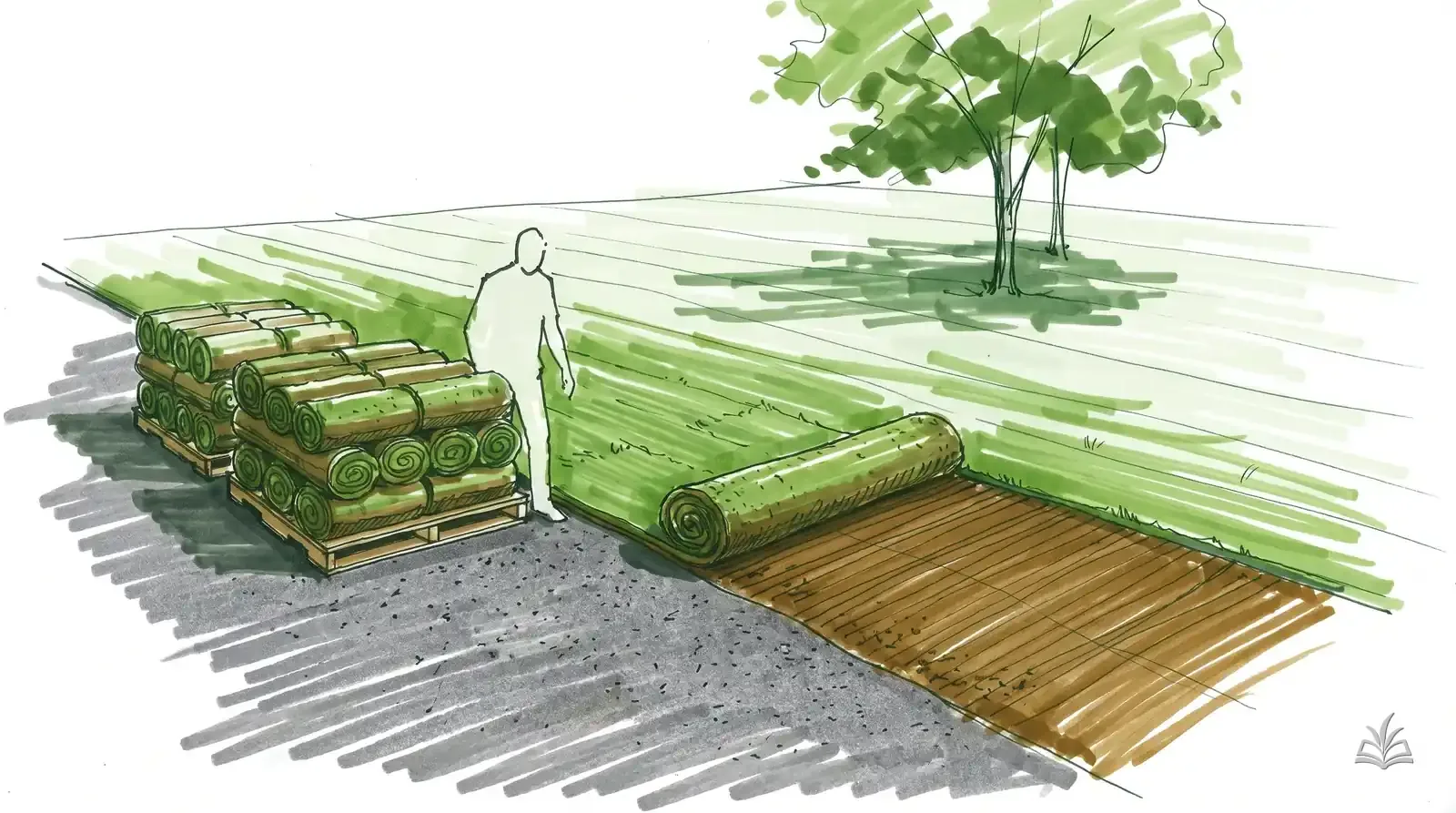
Sod Installation at a Glance
7 steps · 14 min read · DIY-friendly for any lawn size
Coverage per Pallet
450-500 sq ft
DIY Cost
$0.30-$0.80/sq ft
Install Time (1,000 sq ft)
3-4 hours
Root Establishment
2-3 weeks
Sod gives you an instant lawn in a single day — no waiting weeks for germination, no babying fragile seedlings. But sod is also unforgiving: lay it on unprepared soil, water it wrong, or leave gaps between pieces, and you will have a dead, expensive mess within a month. This guide covers every step from ripping out old grass to your first mow, with exact quantities you can plug into our sod calculator for a precise material order.
Step 1
Prepare the Soil
Soil prep is the single biggest factor in whether your sod takes root or dies within a month. Sod laid on compacted, nutrient-poor soil will yellow and peel up like carpet — no amount of watering fixes a bad foundation.
Soil Prep Sequence
- 01Remove existing grass, weeds, and debris with a sod cutter or flat shovel
- 02Test your soil pH — sod grass thrives between 6.0 – 7.0
- 03Till the top 4-6 inches of soil to break up compaction
- 04Mix in 1-2 inches of compost and apply starter fertilizer (high phosphorus)
- 05Grade the surface so it slopes 1-2% away from structures for drainage
- 06Rake smooth and firm with a lawn roller — the surface should be about 1 inch below sidewalks and driveways
Pro tip: Water the prepped soil lightly the day before sod arrives. Damp soil helps the sod make immediate root contact. Bone dry soil draws moisture away from the sod before roots can establish.
Step 2
Measure and Order Sod
Sod is perishable — it starts dying within 24-48 hours of harvest. You need accurate measurements so you order the right amount and install it the same day it arrives. Use our sod calculator to get exact quantities and cost estimates.
How to Measure Your Lawn
Break your lawn into rectangles, triangles, or circles
Measure each shape's dimensions in feet using a tape measure
Calculate total square footage (L x W for rectangles)
Add 5-10% for cuts, curves, and waste
| Unit | Coverage | Typical Price |
|---|---|---|
| Roll | 10 sq ft | $3 - $8 |
| Slab | 16 x 24 in | $2 - $5 |
| Pallet | 450-500 sq ft | $150 - $400 |
Schedule delivery for early morning so you have the full day to install. If you cannot lay all the sod the same day, unroll unused pieces in a shaded area and water them to keep the roots alive.
Step 3
Lay the Sod
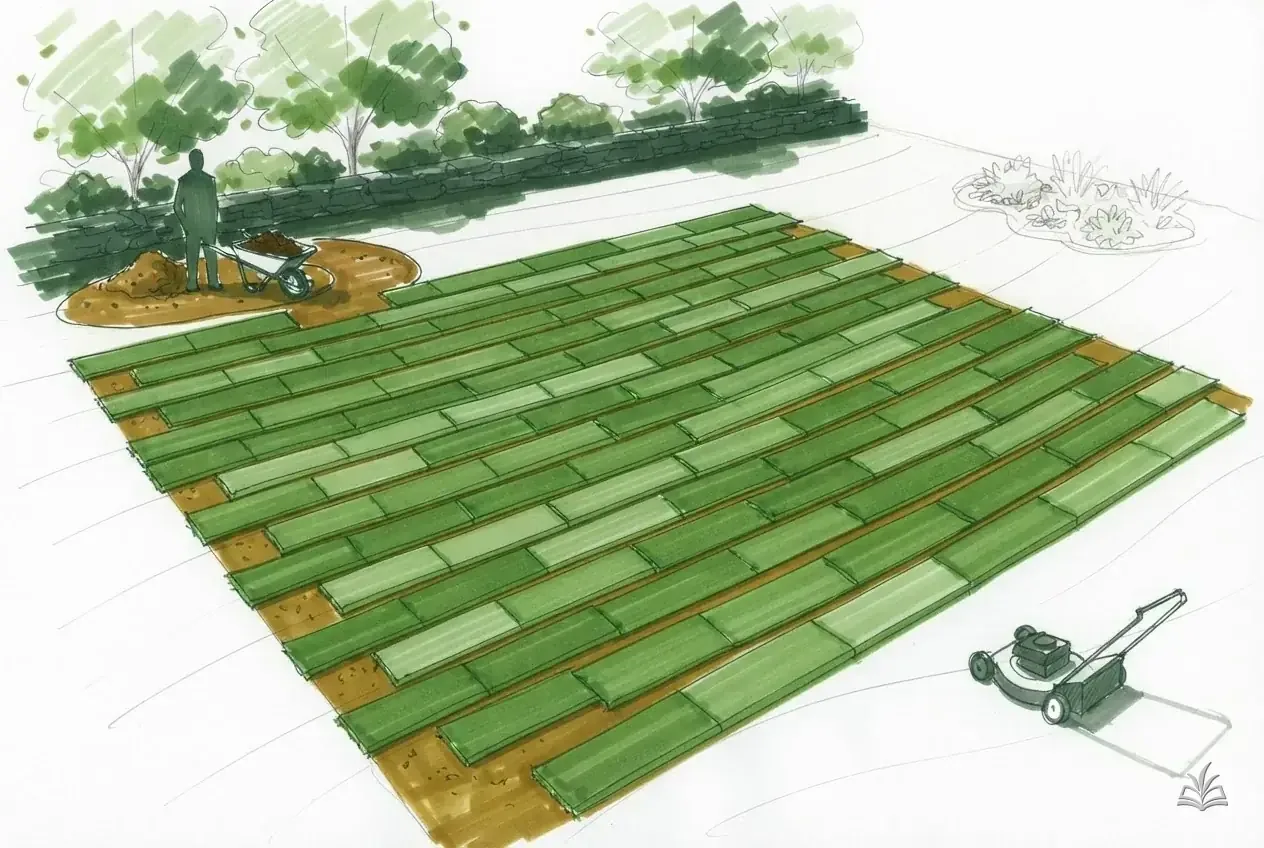
Start laying sod along the longest straight edge in your yard — a sidewalk, driveway, or fence line. Work outward from there so you only need to cut pieces at the far edges where irregular shapes are less visible.
Laying Pattern: Staggered Brick
Offset each row by half a roll length, like bricks in a wall. This prevents visible seam lines and keeps the sod from shifting.
Key Laying Rules
- 01Butt edges tightly together — no gaps, no overlapping
- 02Press each piece flat against the soil. Lift and re-lay any piece that bunches or folds
- 03On slopes, lay sod horizontally across the slope (not up and down). Stake pieces on steep grades
- 04Use a sharp knife to cut around flower bed edges, sprinkler heads, and tree rings
- 05Never stretch sod to fill gaps — it shrinks as it dries and the seams will open up
Step 4
Roll and Seal the Seams
Once all the sod is down, roll the entire lawn with a water-filled lawn roller. This eliminates air pockets and presses the sod roots into direct contact with the soil beneath — the single most important factor for fast root establishment.
Do This
- ✓Roll in two directions (north-south, then east-west)
- ✓Fill roller only 1/3 full on soft soil to avoid compaction
- ✓Push soil into any visible seams with your fingers
- ✓Top-dress seams with a thin layer of topsoil if gaps remain
Avoid This
- ✗Rolling when soil is soggy (creates ruts and compaction)
- ✗Using a fully-loaded roller (crushes new roots)
- ✗Walking on seams before rolling (shifts sod out of place)
- ✗Leaving visible gaps between pieces (they will not grow together)
Seam test: After rolling, try to lift a corner of the sod. If it peels up easily, it needs more rolling or the soil beneath is too dry. Good contact means you feel resistance when pulling.
Step 5
Watering Schedule
New sod needs far more water than established grass. The goal is to keep both the sod and the soil beneath it moist for the first two weeks so roots can grow downward. Too little water and edges curl and brown. Too much and you invite fungal disease.
Day 1 (Install Day)
Start watering within 30 minutes of laying each section. Soil beneath sod must be soaked.
Days 2-14
Keep sod and soil consistently moist. Water early AM, midday, and late afternoon.
Weeks 3-4
Roots establishing. Reduce frequency but increase duration to encourage deeper growth.
Week 5+
Transition to normal deep watering. The sod should be fully rooted by now.
Moisture check: Lift a corner of the sod. The soil should be dark and damp to a depth of 3-4 inches. If the underside of the sod is dry or the soil is light-colored, increase watering immediately.
Step 6
First Mow Timing
Mowing too soon is one of the fastest ways to ruin a new sod installation. The roots need 2-3 weeks to anchor into the soil. If you mow before that, the mower wheels tear up the loose sod.
When Is It Safe to Mow?
Tug test
Grab a handful of grass and pull gently. If the sod lifts, it is not ready. If the grass blades tear but the sod stays anchored, roots have established.
Height check
Wait until grass reaches 3-4 inches. Set the mower to the highest setting and cut no more than 1/3 of the blade height.
Timeline
Most sod is ready for its first mow at 14-21 days after installation. Warm-season grasses (Bermuda, Zoysia) root faster than cool-season types.
Use a freshly sharpened mower blade for the first cut. Dull blades tear new grass rather than cutting it cleanly, which stresses the still-establishing root system and invites disease.
Step 7
Ongoing Care (First 60 Days)
Your sod will look great on day one, but the first 60 days are critical for long-term survival. Here is the maintenance timeline that turns fresh sod into a permanent, healthy lawn.
| Timeframe | Task | Details |
|---|---|---|
| Week 1-2 | Stay off it | No foot traffic, no pets, no playing. Let roots anchor. |
| Week 3 | First mow | Highest setting, sharp blade. Cut no more than 1/3 of height. |
| Week 4 | Reduce watering | Transition to deep, infrequent watering (2-3x per week). |
| Week 4-6 | First fertilizer | Apply a balanced lawn fertilizer after the 2nd mow. |
| Week 6-8 | Light use OK | Walking, light activity. Avoid heavy equipment or sports. |
| Week 8+ | Full use | Lawn is established. Resume normal mowing and activity. |
Do not apply weed killer for at least 60 days after installation. Herbicides stress new roots and can kill young sod. If weeds appear in seams, pull them by hand.
Tools & Materials Checklist
Tools
- Sod cutter or flat shovel — Remove old grass
- Rototiller (rent) — Loosen top 4-6 inches of soil
- Landscape rake — Level and smooth the surface
- Sharp utility knife — Cut sod to fit edges and curves
- Lawn roller (rent) — Press sod into soil contact
- Wheelbarrow — Transport sod rolls across yard
- Garden hose + sprinkler — Immediate and ongoing watering
- Tape measure — Measure lawn area for ordering
Materials
- Sod — Order 5-10% extra for cuts and waste
- Topsoil or compost — 1-2 cubic yards per 1,000 sq ft
- Starter fertilizer — Per bag coverage directions
- Lime or sulfur — Based on soil test results
Best Time to Install Sod by Region
Sod can be installed almost any time the ground is not frozen, but timing it right dramatically improves establishment. The ideal window gives roots 6-8 weeks of moderate temperatures before extreme heat or cold arrives.
Northeast
Cool-seasonBest: Late Aug - Sep
Alt: Early Apr - May
Southeast
Warm-seasonBest: May - Jun
Alt: Mar - Apr
Midwest
Cool-seasonBest: Sep - early Oct
Alt: Apr - May
Southwest
Warm-seasonBest: Apr - Jun
Alt: Sep - Oct
Pacific NW
Cool-seasonBest: Sep - Oct
Alt: Mar - Apr
Summer installations: Sod laid in July-August requires 2-3x the water of a spring or fall install. If you cannot commit to watering multiple times per day in peak heat, wait for cooler weather.
7 Common Sod Installation Mistakes
These Kill New Sod Lawns
Leaving gaps between pieces
Butt edges tightly. Gaps dry out, let weeds in, and never fill on their own.
Overlapping sod edges
Overlaps create bumps and smother the lower piece. Trim flush with a knife.
Not watering within 30 minutes
Sod starts dying immediately after harvest. Water each section as you finish laying it.
Laying sod on hard, unprepped soil
Roots cannot penetrate compacted ground. Till 4-6 inches deep before installation.
Installing day-old sod
Sod on a pallet heats up internally and dies within 24-48 hours. Install same day as delivery.
Walking on new sod
Stay off the lawn for 2 weeks. Foot traffic breaks the fragile root-to-soil connection.
Mowing too early
Wait until sod passes the tug test (14-21 days). Early mowing rips up loose pieces.
DIY vs. Professional Installation Cost
DIY sod installation saves the labor, which LawnStarter puts at $0.55-$1.00 per sq ft, but the savings shrink once you factor in equipment rentals, soil amendments, and the value of your time. Use our sod calculator for an estimate specific to your lawn size.
| Cost Item | DIY | Professional |
|---|---|---|
| Sod (per sq ft) | $0.30 - $0.80 | Included |
| Soil amendments | $50 - $150 | Included |
| Equipment rental | $75 - $150/day | N/A |
| Labor | Your time (3-8 hrs) | $0.55 - $1.00/sq ft |
| Total (1,000 sq ft) | $400 - $1,100 | $800 - $1,800 (ready grade) |
Choose DIY if:
- • Lawn is under 2,000 sq ft
- • Relatively flat, simple shape
- • You have 1-2 helpers available
- • Budget is the top priority
Hire a pro if:
- • Lawn exceeds 3,000 sq ft
- • Steep slopes or complex grading
- • Irrigation system needs rework
- • Time is more valuable than money
Whether you DIY or hire out, get an accurate material estimate first. Our landscaping cost calculator covers the full project including grading, soil, and sod.
Quick Reference Cheat Sheet
Bookmark this page. Everything you need in one view.
How to Install Sod — 10-Step Summary
Remove Old Grass
Sod cutter or shovel. Clear all debris.
Test & Amend Soil
pH 6.0-7.0. Till 4-6″, add compost.
Grade & Rake Smooth
1-2% slope away from structures. 1″ below sidewalks.
Measure & Order
Add 5-10% extra. Schedule same-day delivery.
Lay Along Straight Edge
Staggered brick pattern. No gaps or overlaps.
Roll the Lawn
Two directions with 1/3-full roller.
Water Immediately
Soak 3-4″ deep within 30 minutes.
Water 2-3x Daily (2 Wks)
Keep sod and soil consistently moist.
First Mow at 14-21 Days
Tug test first. Highest mower setting.
Stay Off Lawn for 2 Weeks
No foot traffic until roots anchor.
Sod per Pallet
450-500
sq ft coverage
Root Establishment
14-21 days
before first mow
Full Establishment
6-8 wk
before heavy use
Need exact material quantities? Our sod calculator tells you how many pallets to order based on your lawn dimensions and grass type.