Lawn Aeration Guide: When, Why & How to Aerate
March 8, 2026 · Updated October 18, 2026 · 12 min read
1×
a year on clay soil
Thin grass, brown patches and poor drainage often trace back to compacted soil. Clay-heavy lawns need core aeration every year (sandy soils every 2–3 years), and most homeowners skip it entirely.
Aeration creates channels in compacted soil so water, air, and nutrients can reach grass roots. Whether you have a small suburban yard or manage properties professionally, this guide covers everything: signs you need it, timing by grass type, core vs. spike methods, cost comparisons, and a step-by-step DIY walkthrough. If your lawn also has a thatch problem, start with our dethatching guide — dethatching should come first.
5 Signs Your Lawn Needs Aeration
Not every lawn needs aeration every year. Check for these indicators before renting equipment or hiring a pro.
Heavy foot traffic areas
Paths, play areas, or dog runs where soil gets packed down regularly.
Water pools after rain
Puddles that sit for hours mean water can't penetrate compacted soil.
Thatch layer over 1/2 inch
Cut a wedge of turf — if the spongy layer above soil exceeds 1/2", aerate.
Screwdriver test fails
Push a screwdriver into moist soil. If it won't go in 3–4 inches easily, the soil is compacted.
Thin, patchy grass despite care
Fertilizing and watering but still seeing bare spots? Roots can't breathe.
Rule of thumb: If two or more signs apply, aerate this season. Clay-heavy soils should be aerated annually regardless. Sandy soils may only need it every 2–3 years.
When to Aerate: Timing by Grass Type
The single most important aeration rule: aerate during peak growth. Grass needs to be actively growing to recover from the disruption. Aerate at the wrong time and you're just poking holes that invite weeds.
Cool-Season Grasses
Types: Kentucky Bluegrass, Tall Fescue, Perennial Ryegrass
| Window | Rating | Why |
|---|---|---|
| Early Sep | Best | Peak root growth + 6–8 weeks before frost |
| Late Aug | Good | Slightly early but still effective |
| Mid Oct | Okay | Cutting it close — roots may not fill in before dormancy |
| Spring (Apr) | Last resort | Opens soil to weed seeds; only if fall was missed |
Warm-Season Grasses
Types: Bermuda, Zoysia, St. Augustine, Centipede
| Window | Rating | Why |
|---|---|---|
| Late May–Jun | Best | Active growth peak; fastest recovery |
| Early May | Good | Just greened up — growth is accelerating |
| Jul–Aug | Okay | Heat stress can slow recovery; water heavily after |
| Fall/Winter | Avoid | Grass entering dormancy; holes won’t close |
Pair aeration with overseeding for maximum impact. The seed falls directly into the aeration holes, making soil-to-seed contact nearly guaranteed. Our spring lawn care checklist covers the full seasonal workflow.
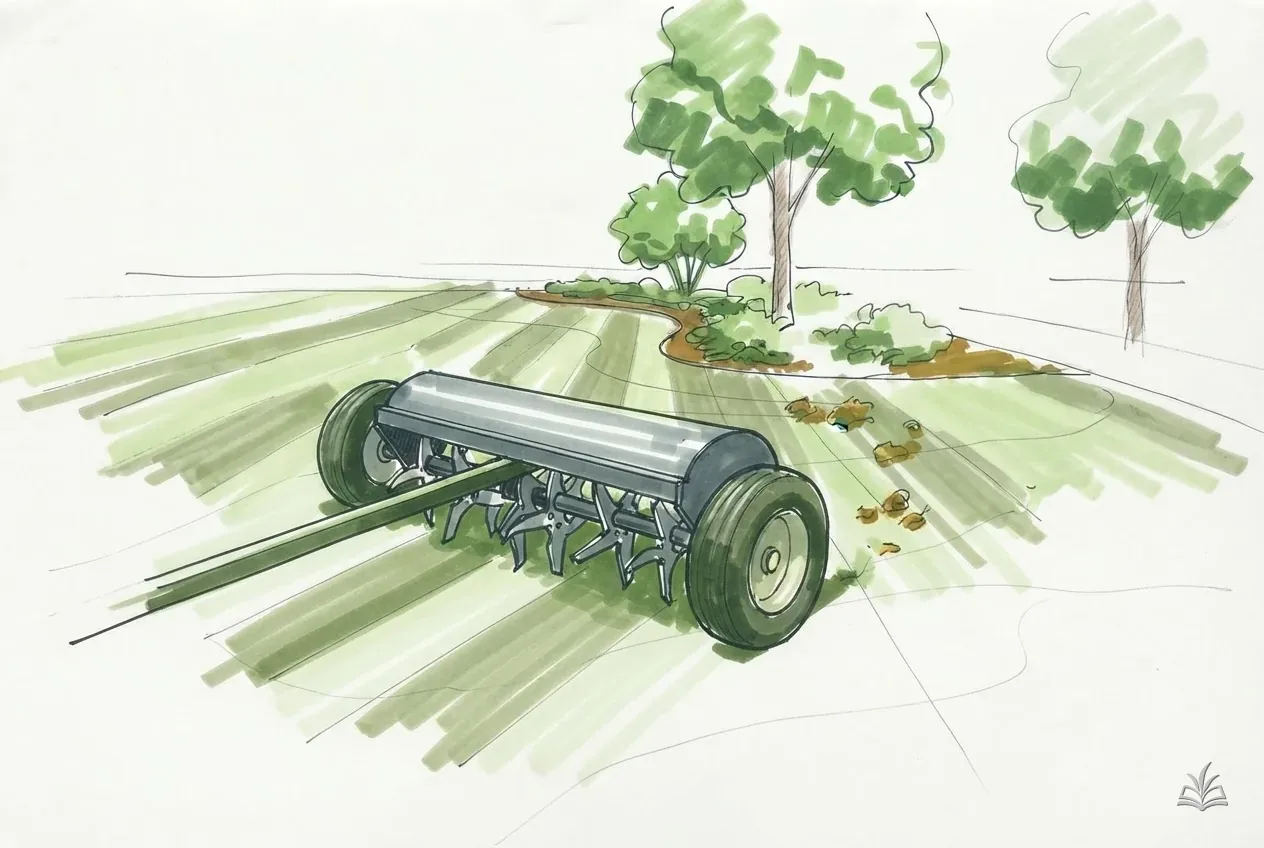
Core Aeration vs. Spike Aeration
This is the most common question homeowners get wrong. Spike aeration is cheaper and easier, but it can actually make compaction worse in clay soil. Here's the side-by-side.
Core Aeration
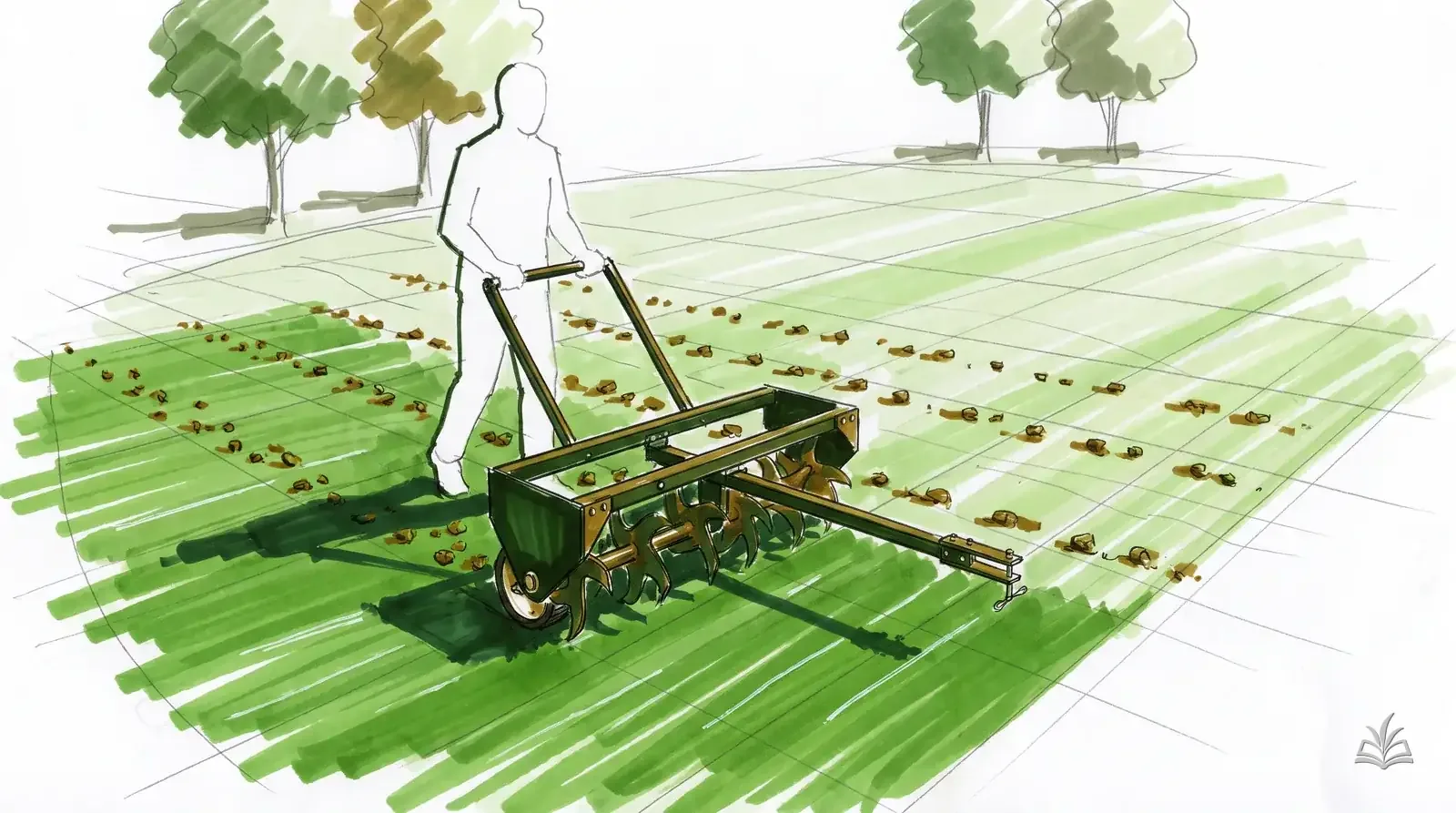
Hollow tines pull 2–3" soil plugs out of the ground, leaving them on the surface to decompose.
- + Removes compacted soil — the gold standard
- + Reduces thatch as plugs break down
- + Creates deep channels for water, air, and roots
- + Results last 6–12 months
- − Equipment rental: $40–$80/day
- − Heavier machines require truck transport
- − Soil plugs on lawn surface for 1–2 weeks
Best for most lawns, especially clay soil
Spike Aeration
Solid tines poke holes into the soil without removing material. Manual tools, spike shoes, or rolling drum aerators.
- + Cheap — spike shoes cost $15–$30
- + Quick for small or lightly compacted areas
- + No soil plugs to deal with
- + Can DIY with a garden fork
- − Compresses soil around each hole (displaces, doesn’t remove)
- − Shallow penetration (1–2")
- − Temporary relief — holes close quickly
- − Can worsen clay compaction
Only for sandy soil or small problem spots
“Spike aeration is like poking a straw into packed sand. Core aeration is like removing a core sample. Only one actually creates space.”
Aeration Cost Guide: DIY vs. Professional
The math changes based on lawn size. For small lawns under 5,000 sq ft, hiring a pro is almost the same price as renting. For large properties, DIY saves significantly. Check our lawn mowing cost calculator for broader service pricing.
| Item | DIY | Pro | Notes |
|---|---|---|---|
| Core aerator rental | $40–$80/day | — | Home Depot, Sunbelt, local rental yards |
| Fuel/transport | $10–$20 | — | Machine weighs 200–300 lbs; need truck or trailer |
| Your time (avg lawn) | 1.5–3 hrs | 30–60 min | Pros have commercial-grade machines |
| Total cost (5K sq ft) | $50–$100 | $75–$150 | Pro price drops per sq ft on larger lawns |
| Total cost (10K sq ft) | $50–$100 | $120–$200 | DIY cost stays flat — same rental |
| Total cost (20K+ sq ft) | $60–$120 | $200–$400 | DIY savings grow with lawn size |
How Much to Charge for Aeration (Landscapers)
If you're a lawn care pro adding aeration to your service menu, here are current market rates. These assume core aeration with a commercial walk-behind aerator. See our full lawn care pricing guide for more services.
| Lawn Size | Price Range | Per Sq Ft | Est. Time |
|---|---|---|---|
| Under 5,000 sq ft | $75–$120 | $0.015–$0.024 | 30–45 min |
| 5,000–10,000 sq ft | $120–$175 | $0.012–$0.018 | 45–75 min |
| 10,000–15,000 sq ft | $175–$250 | $0.012–$0.017 | 60–90 min |
| 15,000–25,000 sq ft | $250–$350 | $0.010–$0.014 | 90–120 min |
| 25,000+ sq ft | $350–$500+ | $0.010–$0.013 | 2–3 hrs |
Pro tip: Bundle aeration + overseeding for a 15–25% upsell. Most customers who want aeration also want seed — offer it as a package and you'll close more jobs at higher margins.
How to Aerate Your Lawn: Step by Step
Core aeration with a rented walk-behind machine takes 1.5–3 hours for the average yard. Here's the complete process.
Water the lawn 1–2 days before
Soil should be moist (not soggy). Dry, hard soil will fight the machine and reduce plug depth. If it hasn’t rained, run sprinklers for 30 minutes the day before.
Mow shorter than usual
Cut grass to about 1.5–2 inches. This lets the aerator tines penetrate cleanly and makes it easier to spread seed afterward.
Flag sprinkler heads and buried lines
Mark all irrigation heads, invisible fence wires, and shallow utility lines with flags. A core aerator will destroy anything within 3 inches of the surface.
Make two passes in perpendicular directions
Run the aerator in one direction, then make a second pass at 90°. This doubles hole density and ensures even coverage. Overlap slightly on each row.
Leave the plugs on the lawn
Resist the urge to rake them up. Plugs break down in 1–2 weeks and return nutrients and beneficial microbes to the soil. Mowing over them speeds decomposition.
Overseed immediately after (optional but ideal)
Broadcast seed at the recommended rate, then apply a starter fertilizer. Seed falls directly into the aeration holes for excellent soil contact.
Water lightly and consistently
Keep the soil moist (not drenched) for 2–3 weeks post-aeration. If you overseeded, water 2–3 times daily in short bursts until germination.
After aeration is the perfect time to plant grass seed and apply fertilizer on the right schedule. These three actions together — aerate, seed, feed — are the most impactful thing you can do for a struggling lawn.
What to Do After Aeration
Aeration alone helps, but combining it with overseeding and fertilizing is what transforms a tired lawn. The open soil channels are a window of opportunity — use it.
Overseed bare & thin areas
Broadcast seed at the label rate. Seed drops into aeration holes for direct soil contact — far better germination than seed left sitting on the surface. Use our overseeding guide.
Apply starter fertilizer
Use a high-phosphorus starter (e.g., 10-18-10) to fuel new root development. Skip weed-and-feed products — pre-emergents will block grass seed germination too. Use our fertilizer calculator.
Water consistently for 2–3 weeks
Keep soil moist but not saturated. If you seeded, water lightly 2–3x per day until grass reaches 2 inches, then transition to deeper, less frequent watering.
Quick Reference Card
Bookmark this. Everything you need at a glance.
Lawn Aeration — Cheat Sheet