When to Dethatch Your Lawn: Timing, Signs & Methods
March 8, 2026 · Updated October 18, 2026 · 11 min read
Is Your Thatch Too Thick?
Leave it alone. This thin layer insulates roots and retains moisture.
Getting thick. Monitor each season. Aerate to slow buildup.
Water can’t penetrate. Roots are suffocating. Dethatch this season.
A thin layer of thatch is healthy — it insulates roots and retains moisture. But once it crosses ½ inch, it starts suffocating your lawn: blocking water, trapping disease, and starving grass roots of air. This guide shows you how to test your thatch, when to dethatch based on your grass type, which method to use, and exactly what to do afterward. If your lawn also has compaction issues, read our lawn aeration guide — aeration and dethatching often go hand in hand.
What Is Thatch?
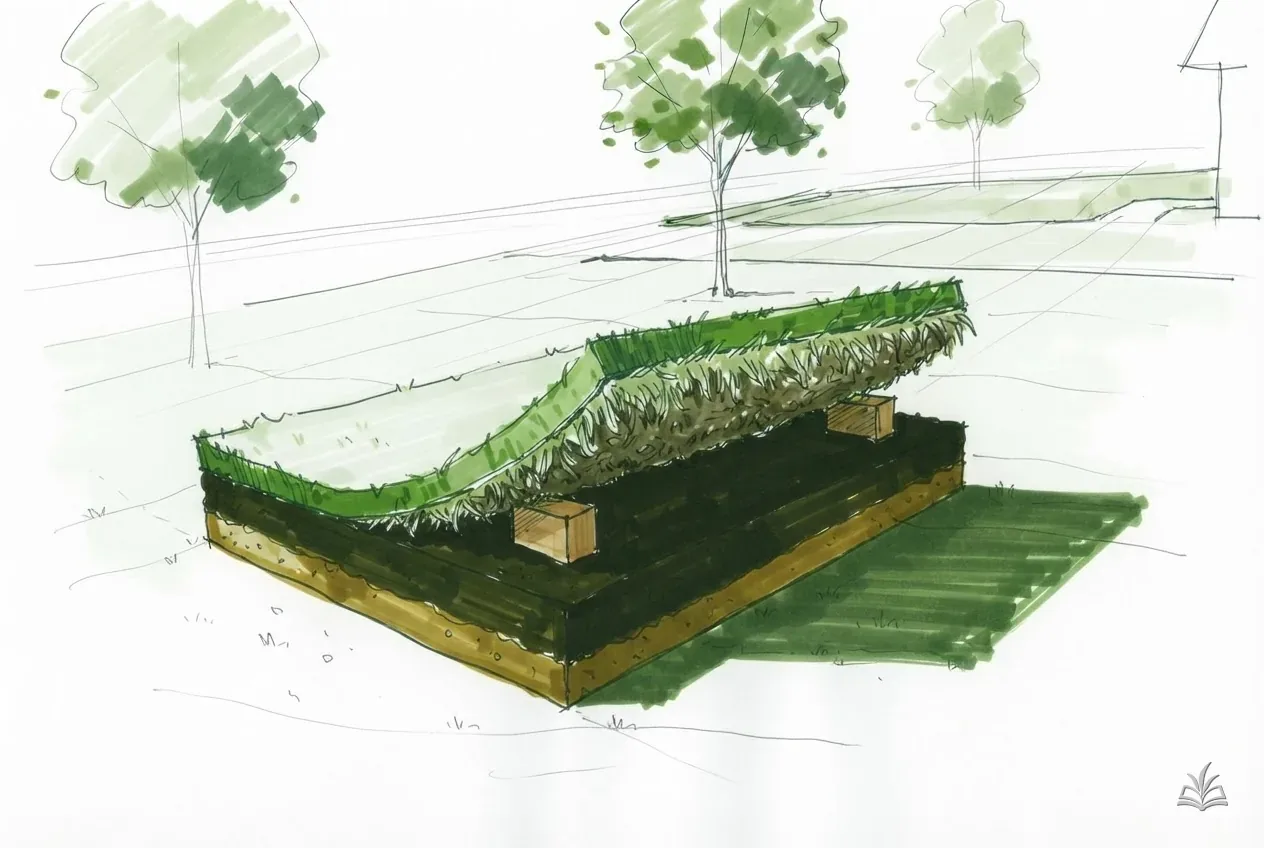
Thatch is a tightly woven layer of dead and living grass stems, roots, and runners that builds up between the green grass blades and the soil surface. Every lawn has some — and a thin layer (under ½ inch) is actually beneficial. It insulates roots from temperature extremes, retains moisture, and cushions foot traffic.
Problems start when thatch exceeds ½ inch. At that point it becomes a barrier: water can't penetrate, fertilizer gets trapped, and roots grow into the thatch instead of the soil — making your lawn shallow-rooted and vulnerable to drought and disease. Certain grasses like Kentucky Bluegrass, Bermuda, and Zoysia are heavy thatch producers because they spread by stolons and rhizomes.
5 Signs of Thatch Buildup
Not sure if your lawn needs dethatching? Check for these indicators before renting equipment.
Spongy, bouncy feeling underfoot
Walk across your lawn. If it feels like walking on a mattress rather than firm ground, thatch is absorbing your steps instead of the soil.
Water runs off instead of soaking in
Sprinklers running but puddles forming? A thick thatch layer is hydrophobic when dry — water beads off the surface instead of reaching roots.
Thin, weak grass despite fertilizing
If you’re feeding the lawn but grass stays sparse, nutrients are trapped in the thatch layer and never reach the soil.
Frequent disease or insect problems
Thick thatch creates a warm, moist habitat for fungal diseases (dollar spot, brown patch) and insects (chinch bugs, sod webworms).
Visible brown layer between grass and soil
Pull back the grass blades and look at the base. A dense, fibrous brown mat between the green crowns and the dirt is thatch.
Rule of thumb: If two or more signs apply, dethatch this season. Lawns with heavy thatch producers (Bluegrass, Bermuda, Zoysia) should be checked annually.
The Screwdriver Test: Measure Your Thatch
Forget guessing. This 2-minute test tells you exactly how thick your thatch is.
- 1Push a flathead screwdriver straight down into the lawn after watering (moist soil is easier to penetrate).
- 2Note where resistance changes. The spongy layer above firm soil is your thatch.
- 3Pull the screwdriver out and measure the thatch zone. Or cut a small wedge of turf with a knife and measure the brown layer directly.
Under ½" = healthy, leave it. ½"–1" = monitor and aerate to slow buildup. Over 1" = dethatch now.
Best Timing by Grass Type
The single most important rule: dethatch during peak growth. Your lawn needs to be actively growing to recover from the stress of having its root zone ripped open. Dethatch at the wrong time and you risk killing large patches outright.
Cool-Season Grasses
Types: Kentucky Bluegrass, Tall Fescue, Perennial Ryegrass
| Window | Rating | Why |
|---|---|---|
| Early Sep | Best | Peak fall growth; 6–8 weeks of recovery before frost |
| Late Aug | Good | Slightly early but strong recovery window |
| Early spring (Apr) | Okay | Only if fall was missed; weed pressure is higher |
| Summer / Winter | Avoid | Grass dormant or heat-stressed; can’t recover |
Warm-Season Grasses
Types: Bermuda, Zoysia, St. Augustine, Centipede
| Window | Rating | Why |
|---|---|---|
| Late May–Jun | Best | Peak active growth; fastest recovery window |
| Early May | Good | Just greened up; growth accelerating |
| Jul–Aug | Risky | Heat stress slows recovery; water heavily after |
| Fall / Winter | Avoid | Approaching dormancy; lawn can’t heal |
“Dethatch when the grass is growing fastest. The goal is to stress it hard and then let it bounce back before dormancy.”
If you plan to overseed after dethatching (highly recommended), time it so you can seed immediately. For cool-season lawns, early September gives you dethatching + overseeding + fertilizing in one weekend. Check the spring lawn care checklist for the full seasonal workflow.
Dethatching Methods Compared
Three tools, three levels of aggression. Match the method to your thatch thickness and lawn size.
Manual Dethatching Rake
Short, curved tines slice into thatch as you pull the rake toward you. Requires significant arm and back effort.
Best for: Small lawns under 2,000 sq ft with mild thatch
- + Cheapest option — one-time purchase
- + No rental logistics or engine noise
- + Gentle on the lawn for thin thatch
- − Exhausting on anything larger than a small yard
- − Only effective for thatch under 1 inch
- − Takes 2–4 hours for 2,000 sq ft
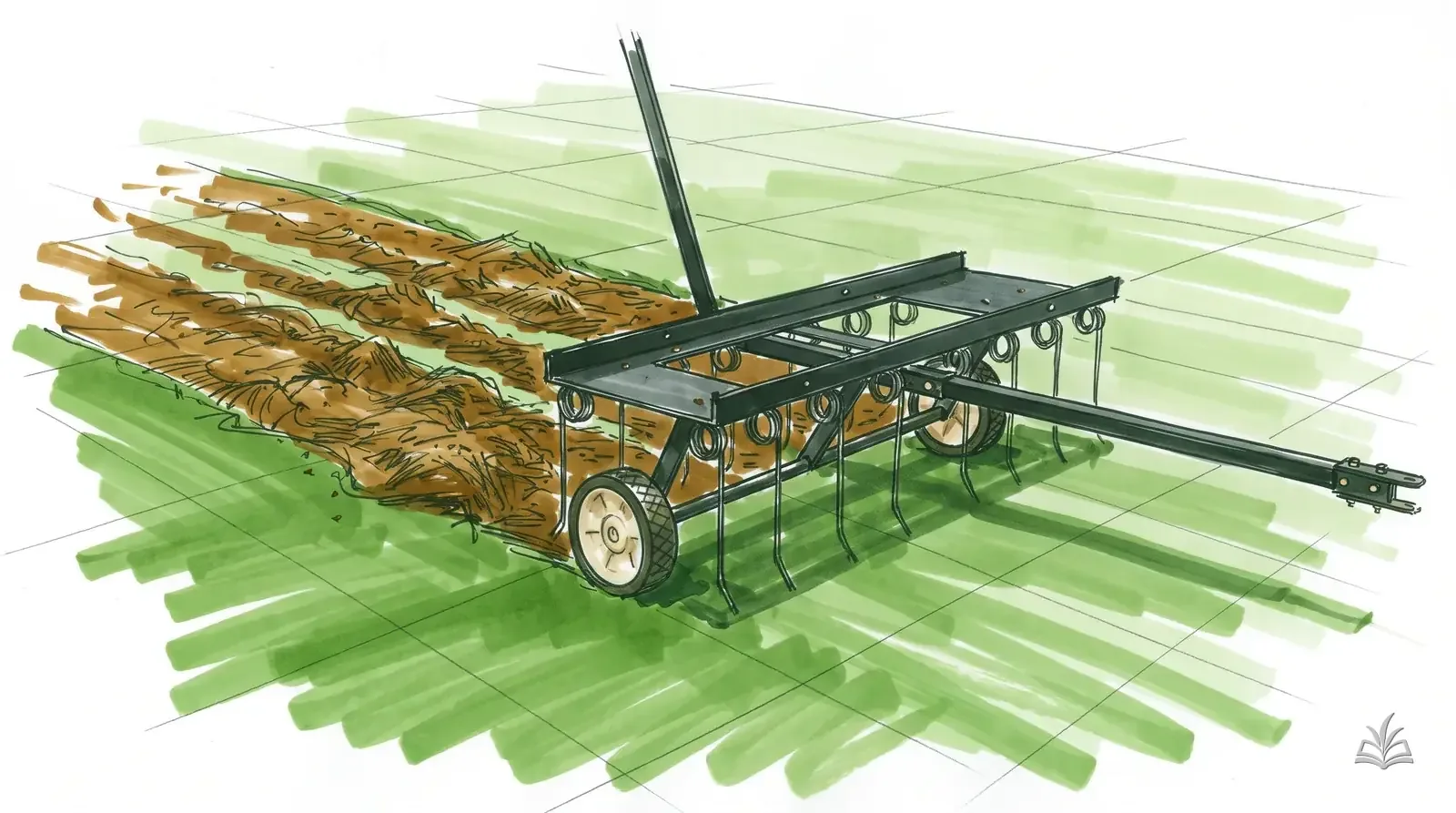
Power Rake / Dethatcher
Spinning tines or flails comb through the lawn at a set depth, pulling up thatch. Walk-behind, similar to a push mower.
Best for: Medium lawns (2,000–10,000 sq ft) with moderate thatch
- + Fast — covers 5,000 sq ft in 1–2 hours
- + Adjustable depth settings
- + Available at most rental centers (Home Depot, Sunbelt)
- − Machine weighs 100–150 lbs; need truck to transport
- − Rental cost adds up if done annually
- − Can tear up weak turf if set too deep
Vertical Mower (Verticutter)
Vertical blades slice into the soil, cutting through thatch and severing lateral grass runners. Most aggressive method.
Best for: Large lawns or severe thatch over 1.5 inches
- + Handles the thickest thatch layers
- + Blades cut into soil for deeper renovation
- + Can double as overseeding prep (creates seed furrows)
- − Aggressive — lawn looks rough for 3–4 weeks after
- − Most expensive rental
- − Overkill for thatch under 1 inch
- − Can damage shallow irrigation lines
Quick decision: Thatch under 1" on a small yard? Manual rake. Thatch ½"–1.5" on a medium lawn? Power rake. Severe thatch over 1.5" or full lawn renovation? Verticutter.
How to Dethatch: Step by Step
The full process takes 2–4 hours for an average-sized lawn (5,000–10,000 sq ft) with a power rake. Here's the complete walkthrough.
Mow the lawn shorter than usual
Cut to about 1–1.5 inches. Shorter grass makes it easier for the dethatcher tines to reach the thatch layer. Bag the clippings so they don’t add to the debris.
Water lightly 1–2 days before
Moist (not soggy) soil lets tines penetrate evenly. Dry, hard soil resists the machine and produces poor results. If it rained recently, you’re all set.
Flag sprinkler heads and shallow lines
Mark irrigation heads, invisible fence wires, and shallow utility lines. A power rake or verticutter will destroy anything in the top 2–3 inches.
Set the machine depth
For a power rake, start at the shallowest setting and test a small area. You want tines hitting the thatch layer but not gouging into the soil. Adjust deeper only as needed.
Make parallel passes across the lawn
Run the dethatcher in straight, overlapping rows (like mowing). For severe thatch, make a second pass perpendicular to the first. Don’t go over the same area more than twice.
Rake up the debris
The machine pulls thatch to the surface — you’ll have piles of dead material everywhere. Use a leaf rake, lawn sweeper, or bagging mower to collect it. Compost it or bag for green waste.
Overseed bare spots immediately
Dethatching exposes soil — the perfect seedbed. Broadcast seed at the recommended rate for your grass type. Use our grass seed calculator for exact amounts.
Apply starter fertilizer and water deeply
A high-phosphorus starter (e.g., 10-18-10) fuels root growth. Water thoroughly, then keep the soil consistently moist for 2–3 weeks until new grass establishes.
Need to calculate seed amounts for those bare spots? The grass seed calculator gives you exact quantities by grass type and area. And check our grass seed planting guide for germination tips.
Aftercare: Water, Feed, Seed
Dethatching is stressful on a lawn. What you do in the next 2–3 weeks determines whether it bounces back thick and healthy or stays thin and patchy. These three steps are non-negotiable.
Water deeply right away
Give the lawn a thorough soaking immediately after dethatching. Exposed roots and soil dry out fast. Water to a depth of 4–6 inches, then keep soil consistently moist (not soggy) for the next 2–3 weeks.
Apply starter fertilizer
Use a high-phosphorus starter fertilizer (e.g., 10-18-10) to stimulate root recovery. Avoid weed-and-feed products — the pre-emergent herbicide will prevent new grass seed from germinating too. Use our fertilizer calculator.
Overseed bare and thin areas
Dethatching exposes bare soil — the ideal seedbed. Broadcast grass seed at the label rate for your grass type. Seed-to-soil contact is excellent after dethatching, so germination rates are significantly higher than surface seeding. Use our overseeding guide.
Recovery timeline: Expect your lawn to look rough for 2–4 weeks. New grass seedlings appear in 7–14 days (cool-season) or 10–21 days (warm-season). Full recovery takes 4–6 weeks with proper watering. Avoid heavy foot traffic during this period.
How to Prevent Thatch Buildup
Dethatching is corrective. Prevention is better. These five habits keep thatch in check so you rarely need to dethatch at all.
Mow at the right height
Mowing too short weakens grass and accelerates thatch. Follow the one-third rule: never remove more than 1/3 of the blade height in a single mow. See our mowing frequency guide.
Don’t over-fertilize
Excess nitrogen pushes rapid top growth that outpaces decomposition, building thatch faster. Stick to 3–4 lbs of nitrogen per 1,000 sq ft per year maximum. See our fertilizer schedule.
Core aerate annually
Aeration breaks up thatch mechanically and introduces soil microbes that speed decomposition. It’s the single best preventive measure. See our aeration guide.
Leave clippings (but not clumps)
Regular grass clippings decompose quickly and don’t cause thatch — that’s a myth. But heavy wet clumps should be dispersed or bagged.
Maintain soil biology
Healthy soil microbes break down organic matter naturally. Avoid excessive pesticide use, test soil pH annually, and consider a thin topdressing of compost in fall. See our soil pH testing guide.
“The best dethatching program is one you never need to use. Mow high, feed smart, aerate once a year.”
DIY vs. Professional Cost Comparison
For small lawns under 5,000 sq ft, hiring a pro is close in price to renting and saves you the hassle of transporting heavy equipment. For larger properties, DIY saves significantly. Check our lawn care pricing guide for more service costs, or the equipment list for what pros use.
| Item | DIY | Pro | Notes |
|---|---|---|---|
| Manual thatch rake | $25–$50 (buy once) | — | One-time purchase; good for small yards |
| Power rake rental | $40–$80/day | — | Home Depot, Sunbelt, local rental yards |
| Verticutter rental | $50–$100/day | — | Less commonly available; call ahead |
| Transport / fuel | $10–$25 | — | Power rakes weigh 100–150 lbs; need truck |
| Your time (avg lawn) | 2–4 hours | 45–90 min | Pros have commercial machines + experience |
| Total (5K sq ft) | $50–$105 | $100–$200 | DIY barely cheaper for small lawns |
| Total (10K sq ft) | $50–$105 | $175–$300 | Same rental fee; DIY savings grow with size |
| Total (20K+ sq ft) | $60–$125 | $300–$500+ | DIY saves $200+ on large properties |
Pro tip: If you're also planning to aerate, many rental centers offer both a dethatcher and aerator for a bundled day rate. Dethatch first, then aerate on the same day for best results.
Quick Reference Card
Bookmark this. Everything you need at a glance.
Lawn Dethatching — Cheat Sheet