Grass Seed Calculator
Enter your lawn area, choose a seed type, and find out exactly how many pounds of grass seed you need for a new lawn or overseeding.
Pre-filled with a 5,000 sq ft lawn, Kentucky Bluegrass, new lawn. Edit to match your project.
Seed Needed
12.5
pounds (10.0–15.0 lb range)
Lawn Area
5,000 sq ft
Best Buy
(5 lb bags)
3 bags
Seeding Rate
(lbs / 1,000 sq ft)
2–3
Est. Cost
$50–$225
Bag Options — 12.5 lbs needed
| Bag Size | Bags | Total Lbs | Est. Cost |
|---|---|---|---|
| 3 lb bagBest value | 5 | 15 lbs | $150 |
| 5 lb bagBest value | 3 | 15 lbs | $150 |
| 10 lb bag | 2 | 20 lbs | $200 |
| 25 lb bag | 1 | 25 lbs | $250 |
| 50 lb bag | 1 | 50 lbs | $500 |
Tip: Prices vary by brand and region. Budget $5–$15 per lb depending on seed quality. Premium blends cost more but germinate faster with better disease resistance.
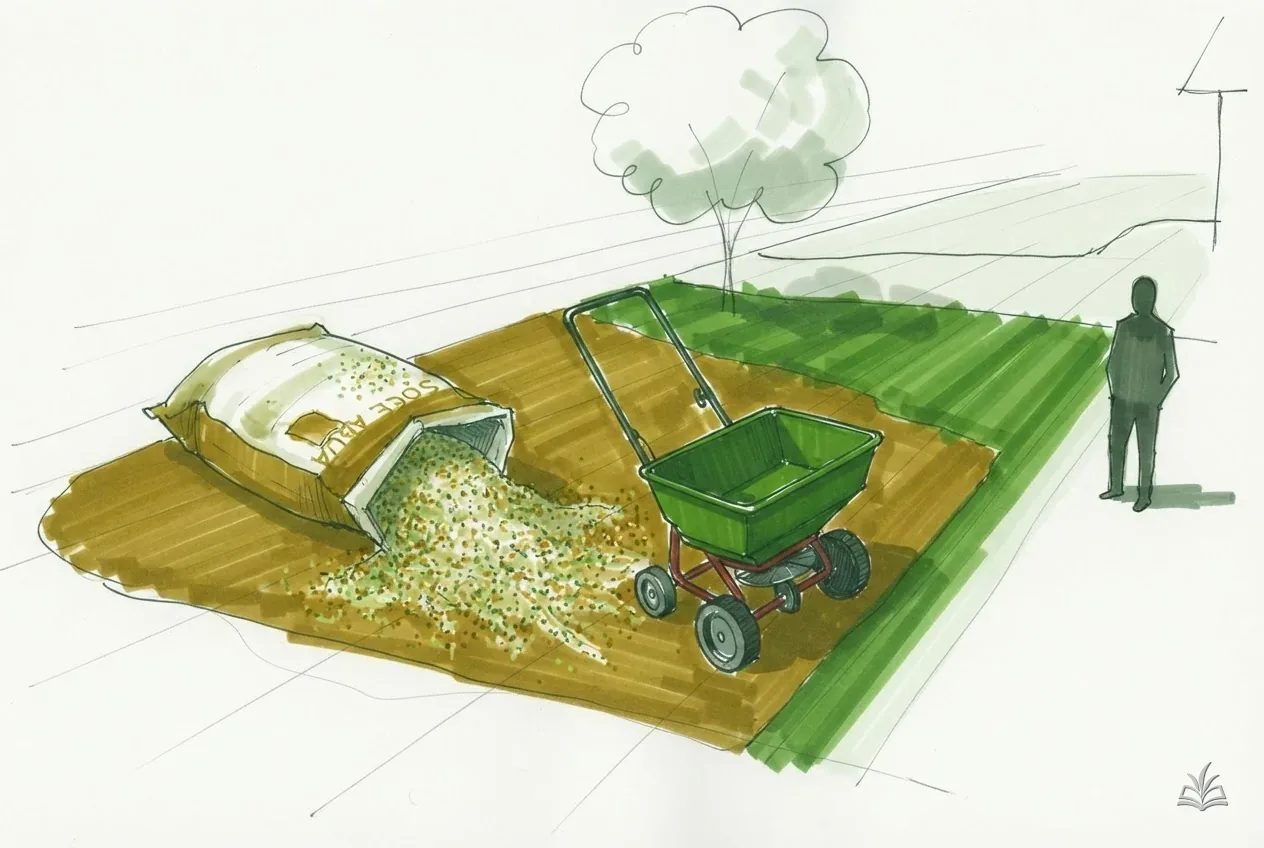
What Is a Grass Seed Calculator?
A grass seed calculator takes your lawn's square footage, the type of grass you're planting, and whether you're starting fresh or overseeding an existing lawn, then tells you the exact pounds of seed to buy. No more guessing at the garden center or lugging home three times more bags than you need.
How to Use This Calculator
- 1Enter your total lawn area in square feet (length × width for rectangular lawns)
- 2Select your grass seed type from the dropdown
- 3Choose "New Lawn" for bare soil or "Overseeding" for existing turf
- 4Review your seed quantity, recommended bag size, and estimated cost
- 5Use Print or Copy to bring the estimate to your local garden center
Seeding Rates by Grass Type
Rates are in pounds per 1,000 sq ft. New lawns need roughly double the seed of overseeding because you're filling bare soil instead of thickening existing turf. These follow common seed-bag label rates; university extension guides often call for less (NC State uses 6 lb of tall fescue and 1–2 lb of Kentucky bluegrass or zoysia per 1,000 sq ft), so check your bag and your local extension office.
| Grass Type | New Lawn | Overseed | Season |
|---|---|---|---|
| Kentucky Bluegrass | 2–3 | 1–2 | Cool |
| Perennial Ryegrass | 8–10 | 4–5 | Cool |
| Tall Fescue | 8–10 | 4–6 | Cool |
| Fine Fescue | 4–5 | 2–3 | Cool |
| Bermuda | 1–2 | 0.5–1 | Warm |
| Zoysia | 2–3 | 1–1.5 | Warm |
| St. Augustine | Sod/plugs only | N/A | Warm |
5 Tips for Seeding Success
Time it right
Cool-season grasses (Bluegrass, Fescue, Ryegrass) do best planted in early fall or early spring. Warm-season grasses (Bermuda, Zoysia) thrive when planted in late spring after soil reaches 65°F.
Measure accurately
Break irregular lawns into rectangles and triangles. Add areas together for your total. Overestimate slightly — leftover seed stores well in a cool, dry place for 2–3 years.
Keep seed moist
Water lightly 2–3 times daily for the first 2–3 weeks after seeding. The top ½ inch of soil should stay consistently moist until germination is complete.
Match sun exposure
Full-sun areas suit Bermuda and Bluegrass. Shaded yards need Fine Fescue or a shade-tolerant blend. Mismatching seed to sunlight is a common cause of patchy lawns.
Don’t skip soil prep
Rake the surface to loosen the top ¼ inch, remove debris, and apply a starter fertilizer before spreading seed. Good soil-to-seed contact markedly improves germination.
Seeding vs. Sodding: Which Is Right for You?
Seeding is significantly cheaper — typically $0.01–$0.10/sq ft compared to $0.30–$0.90/sq ft for sod material alone. However, seeded lawns take 6–12 weeks to establish, while sod gives you an instant lawn. For large areas on a budget, seed wins. For erosion-prone slopes or instant curb appeal, sod is worth the premium.
| Factor | Seed | Sod |
|---|---|---|
| Material cost (5,000 sq ft) | $50–$400 | $1,500–$4,500 |
| Time to usable lawn | 6–12 weeks | 2–3 weeks |
| Best season to install | Fall / Spring | Almost any time |
| DIY difficulty | Easy | Moderate |
| Variety selection | Extensive | Limited |
Many homeowners combine both methods: sod for the front yard (instant curb appeal) and seed for the backyard (budget-friendly). Use the landscaping cost calculator to estimate your total project budget.
After Seeding: Next Steps
Once your seed is down, the real work begins. Follow a proper fertilizer schedule starting 4–6 weeks after germination with a balanced fertilizer. Test your soil pH to ensure it falls between 6.0 and 7.0 for optimal nutrient uptake. And consider aerating your lawn the following fall to promote deeper root growth.
First mow timing: Wait until new grass reaches 3–4 inches tall, then mow to 2.5–3 inches. Never remove more than ⅓ of the blade height in a single mowing.