How Often Should You Mow Your Lawn?
March 8, 2026 · Updated October 18, 2026 · 11 min read
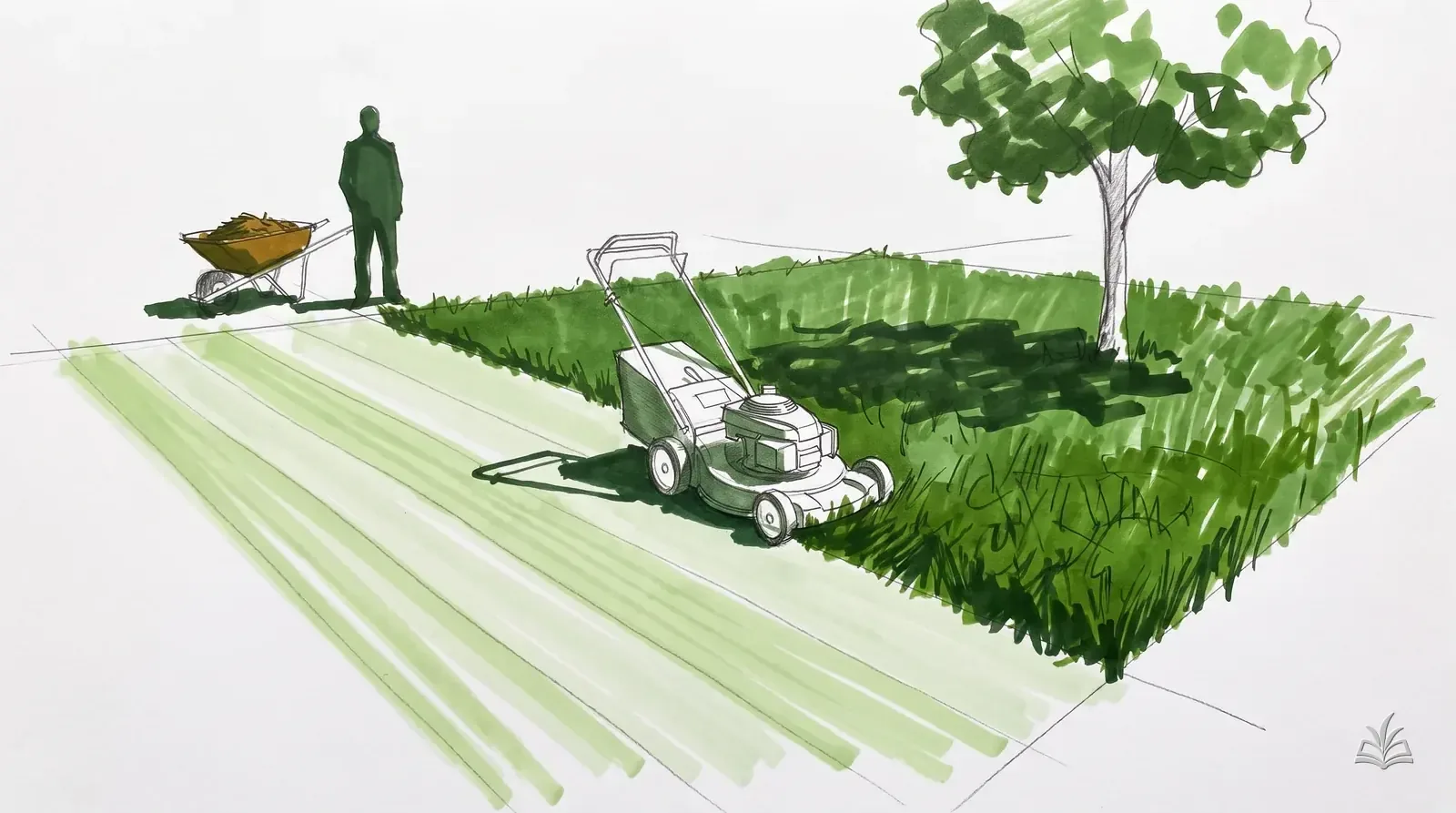
1/3
max blade removal
The 1/3 rule is the foundation of proper mowing. Never cut more than one-third of the grass blade at a time. This alone prevents 90% of mowing-related lawn damage — scalping, stress, disease, and weed invasion.
“How often should I mow?” doesn't have a single answer. It depends on your grass type, the season, recent weather, and whether you just fertilized. This guide breaks it all down with specific schedules, a mowing height chart for 9 grass types, and clear explanations of what goes wrong when you mow too often or skip too long. If you run a lawn care business, educating your clients on mowing frequency builds trust and reduces callbacks. Use our mowing cost calculator to price your services right.
The 1/3 Rule: The Only Mowing Rule That Matters
Never remove more than one-third of the grass blade in a single mow. This is the single most important principle in lawn care. Cutting more than a third shocks the plant, strips away photosynthetic tissue, and forces the grass to redirect energy from root growth to blade recovery.
The 1/3 Rule — Visual Guide
Before
Correct ✓
1/3 removed
At 4″ tall, mow down to ~3″. Removing 1″ (25%) is safe. Cutting to 2″ removes 50% — that's scalping.
How to apply the 1/3 rule:
- • Grass is 4″ tall → mow to 2.67″ (remove ~1.3″)
- • Grass is 3″ tall → mow to 2″ (remove 1″)
- • Missed a week and it's 6″? Mow to 4″, wait 3 days, then mow again
Mowing Frequency by Season
Grass doesn't grow at a constant rate. Mowing frequency should follow the growth curve — more often during peak growing seasons, less when growth slows. Here's a season-by-season breakdown.
Spring
Mar – May- • Growth explodes — cool-season grasses hit peak growth as soil temps reach 50–65°F
- • Start mowing when grass reaches 3–4 inches
- • Bag first 2 mowings to remove debris, then mulch-mow after
- • Raise mower one notch above summer height for the first few cuts
Summer
Jun – Aug- • Warm-season grasses (Bermuda, Zoysia) hit peak — mow every 5–7 days
- • Cool-season grasses slow down in heat — extend to every 10–14 days
- • Raise mowing height ½ inch to shade roots and reduce water stress
- • Mow in the evening to avoid heat stress on freshly cut blades
Fall
Sep – Nov- • Cool-season grasses surge again — second peak growth period
- • Gradually lower mowing height toward the final cut of the season
- • Last mow: cut 1 inch shorter than usual to reduce snow mold risk
- • Continue mowing until grass stops growing (usually first hard frost)
Winter
Dec – Feb- • Most lawns are dormant — no mowing required
- • Southern warm-season lawns may need a monthly trim in mild winters
- • Stay off frozen or frost-covered grass to avoid crown damage
- • Service your mower: sharpen blades, change oil, replace spark plug
Want help keeping up with your lawn fertilizer schedule? Timing your fertilizer applications to match these growth periods produces dramatically better results.
Mowing Frequency by Grass Type
Not all grasses grow at the same rate. Bermuda can grow an inch in 3 days during summer, while fine fescue barely moves. Knowing your grass type is the key to a proper schedule. Not sure what you have? Your local extension office can help identify it.
Cool-Season Grasses
Peak: spring & fall • Slow period: summer heat
| Grass | Peak Growth | Off-Peak | Notes |
|---|---|---|---|
| Kentucky Bluegrass | Every 5–7 days | Every 10–14 days | Slows in summer heat; may go dormant above 90°F |
| Tall Fescue | Every 7 days | Every 10–14 days | More heat-tolerant than bluegrass; stays active longer |
| Fine Fescue | Every 7–10 days | Every 14+ days | Slowest growing cool-season; great for low-maintenance |
| Perennial Ryegrass | Every 5–7 days | Every 10–14 days | Fast germinator; vigorous spring growth |
Warm-Season Grasses
Peak: late spring through summer • Dormant: winter
| Grass | Peak Growth | Off-Peak | Notes |
|---|---|---|---|
| Bermuda | Every 4–5 days | Dormant | Most aggressive grower; needs frequent mowing |
| Zoysia | Every 7–10 days | Dormant | Moderate growth; thickest turf density |
| St. Augustine | Every 7–10 days | Dormant | Tall-growing; mow higher than other warm-season types |
| Centipede | Every 10–14 days | Dormant | Slowest warm-season grass; low fertilizer needs |
| Bahia | Every 7–10 days | Dormant | Produces tall seed heads that need frequent cutting |
If you're planting new grass seed, wait until the new grass has been mowed 3–4 times before switching to your normal schedule. Use our grass seed calculator to determine the right amount for your yard.
Ideal Mowing Heights by Grass Type
Mowing height and mowing frequency are two sides of the same coin. Setting the right height determines when you need to mow again (using the 1/3 rule). For example, if you keep Bermuda at 1.5″ and it grows to 2.25″, it's time to mow.
| Grass Type | Ideal Range | Summer | Notes |
|---|---|---|---|
| Kentucky Bluegrass | 2.5″–3.5″ | 3.5″ | Raise in heat to protect shallow roots |
| Tall Fescue | 3.0″–4.0″ | 4.0″ | Tolerates higher cut; deep root system |
| Fine Fescue | 2.5″–3.5″ | 3.5″ | Shade-tolerant; mow higher in shaded areas |
| Perennial Ryegrass | 2.0″–3.0″ | 3.0″ | Fast recovery; handles moderate traffic |
| Bermuda | 1.0″–2.0″ | 1.5″ | Hybrid Bermuda can go 0.5–1.5" |
| Zoysia | 1.0″–2.5″ | 2.0″ | Fine-textured types go shorter (0.5–1") |
| St. Augustine | 3.0″–4.0″ | 4.0″ | Never mow below 2.5"; scalps easily |
| Centipede | 1.5″–2.5″ | 2.0″ | Low-maintenance; avoid overfertilizing |
| Bahia | 3.0″–4.0″ | 4.0″ | Mow tall to crowd out weeds |
Pro tip: Always raise your mowing height by ½″ during heat waves or drought. Taller grass shades the soil and reduces water evaporation. Keep your blades sharp — dull blades tear instead of cut, leaving ragged tips that brown and invite disease.
What Affects Growth Rate (and Mowing Frequency)
Season and grass type set the baseline, but five factors can speed up or slow down growth — sometimes dramatically. Understanding these helps you predict when the next mow is needed instead of guessing.
Temperature
High impactCool-season grasses grow fastest at 60–75°F soil temp. Warm-season grasses peak at 80–95°F. Growth slows dramatically outside these ranges. During heat waves, you may go 2 weeks between mows.
Rainfall & Irrigation
High impactAfter heavy rain or irrigation, expect to mow 2–3 days sooner than usual. A lawn getting 1–1.5 inches of water per week grows much faster than a drought-stressed lawn.
Fertilizer
High impactNitrogen drives blade growth. Fast-release nitrogen (urea, ammonium sulfate) can cause a growth surge requiring 2x mowing for 2–3 weeks. Slow-release provides steadier growth and less frequent mowing.
Sunlight
Medium impactFull-sun areas grow noticeably faster than shaded spots. If your yard has both, you may need to mow sunny areas twice for every once in shaded sections.
Shade & Competition
Medium impactHeavy shade from trees slows growth and weakens turf. Mow shaded areas ½ inch higher than sunny spots to maximize photosynthetic leaf area. Consider shade-tolerant fine fescue for these zones.
For optimal results, align mowing with your fertilizer schedule — apply slow-release fertilizer right after a mow, and expect the growth surge to start 4–7 days later. Testing your soil pH also reveals whether nutrients are actually reaching the roots.
What Happens If You Mow Too Often (or Too Little)
Both extremes damage your lawn. The goal is a Goldilocks schedule driven by the 1/3 rule — not by the calendar. Here's exactly what goes wrong when you miss the mark.
Mowing Too Often / Too Short
Shallow root system
Grass blades power root growth through photosynthesis. Cutting too short too often starves the root system, making the lawn drought-prone.
Scalping & brown spots
Removing too much blade exposes the crown and stem, turning the lawn brown. Bermuda and Zoysia are especially susceptible.
Increased disease risk
Stressed, weakened turf is more vulnerable to fungal diseases like brown patch, dollar spot, and summer patch.
Soil compaction
Heavy mower traffic on wet or soft soil compresses the ground, reducing air and water penetration to roots.
Skipping Mowing Too Long
Thatch buildup
Long clippings mat on the surface instead of decomposing, creating a thatch layer that blocks water and air. Over ½ inch requires dethatching.
Shock from heavy cuts
Cutting 50%+ of the blade triggers a severe stress response. The grass redirects all energy to blade recovery, stalling root growth for 1–2 weeks.
Weed invasion
Tall grass that's suddenly cut short exposes bare soil to sunlight — the ideal condition for crabgrass and dandelion germination.
Uneven, clumpy finish
Long clippings form wet clumps that smother the grass below. You'll need to rake or bag — defeating the purpose of mulch mowing.
If you've already let your lawn get too tall, don't panic. Bring it down in stages: cut 1/3 off, wait 3–4 days, cut another 1/3, repeat until you reach the target height. For severe thatch problems, dethatch first, then resume a consistent schedule.
Quick Reference Card
Save or print this cheat sheet for your garage wall.
How Often to Mow — Cheat Sheet
Bottom line: Let the grass tell you when to mow, not the calendar. Measure the height, apply the 1/3 rule, and adjust for weather. A consistent, growth-based schedule produces a thicker, healthier lawn with fewer weeds. Check our aeration guide and overseeding guide for the other pieces of the puzzle.