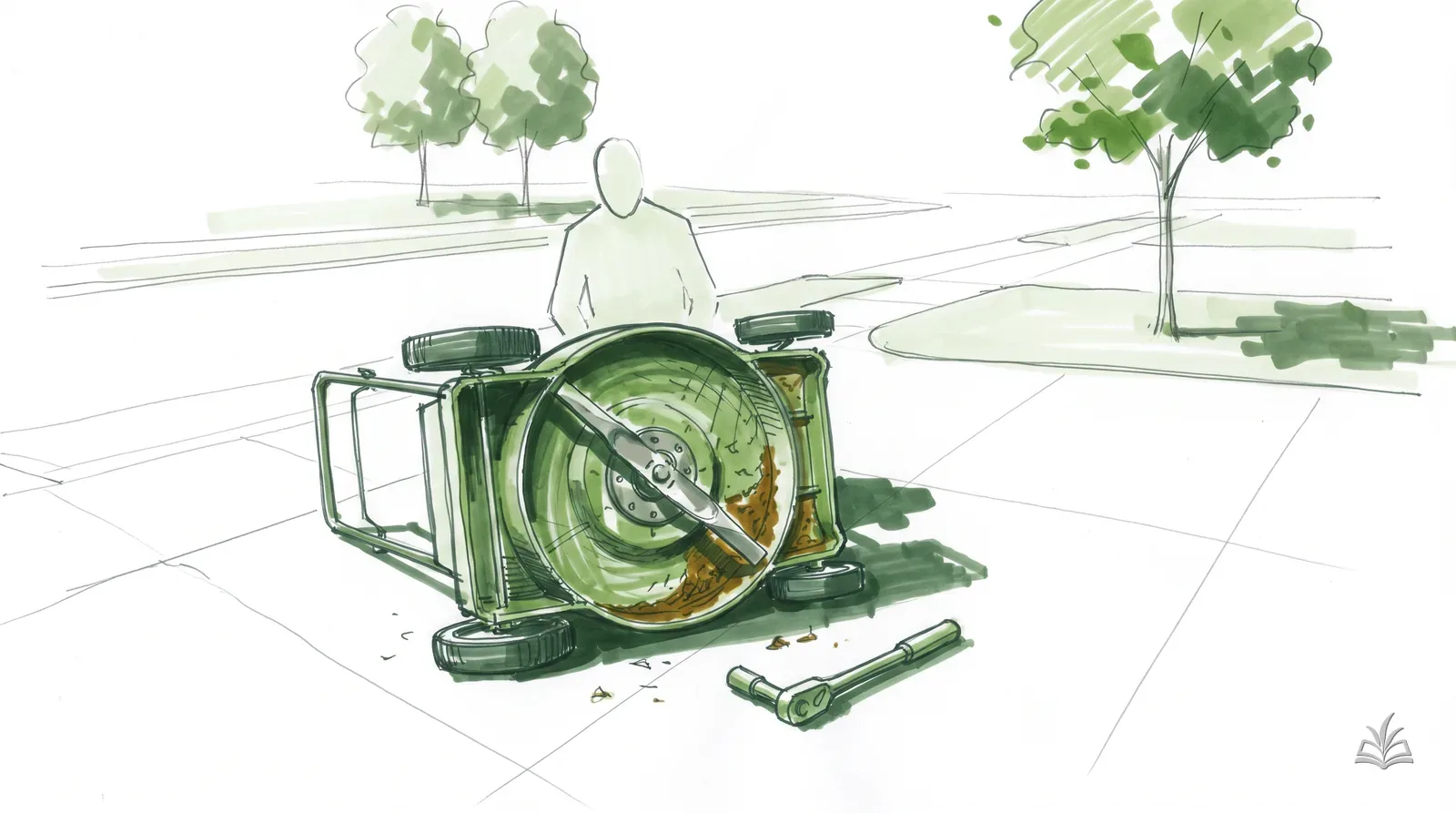
30–45°
ideal grinding angle
A dull mower blade tears grass instead of cutting it, leaving ragged brown tips that invite disease. Sharpening every 20–25 hours of use keeps your cut clean and your lawn healthy — and it takes under 30 minutes.
Dull blades are the most common cause of a lawn that looks stressed even with proper mowing frequency and watering. This guide walks through removal, sharpening technique, balancing, reinstallation, and how to know when a blade is too far gone. Whether you maintain your own yard or run a lawn care business, sharp blades are non-negotiable.
Signs Your Blades Need Sharpening
Most homeowners wait until their lawn looks terrible. Catch these signs early and you'll save your grass — and your mower engine, which works harder pushing dull metal through turf.
Torn, brown grass tips
Healthy-cut grass has a clean edge. Dull blades shred the tips, leaving white or brown ragged edges visible within 24 hours after mowing.
Uneven cut height
If some patches look taller than others after a pass, the blade is bending grass over instead of slicing it cleanly.
Mowing takes longer than usual
You find yourself going over the same rows twice. The mower bogs down in thick areas because dull blades can't slice efficiently.
Increased disease & pest pressure
Torn grass creates open wounds that invite fungal infections like brown patch and dollar spot — especially in humid climates.
Visible nicks or dents on the blade edge
Remove the blade and run a gloved finger along the edge. If you feel flat spots, chips, or rounded sections, it's overdue.
Quick test: Mow a small section and inspect the grass tips 24 hours later. If the ends are white and frayed instead of cleanly cut, your blades need attention. Do this check monthly during peak mowing season.
Tools & Safety Gear Checklist
Gather everything before you start. Most of this is in a standard garage already — the blade balancer (~$8) is the only specialty item, and it pays for itself by preventing vibration damage. See our full equipment list for a complete gear breakdown.
Tools
- Socket wrench or breaker bar — Typically 15/16" or 5/8" for the blade bolt
- Block of wood (wedge) — Jams between blade and deck to prevent rotation
- Wire brush or putty knife — To scrape caked grass and dirt off the blade
- Mill bastard file (10") — For hand sharpening — fine cut, single direction
- Bench grinder or angle grinder — Optional — faster but requires more care
- Blade balancer — Cone-style or wall-mount; detects weight imbalance
- Torque wrench — Reinstall blade bolt to spec (typically 35–50 ft-lbs)
Safety Gear
- Heavy leather work gloves
- Safety glasses or face shield
- Hearing protection (if using grinder)
- Sturdy workbench or vise
Cost note: A 10" mill file costs ~$10, a blade balancer ~$8. Total investment under $20 if you already own basic wrenches.
Step-by-Step Sharpening Process
The entire process takes 20–30 minutes once you've done it a few times. If you mow on a regular mowing schedule, plan to sharpen every 20–25 hours of use — roughly 2–3 times per season for most homeowners.
Disconnect the spark plug wire
This is the most critical safety step. Pull the spark plug wire (or remove the battery on electric mowers) so the engine cannot accidentally start. Never skip this — even bumping the blade can engage the flywheel.
Tip the mower and remove the blade
Tilt the mower so the carburetor/air filter side faces UP (prevents oil flooding). Wedge a block of wood between the blade and deck, then loosen the center bolt (usually counter-clockwise). Mark the bottom of the blade with spray paint or a marker so you reinstall it right-side up.
Clean the blade thoroughly
Scrape off caked grass, dirt, and rust with a wire brush or putty knife. A clean surface lets you see the actual edge condition — nicks, flat spots, and thin areas that might mean replacement instead of sharpening.
Clamp the blade and sharpen
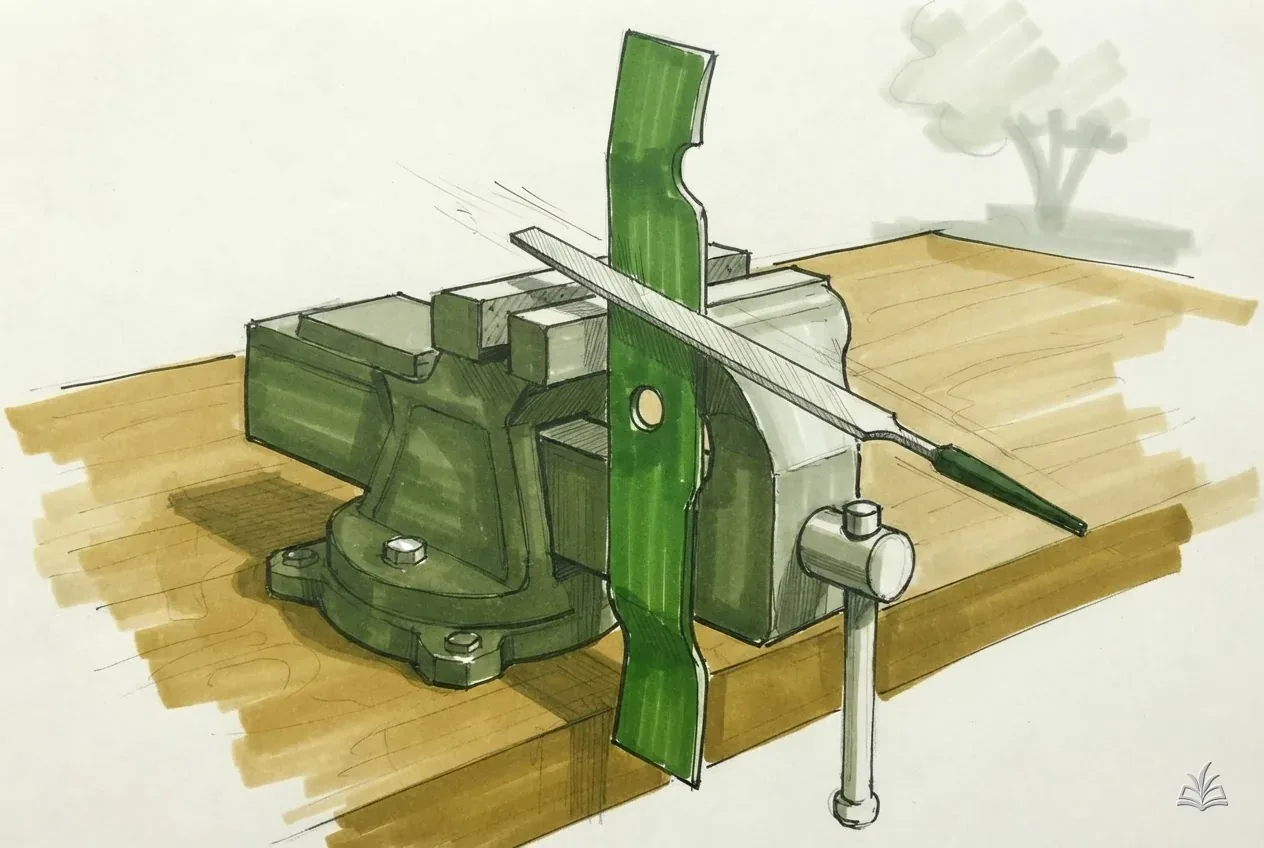
Secure the blade in a bench vise. File or grind at the existing bevel angle — typically 30–45° for standard blades. Work from the inside edge outward, following the original angle. Remove equal amounts of metal from both ends to maintain balance. Aim for a butter-knife edge, not razor sharp.
Balance the blade
Place the blade on a cone balancer (or hang it on a nail through the center hole). If one side dips, file more material from the heavy end. An unbalanced blade causes vibration that destroys spindle bearings — a $100–$200 repair.
Reinstall and torque the bolt
Place the blade with the marked side (cutting edge) facing the ground. Thread the bolt by hand first, then torque to manufacturer spec — typically 35–50 ft-lbs for residential mowers. Reconnect the spark plug wire. Start the engine and listen for vibration.
Grinding Angle Guide
30°
Standard blades
Most common. Good balance of sharpness and durability for general mowing.
35–40°
Mulching blades
Slightly steeper to handle re-cutting clippings. More durable edge.
45°
Heavy-duty / rocky soil
Maximum durability. Slightly less clean cut but resists chipping.
When in doubt, match the existing bevel. Hold a protractor or angle gauge against the factory edge before you start grinding.
Pro tip: Keep a spare set of blades so you can swap immediately and sharpen the dull set at your convenience. Lawn care professionals doing multiple jobs daily always carry 2–3 spare blades per mower — budget for this in your pricing.
File vs. Bench Grinder vs. Angle Grinder
All three get the job done. The right choice depends on how often you sharpen, your comfort level, and whether you need portability.
Hand File
- + Most control over metal removal
- + No risk of overheating the blade
- + Quiet — can do it anytime
- + No electricity needed
- − Slowest method
- − Requires more physical effort
- − Harder on heavily damaged blades
Best for: Homeowners, light touch-ups, first-timers
Bench Grinder
- + Fast and consistent results
- + Stationary — both hands free for the blade
- + Good for regular maintenance
- − Can overheat and ruin blade temper
- − Fixed wheel makes angle control tricky
- − Requires workshop space
- − Learning curve for even pressure
Best for: Frequent sharpening, pros with a workshop
Angle Grinder
- + Fastest method by far
- + Portable — sharpen in the field
- + Handles heavy damage and nicks
- + Versatile tool for other jobs
- − Easiest to over-grind and ruin temper
- − Requires steady hand and experience
- − Sparks — fire risk near dry grass/fuel
- − Aggressive removal makes balancing critical
Best for: Experienced pros, badly damaged blades
“A hand file can't ruin a blade. A grinder can ruin one in seconds. Start with the file until you know what you're doing.”
When to Replace Instead of Sharpen
A standard mower blade lasts 100–200 hours of mowing (roughly 2–4 seasons for homeowners). Replacement blades cost $10–$25 each — cheap insurance against vibration damage to your mower. Factor blade costs into your mowing cost estimates.
Replace the blade
- ×Deep nicks or gouges that won’t file out without removing excessive metal
- ×Blade is visibly bent (lay it on a flat surface — if it rocks, it’s bent)
- ×Cutting edge is thin from repeated sharpening (less than 1/8″ thick)
- ×Large chunks missing from hitting rocks or debris
- ×Excessive rust that has pitted the metal beyond the surface
- ×Blade sail (the upturned trailing edge) is worn down or bent
Sharpen & reuse
- ✓Dull but edge is still intact — no deep chips
- ✓Minor surface rust that wire-brushes off
- ✓Slight imbalance that corrects with light filing
- ✓Grass tips are torn but no visible blade damage
- ✓Blade still has good thickness and straight profile
Mulching Blades vs. Standard Blades
Mulching blades have a more curved shape and extra cutting surfaces along the length. When sharpening, follow the original angle on each cutting edge — don't just do the tips. Mulching blades dull faster because they re-cut clippings multiple times, so sharpen them every 15–20 hours instead of 20–25. They also cost more to replace ($15–$35), which makes regular sharpening even more worthwhile.
Add blade inspection to your spring lawn care checklist — sharpen or replace before the first cut of the season so you start with a clean edge on day one.
Quick Reference Card
Bookmark this or pin it in your garage. Everything you need at a glance.
Mower Blade Sharpening — Cheat Sheet