How to Winterize a Sprinkler System
March 8, 2026 · Updated October 18, 2026 · 11 min read
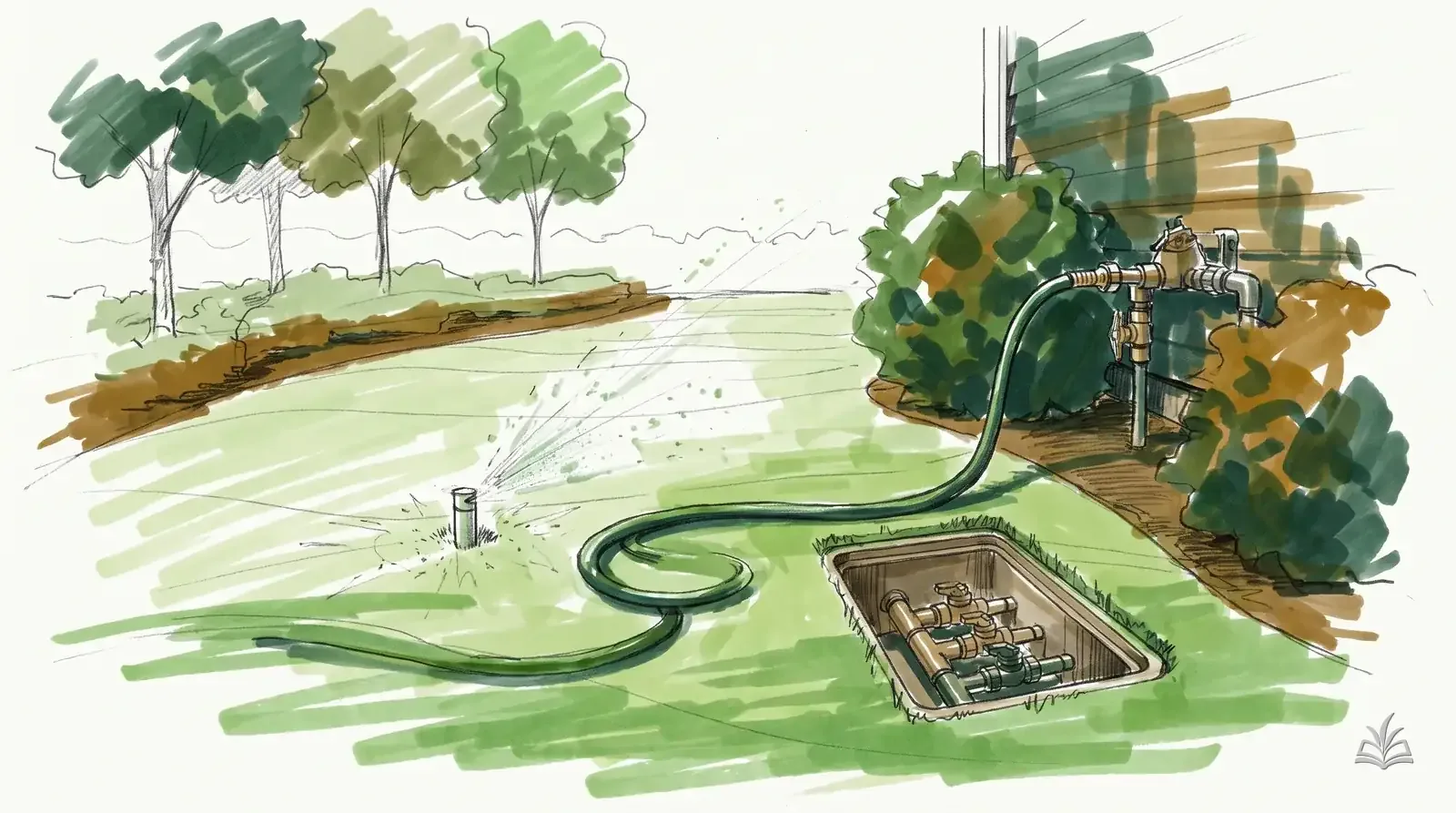
When to Winterize by Zone
Winterize 1–2 weeks before your average first frost date. Waiting until after the first hard freeze (<28°F for 4+ hours) risks cracked pipes.
| Zone | Region | First Frost | Winterize By |
|---|---|---|---|
| Zone 3–4 | Northern US & Canada | Sep 15–Oct 1 | Sep 1–15 |
| Zone 5–6 | Upper Midwest, Northeast | Oct 1–20 | Sep 15–Oct 5 |
| Zone 7 | Mid-Atlantic, Pacific NW | Oct 15–Nov 1 | Oct 1–15 |
| Zone 8 | South, Coastal | Nov 1–15 | Oct 15–Nov 1 |
| Zone 9+ | Deep South, SoCal, FL | Rare / Never | Optional |
Not sure about your zone? Search “USDA plant hardiness zone” + your zip code. If nighttime temps regularly drop below 32°F, winterize.
A single hard freeze can crack PVC pipes, split backflow preventers, and destroy sprinkler heads — turning a $50–$150 winterization job into a $1,000–$5,000 spring repair bill. This guide walks you through all three winterization methods step by step, explains when to winterize based on your region, and breaks down DIY vs. professional costs. If you're a lawn care business owner, winterization is one of the most profitable seasonal upsells you can offer.
3 Winterization Methods Compared
There are three ways to remove water from your irrigation system before it freezes. The blowout method is the most thorough and the most commonly used by professionals. Manual and auto drain work for some systems but leave water in low spots where it can freeze.
Blowout Method
RecommendedCost
$0–$50 DIY (compressor rental)
Tools Needed
Air compressor (80+ PSI, 10+ CFM), blowout adapter, safety glasses
Best For
Most systems — the industry standard
- 1.Shut off water supply at the main valve
- 2.Connect compressor to blowout port (after backflow preventer)
- 3.Set regulator to 50–80 PSI (PVC: max 80, polyethylene: max 50)
- 4.Open one zone at a time starting with the farthest/highest
- 5.Blow each zone for 2–3 minutes until only a fine mist exits
- 6.Run each zone 2–3 cycles to clear all residual water
Manual Drain
Cost
$0 (no special equipment)
Tools Needed
Bucket, towels — valves already built into system
Best For
Systems with manual drain valves at low points
- 1.Shut off water supply at the main valve
- 2.Open all manual drain valves (usually at pipe low points)
- 3.Let gravity pull water out through open valves
- 4.Open test cocks on the backflow preventer
- 5.Drain any remaining water from the main supply line
Auto Drain
Cost
$0 (system does the work)
Tools Needed
None — auto-drain valves activate when pressure drops
Best For
Systems installed with auto-drain valves
- 1.Shut off water supply at the main valve
- 2.Run each zone for 1–2 minutes to release system pressure
- 3.Auto-drain valves open automatically once pressure drops
- 4.Verify drain valves are clear and not clogged with debris
- 5.Manually drain the main supply line and backflow preventer
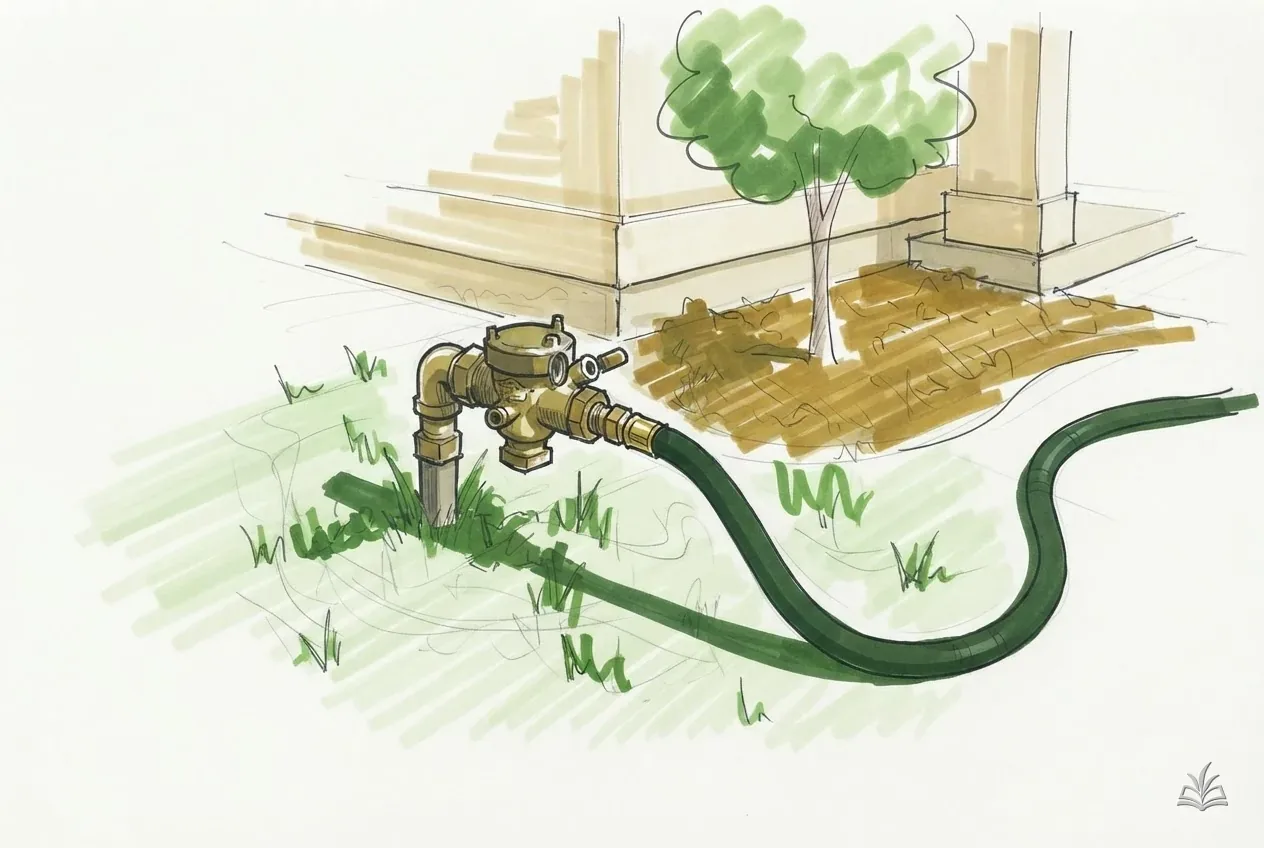
Blowout Method: Step by Step
The compressed air blowout is how most professionals winterize irrigation systems. It removes virtually all water from the lines, heads, and valves. Here's the full process.
Safety Warning
Wear ANSI-rated safety glasses. Never stand over sprinkler heads during blowout — pressurized debris can cause eye injuries. Never exceed 80 PSI on PVC or 50 PSI on poly pipe. Do not blow air through the backflow preventer.
Shut off the main water supply
Locate the main irrigation shut-off valve (usually in the basement, utility room, or an underground valve box near the meter). Turn it completely off. If your system has a pump, disconnect it.
Disable the controller
Set your sprinkler timer to “rain mode” or turn it off entirely. Rain mode keeps your program settings saved for spring. Some controllers have a dedicated “winter” mode.
Connect the air compressor
Attach the compressor hose to the blowout port downstream of the backflow preventer using a quick-connect or threaded adapter. Never blow air through the backflow preventer — it will damage the internal seals.
Set the correct PSI
PVC systems: max 80 PSI. Polyethylene (poly) pipe: max 50 PSI. Start at 50 PSI and increase only if needed. A compressor rated at 10+ CFM at 80 PSI is ideal for residential systems. Commercial properties may need 80+ CFM.
Start with the farthest zone
Activate the zone that’s highest in elevation or farthest from the compressor. Open the zone valve using your controller or a manual bleeder. Introduce air slowly — don’t open the compressor full blast.
Blow each zone for 2–3 minutes
Watch the sprinkler heads. You’ll see water spray, then a mist, then dry air. Once you see only mist or dry air, that zone is clear. Never blow a dry zone longer than 30 seconds — the friction heat can melt fittings.
Repeat each zone 2–3 cycles
Water clings to pipe walls and pools in low spots. Running each zone two or three cycles catches the residual. Work from the farthest zone back toward the compressor.
Disconnect and open manual drains
Once all zones are clear, disconnect the compressor. Open any manual drain valves and test cocks on the backflow preventer. Leave them cracked open through winter so expanding ice has an escape route.
PSI Quick Reference
PVC Pipe
50–80 PSI
Never exceed 80
Polyethylene Pipe
40–50 PSI
Never exceed 50
If you manage multiple properties, add winterization to your equipment list — owning a compressor pays for itself after 3–4 jobs. Check our pricing guide for what to charge.
What Happens If You Don't Winterize
Skipping winterization is a gamble that rarely pays off. Even one hard freeze (below 28°F for 4+ hours) can cause catastrophic damage. Here's what's at stake and what it costs to fix.
$1,000–$5,000+
Typical repair bill for freeze damage to a residential irrigation system
Underground PVC pipes
Water expands 9% when frozen, cracking rigid PVC from the inside out. Cracks often go undetected until spring startup floods the yard.
$500–$3,000
Backflow preventer
The brass body and internal rubber seals crack or rupture. This is the most commonly damaged component because it sits above ground.
$150–$600
Sprinkler heads
Trapped water freezes inside the riser or body, splitting the plastic housing. You may lose 5–20 heads across a property.
$5–$20 each
Zone valves
Diaphragms and solenoids crack when ice forms inside the valve body. Valves either stick open (constant water flow) or won’t open at all.
$50–$150 each
Main supply line
The line from your water meter to the irrigation system can freeze and burst, especially in crawl spaces or unheated areas.
$200–$1,500
“The $100 you spend on winterization is insurance against a $3,000 spring surprise. Every single year, we see homeowners who thought they'd get away with skipping it.”
DIY vs. Hiring a Pro
For small systems (3–6 zones), DIY costs about the same as hiring a pro once you factor in compressor rental and your time. For larger systems, pros are faster and the price gap widens in their favor. Use our landscaping cost calculator to estimate your project.
| Item | DIY | Pro |
|---|---|---|
| Compressor rental | $30–$50/day | Included |
| Blowout adapter | $5–$15 (one-time) | Included |
| Your time | 45–90 min | 0 min |
| Total cost (3–6 zones) | $35–$65 | $50–$100 |
| Total cost (7–12 zones) | $35–$65 | $75–$150 |
| Risk of mistakes | Moderate | Low |
| Backflow inspection | Not included | Usually included |
Hire a pro if: you have 7+ zones, a large commercial compressor isn't available locally, your backflow preventer requires a certified inspection, or you're not comfortable working with 80 PSI compressed air near your face.
Equipment Checklist (DIY)
Everything you need if you're doing it yourself. Most items are available at Home Depot, Lowe's, or local rental yards.
- Air compressor (10+ CFM at 80 PSI)
- Blowout adapter (quick-connect or threaded to match your port)
- ANSI-rated safety glasses
- Pipe insulation or foam covers
- Adjustable wrench (for backflow test cocks)
- Rags or towels for mopping residual water
- Marking flags (to find buried valve boxes)
If you're starting a lawn care business, offering sprinkler winterization at $75–$150 per job is an excellent way to generate fall and early winter revenue when mowing season slows down.
Insulating Above-Ground Components
Even after blowing out the lines, above-ground components are exposed to wind chill and direct frost. Insulation is cheap insurance — especially for the backflow preventer, which is the most expensive component to replace.
Backflow preventer
Wrap with foam insulation tape or a fitted insulated bag. Commercial covers ($15–$40) are purpose-built. Secure with zip ties — wind will rip off loose wraps.
Exposed pipes & risers
Slide foam pipe insulation over any above-ground pipes. Use self-adhesive foam tape for elbows and fittings. Cover any exposed copper or brass connections.
Valve boxes
Pack insulating material (foam peanuts, old towels, or bags of mulch) inside valve boxes. Make sure lids close securely to keep out rain and rodents.
Main shut-off valve
If the main valve is in an unheated space (crawl space, detached garage), insulate the pipe and valve with foam sleeves. Consider adding a pipe heating cable in extreme cold zones.
Pro tip: Take a photo of your backflow preventer and valve locations before insulating. You'll thank yourself in spring when everything is buried under mulch or snow.
Spring Startup Checklist
When temps consistently stay above freezing, it's time to bring your system back online. Take it slow — rushing the startup can cause water hammer and break fittings.
Check for visible damage: cracked pipes, split heads, broken backflow
Close all drain valves and test cocks you left open for winter
Turn on the water supply slowly — quarter-turn increments over 5 minutes
Activate each zone one at a time at the controller
Walk every zone: look for geysers (broken heads), soggy spots (cracked pipes), and no-flow zones (stuck valves)
Replace damaged heads, repair leaks, then run a full cycle
Reprogram your controller for spring watering schedule
For the full spring lawn care workflow — including fertilizing, mowing height, and weed prevention — see our spring lawn care checklist.
Quick Reference Card
Bookmark this. Everything you need at a glance.
Sprinkler Winterization — Cheat Sheet