Landscape Lighting Cost Calculator
Price a low-voltage LED lighting system by fixture type, quality tier, and DIY vs. professional install. The calculator also sizes your transformer with the 80% load rule and estimates what the lights will add to the power bill. Pricing a bigger yard project? Start with the landscaping cost calculator.
Quick answer
Professionally installed landscape lighting costs $2,000 to $6,000 for most homes, with a typical project at $3,500 per Angi's 2026 cost data. That works out to $100–$300 per fixture installed (LawnStarter 2026: $100–$200; Fixr: up to $300). A DIY low-voltage kit for the same 10–12 lights runs $600–$1,500 in materials. LED fixtures draw 2–10 W each, so a 12-light system adds roughly $20 a year in electricity.
Pre-filled with a typical 12-fixture front-yard system: 6 path lights, 4 up-lights on trees, 2 wall washes, mid-grade fixtures, 150 ft of wire, professionally installed. Change any number to match your project.
Fixtures by type
walkways, beds
trees, facade
in-ground, flush
wide, even glow
stairs, railings
under caps, per 12 in.
Fixture quality
powder-coated aluminum, 5 yr
Installation
$50-$100 labor per fixture plus trenching
Rough rule: 10-15 ft per fixture plus the run back to the transformer.
Estimated Total Cost
$1,994 – $3,123
12 fixtures, installed
Materials
$1,094–$1,398
Labor
$900–$1,725
Per Fixture (avg)
$213
Electricity / yr
(6 hrs/night)
$20
Materials vs. Labor
50 W
110 kWh/yr at 6 hrs/night, $0.18/kWh
100 W
50 W ÷ 0.8 = 63 W minimum
50%
50 W headroom for more fixtures
Your Midpoint vs. Typical Project (Angi 2026: $3,500)
What Is a Landscape Lighting Cost Calculator?
It totals the parts of a low-voltage lighting job that most online guides lump into one number: the fixtures themselves, the direct-burial cable, a correctly sized transformer, the controller, and the labor to trench and wire it. Because it works per fixture and per watt, it tells you the transformer rating to buy and the running cost, not just a price.
Rule of thumb: $100–$300 per fixture installed, $40–$120 per fixture DIY
Brass fixtures roughly triple the material cost of aluminum but typically carry a lifetime warranty.
How to Use This Calculator
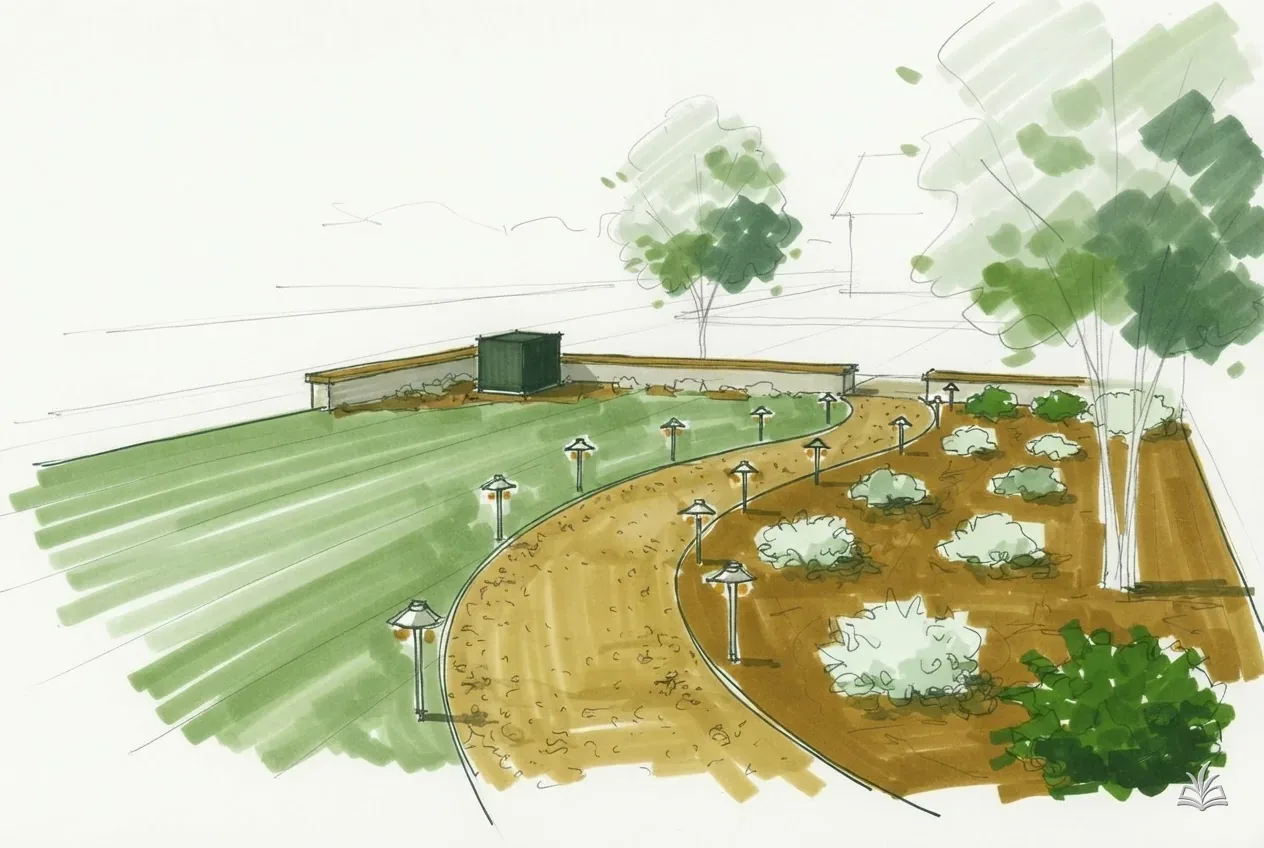
- 1Count fixtures by type. Walk the property at dusk and mark each spot: path lights every 8–10 ft along walks, one up-light per tree under 20 ft (two for larger canopies), a wall wash every 6–8 ft of facade.
- 2Pick a quality tier. Budget aluminum works for a test run; mid-grade for most homes; solid brass if you want it to outlast the plants around it. The tier changes fixture, wire, and transformer prices together.
- 3Estimate wire length. Add 10–15 ft per fixture plus the distance from the transformer to the first light. Runs over 100 ft on 12-gauge cable start to lose voltage, so split into two home-runs.
- 4Choose DIY or professional. Pro mode adds $50–$100 labor per fixture, per-foot trenching, and transformer mounting. DIY shows materials only.
- 5Toggle the smart controller if you want app scheduling or zones. A basic timer with a photocell is around $30 and is plenty for a set-and-forget system.
- 6Read the transformer line. The calculator divides total LED watts by 0.8 (the 80% load rule) and rounds up to the next standard size, so you know exactly what to buy.
Landscape Lighting Cost by Project Size
Three common scopes, from a front walk to the whole property. The pro column includes fixtures, wire, transformer, and labor; the DIY column is materials only.
| Project | DIY (materials) | Pro installed |
|---|---|---|
| Starter | $350–$700 | $1,100–$2,200 |
| Mid-size | $700–$1,500 | $2,200–$4,500 |
| Full property | $1,300–$3,000 | $4,000–$8,500 |
Ranges span budget to pro-brass fixtures. Angi (2026) puts the typical installed project at $3,500, with most homeowners paying $2,000–$6,000; HomeGuide (2026) reports $2,000–$4,500 for a 10–20 light system.
Cost per Fixture by Type
The fixture type drives both price and wattage. Path lights are cheapest and lowest-draw; well lights and wall washes cost the most because of the housing and the digging.
| Fixture type | Fixture only | Installed |
|---|---|---|
| Path light | $25–$130 | $80–$200 |
| Spot / up-light | $20–$120 | $100–$250 |
| Well light | $30–$160 | $125–$300 |
| Wall wash | $35–$170 | $120–$300 |
| Deck / step light | $15–$90 | $75–$200 |
| Hardscape strip | $25–$120 | $100–$250 |
Installed ranges from Fixr and LawnStarter (2026) cost guides; fixture-only pricing reflects big-box budget lines up through solid-brass contractor brands.
DIY vs. Professional Installation
DIY low-voltage
$60–$150 per fixture, all-in
- No permit or electrician: a 12 V system plugs into an outdoor GFCI outlet
- A 10-fixture kit takes one weekend; burying wire 6 in. deep is the slow part
- Hidden cost: budget kits fail in 2–3 seasons (corroded sockets, cracked lenses)
- You do the design. Aim the lights at night, then commit
Professional install
$150–$350 per fixture, all-in
- Labor runs $50–$100 per fixture plus $1.50–$2.50/ft for trenching (LawnStarter 2026)
- Pros use brass fixtures, hub wiring, and voltage-drop math so far fixtures aren't dim
- Most include a night demo, aiming, and a 1–2 year labor warranty
- Line-voltage (120 V) work needs a licensed electrician at $75–$150/hr
What landscapers charge, and the margin
Lighting is one of the highest-margin add-ons a lawn or hardscape crew can sell. A 12-fixture mid-grade job costs the contractor roughly $900–$1,300 in wholesale materials and about a crew-day of labor, and it sells for $3,000–$4,500. That is a 50–65% gross margin versus 30–40% on most maintenance work. Common pricing models:
- Per fixture installed: $150–$350 depending on brass vs. aluminum; the simplest to quote on a walk-through.
- Materials x 2.0–2.5 plus labor: the wholesale-markup model most hardscape crews already use for pavers.
- Annual service plan: $150–$300 per year for a bulb/lens check, re-aiming, and timer reset. Recurring revenue with near-zero material cost.
Guidance only; markup depends on your market. Put the line items in the estimate template and package the design pitch with the proposal template. For the broader pricing method, see how to price lawn care jobs.
Design Tips That Cut the Fixture Count
Moonlighting
Mount one or two 5–7 W downlights 20–30 ft up in a mature tree, aimed through the branches. The dappled shadow on the lawn reads as moonlight and covers a huge area with two fixtures. Use 2700K, not 3000K, or it looks like a security light.
Layer three heights
Ground layer (path and well lights), mid layer (up-lights on shrubs and columns), and canopy layer (tree up-lights or moonlighting). A yard lit at only one height looks like a runway.
Fewer, better-placed fixtures
Path lights every 8–10 ft, staggered on alternate sides. Twelve well-aimed lights beat twenty lined up like fence posts, and they cost less to run and maintain.
Plan around the beds
Keep stakes 12 in. back from bed edges so mowers and string trimmers miss them. If a light has to sit in turf, use a well light. This matters even more if you're adding lighting alongside new edging.
Lighting is usually the last step of a hardscape project, so run the conduit before the base goes down if you're following our paver installation guide, and size the wall-cap strips off the paver calculator. Adding lights to beds? See flower bed edging ideas for edge styles that hide the wire.