Fall Lawn Care Checklist: The Week-by-Week Plan That Sets Up Next Spring
August 24, 2026 · Updated October 18, 2026 · 16 min read
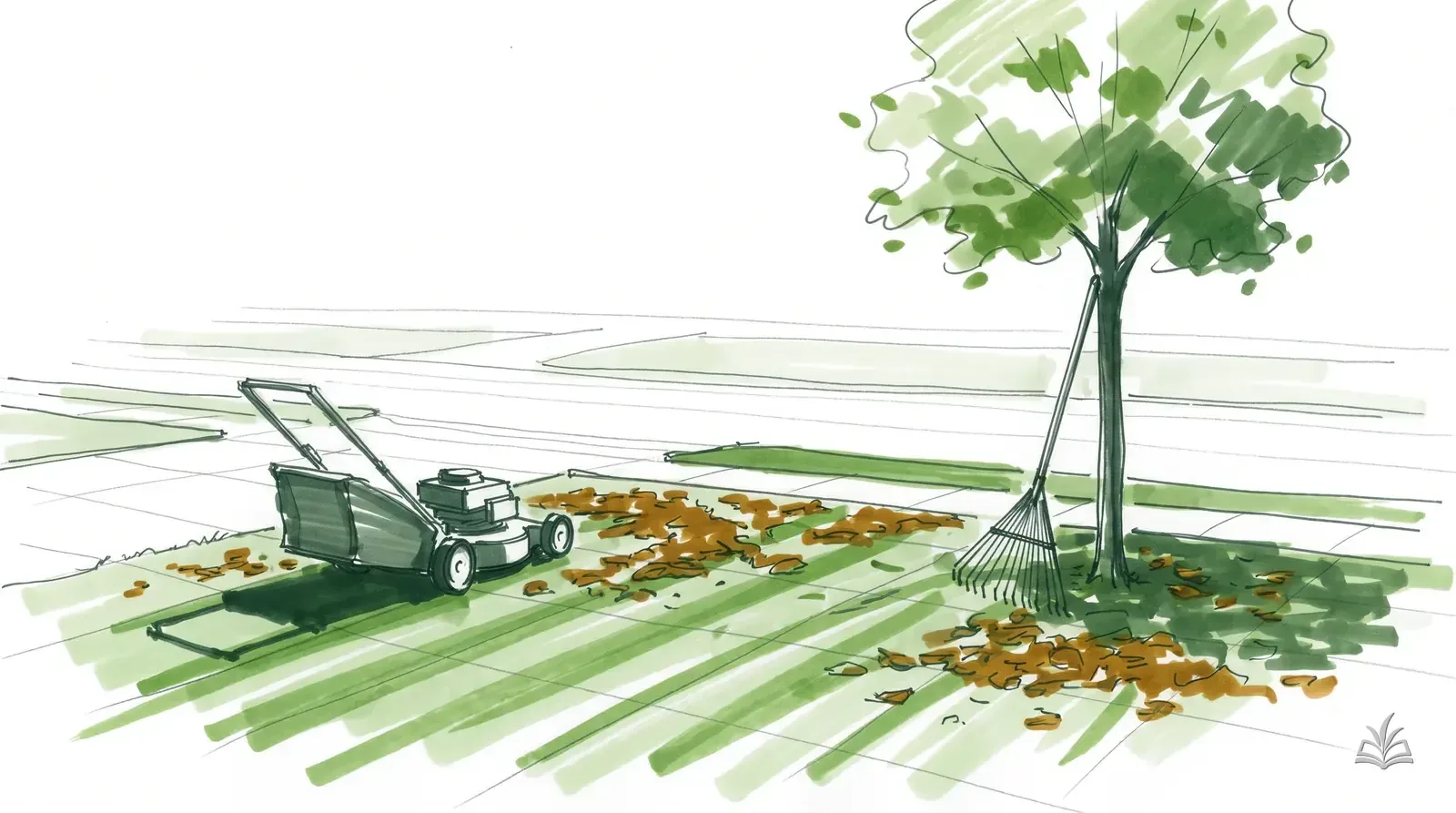
10 Weeks
Labor Day to first hard freeze
Kansas State Extension calls September the single best month to fertilize a cool-season lawn. Roots grow hardest in fall while blades slow down, which is why aerate → overseed → feed in the right order does more than any spring program.
Spring gets the attention, but fall is where lawns are actually made. Cool air, warm soil, and weeds that have quit competing give cool-season grass a window it never gets in April. This checklist puts every fall task in sequence, keyed to soil temperature rather than calendar dates, so it works in Minneapolis and Nashville alike. It is the fall companion to our spring lawn care checklist. Crews: the pro section covers bundle pricing and locking in next-season sign-ups.
Fall Timeline by Region
Fall runs 4–6 weeks earlier in Minneapolis than in Atlanta, which is why a fixed calendar fails. The bars below show where each task lands from mid-August to mid-December; the soil-temperature table underneath is what actually triggers them.
Soil Temperature Triggers
A $12 soil thermometer at 2 in. depth, read mid-morning, beats every calendar. Free alternative: the GreenCast soil temperature map by ZIP code.
| Soil temp | Lawn type | Trigger | Source |
|---|---|---|---|
| 70°F and falling | Warm-season | Fall pre-emergent goes down ~2 weeks before soil averages 70°F. Winter annuals (poa annua, henbit, chickweed) germinate below it. | UGA / Clemson Extension guidance |
| 65–75°F | Cool-season | Best overseeding window: fast germination, low weed competition. Aerate the same day. | MU Extension G6705 |
| 65°F and falling | Warm-season | Last nitrogen of the year. Anything later pushes soft growth into frost. | Milorganite / extension consensus |
| 50–65°F | Cool-season | Main fall feed. Top growth slows, roots keep building. ~1 lb N / 1,000 sq ft. | K-State Extension |
| Below 50°F | Cool-season | Late-fall feed window (light N) and time for the last mow. Growth is effectively done. | Virginia Tech Extension |
| Air 28°F forecast | All | Irrigation must already be blown out. Backflow preventers crack at the first hard freeze. | Irrigation Association |
Aerate, Overseed, Feed: The Core Three
If a client only budgets for one fall visit, this is the visit. The order is fixed for a reason: aeration makes the seedbed, seed goes into it, and the feed pushes both new seedlings and the existing stand through their fastest root growth of the year. Run the aeration cost calculator to price the job and the fertilizer calculator to convert 1 lb N into bag weight for the product you carry.
1. Core aerate
Pull plugs, do not spike. Spiking a compacted lawn compacts it further around the hole. Cores 2–3 in. deep, 20–40 per sq ft, on soil that was watered the day before. On heavy clay or lawns that host a swing set, make two perpendicular passes.
Full aeration guide →2. Overseed the same day
The plugs are your seedbed; seed dropped the same afternoon lands in open holes with warm soil around it. Rates: 3–4 lb/1,000 sq ft for tall fescue or 1–2 lb for Kentucky bluegrass when overseeding a thin lawn. Water lightly every day until the new grass is mowed for the first time.
When to overseed →3. The fall feed
Roots grow hardest in fall while blades slow, so nitrogen applied now builds the plant instead of forcing mowable top growth. Target about 1 lb of actual N per 1,000 sq ft in September, then an optional light late-fall feed after growth stops. On new seed, hold the feed until it has been mowed twice, or use a starter fertilizer at seeding.
Fertilizer schedule →
Why extension agents call this the most important feeding of the year
Kansas State Extension: if you could fertilize tall fescue or bluegrass only once per year, September is the month. Virginia Tech Extension adds a late-fall application at 40–50 lb N per acre (roughly 1 lb per 1,000 sq ft) from mid-October to late November, once top growth has slowed but roots are still active, to carry color into winter and drive early spring green-up. Spring nitrogen, by contrast, mostly buys you more mowing.
1 lb N
per 1,000 sq ft
Main fall feed, cool-season
3–4 lb
seed per 1,000 sq ft
Tall fescue overseed rate
2×
mowed before feeding
Hold N on fresh seedlings
“The lawn you see in May was built in September. Spring is just the reveal.”
Leaves, Last Mow, Irrigation & Equipment
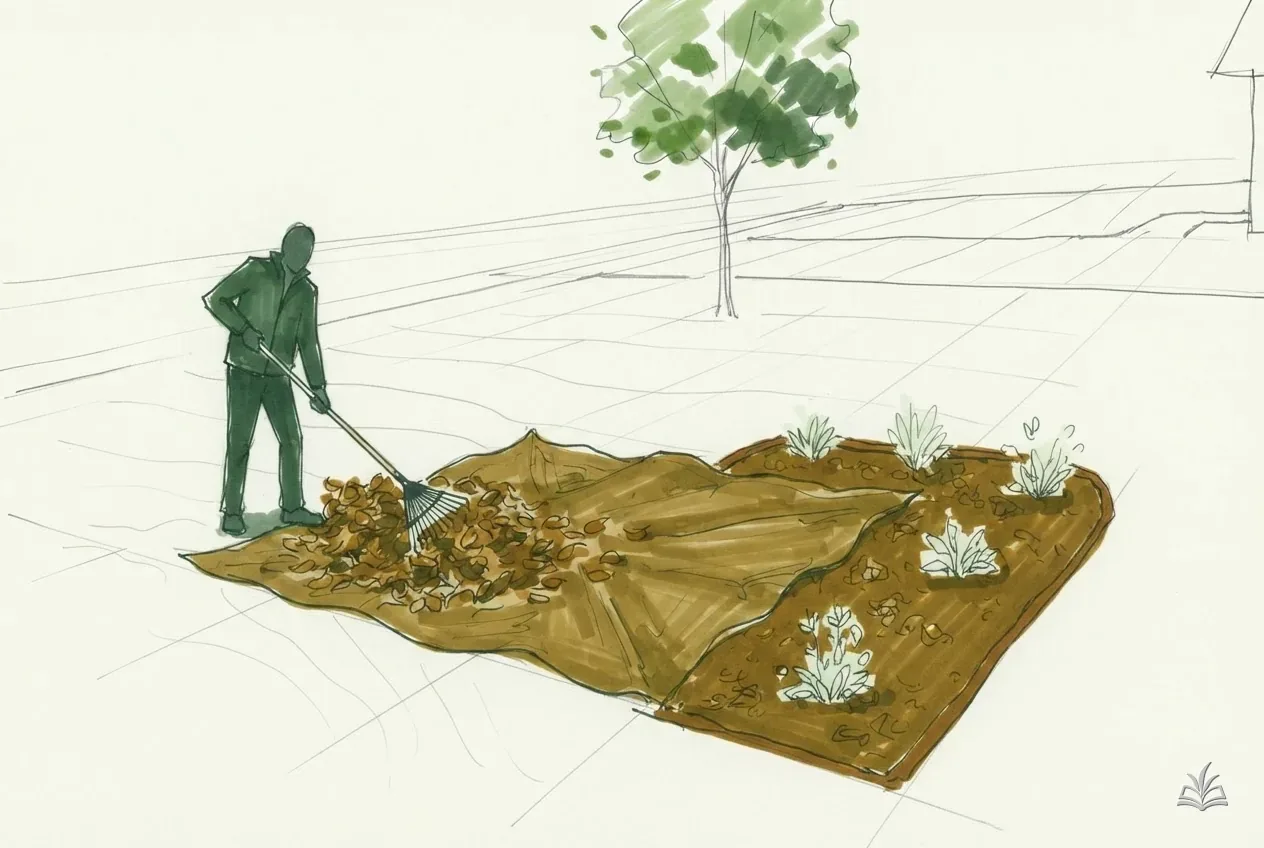
Mulch-mow or remove?
Michigan State University turf researchers spent years proving that shredded leaves left on the lawn do not cause thatch, do not lower pH meaningfully, and actually reduce dandelions the following spring. The rule is frequency: mow when about an inch has landed, highest deck setting, then a second crosswise pass if you cannot see grass through the pieces. Remove instead when the canopy outruns your mowing schedule.
| Mulch-mow | Remove & haul | |
|---|---|---|
| Cost per visit (crew) | Regular mow price, maybe +15% | $150–$450 leaf cleanup (Angi 2025 range) |
| Leaf depth it handles | Up to ~6 in. over a season if mowed every 3–5 days (MSU) | Any depth, including matted wet oak |
| Effect on the lawn | Faster spring green-up, fewer dandelions in MSU trials | Neutral; removes some organic matter |
| Where it fails | Heavy oak or sycamore canopies, lawns already thin | Nothing agronomic, just labor and disposal fees |
| Best choice | Most residential lawns with light to moderate canopy | HOA properties, beds, hardscape, and thick-canopy lots |
When to stop mowing in fall, and how low
Stop when the grass stops, not on a date. For cool-season lawns that is usually after a run of days with highs below 50°F; in the North that is early November, in the transition zone closer to Thanksgiving. Grass left at 3.5 in. under snow mats and grows snow mold; grass scalped to 2 in. in one cut loses its food reserves. Step down over the last three mows and keep the blades sharp so the final cut seals cleanly. See how often to mow for the in-season cadence.
Sept
3–3.5 in.
Full height through the growth surge
Mid Oct
3 in.
First step down, also shreds leaves better
Late Oct
2.5 in.
Second step; never cut more than 1/3
Last mow
2–2.5 in.
When highs hold under 50°F and growth stops
Winterize irrigation
Shut the supply, open the test cocks on the backflow, and blow each zone with a compressor at 50–80 PSI until heads run mist, never more than two minutes per zone so the heads do not melt. Do it before the first forecast of 28°F; a cracked backflow preventer runs $200–$400 to replace and it is the first thing to freeze. Full walk-through in how to winterize a sprinkler system.
Equipment winterization and storage
- Fuel: run the carburetor dry or fill with stabilized fuel and run 5 minutes so it reaches the carb. Ethanol gas goes stale in about 30 days.
- Oil and filters: change oil while the engine is warm; old oil holds acids that pit bearings over winter.
- Blades and deck: scrape the deck, sharpen and balance blades now so spring starts on day one. Battery units: store at 40–60% charge above freezing.
- Handhelds: drain two-stroke fuel from trimmers and blowers; hang them, do not stack them. The full kit is in our lawn care equipment list.
Warm-Season Lawns: What Changes
Bermuda, zoysia, St. Augustine and centipede are heading into dormancy in fall, so the cool-season playbook is almost inverted. The fall visit on a warm-season property is about weed prevention and hardening, not growth. Applying the cool-season program here is the most common mistake a crew moving between the two zones makes. Grass-type detail in our fertilizer schedule.
| Task | Cool-season (fescue, KBG, rye) | Warm-season (Bermuda, zoysia, St. Aug) |
|---|---|---|
| Fertilizer | Heaviest N of the year (Sept) + light late-fall feed | No nitrogen after soil hits ~65°F. Potassium-only (0-0-50 or similar) if anything, to harden for dormancy |
| Pre-emergent | Usually skipped in fall if overseeding (it blocks grass seed too) | The key fall task: apply ~2 weeks before soil averages 70°F to stop poa annua, henbit, chickweed |
| Aeration | Best time of year | Too late. Aerate warm-season in late spring/early summer when it is growing hard |
| Overseeding | Best time of year, same day as aeration | Only perennial ryegrass for winter color, 5–10 lb/1,000 sq ft, once soil is 70°F and falling. Adds spring transition work |
| Mowing height | Step down to 2–2.5 in. for the last mow | Keep at normal height; a slightly taller canopy going into dormancy protects crowns from cold |
| Leaves | Mulch-mow every 3–5 days | Same, but dormant turf cannot outgrow a mat, so remove anything the mower cannot shred |
| Broadleaf weeds | Fall post-emergent is the most effective spray of the year | Spray winter annuals once grass is fully dormant; avoid 2,4-D on St. Augustine and centipede above 85°F |
Rye overseed trade-off: winter rye looks great in December and costs you in April. It competes with Bermuda during green-up and has to be mowed down or sprayed out. Quote it as a two-visit service (seed in fall, transition in spring) or do not offer it.
Winter Lawn Care Tips
Once the last mow is done, winter lawn care is mostly about not undoing the fall work. Dormant grass cannot repair itself, so damage done in January is damage you see in April.
- 1
Stay off frozen grass
Frozen blades snap and crowns bruise. Footpaths across a frosted lawn show up as brown tracks that last until May. Route walkways and dog runs around it.
- 2
Use sand or calcium chloride, not rock salt, near turf
Sodium chloride burns the strip along walks and drives. Calcium magnesium acetate or plain sand is turf-safe. Flush salted edges with water in early spring.
- 3
Do not pile snow on the lawn edge
Plowed piles compact and stay frozen weeks longer, which is where you get snow mold and vole damage. Spread piles onto beds or hardscape.
- 4
Keep leaves and debris off dormant turf
Anything that sits on the lawn through winter, from tarps to firewood to a pile of oak leaves, smothers it. The lawn cannot recover while dormant.
- 5
Water dormant lawns in dry, snowless winters
Roots still lose moisture. In the Plains and Mountain West, a deep watering on a 40°F day every 3–4 weeks prevents desiccation on south-facing slopes.
- 6
Watch for voles and snow mold at thaw
Surface tunnels and gray-pink circular patches show up as snow melts. Rake matted areas lightly to dry them; most recover on their own once growth resumes.
- 7
Plan spring before the ground thaws
Order seed and pre-emergent, book the soil test, and service the mower. Then hand the client the spring lawn care checklist so they know what comes next. It is at /blog/spring-lawn-care-checklist.
For Crews: Fall Bundles & Next-Season Sign-Ups
Fall is the highest-ticket window in residential lawn care and the easiest time to lock in next year. The client is already thinking about the yard, the work is visible, and every task above has a clear reason attached. Package it. The ranges below are for a typical 8,000 sq ft suburban lot; adjust with the aeration cost calculator and put final numbers on your price sheet.
| Bundle | Includes | À la carte | Bundle price |
|---|---|---|---|
| Core Three Anchor offer. Sells itself with the September-feed pitch. | Aeration + overseed + fall feed, ~8,000 sq ft lawn | $150–$225 aeration, $100–$150 seed, $60–$90 feed | $325–$425 |
| Leaf Season Price by canopy, not lawn size. Walk it in August. | 3–4 mulch-mow visits or 2 full cleanups + haul | $150–$450 per cleanup (Angi 2025) | $350–$600 |
| Shutdown Book the blowout date at signing; the compressor schedule fills fast. | Sprinkler blowout + final mow + bed edge/mulch | $60–$120 blowout, $50–$70 mow, $120+ mulch | $225–$300 |
| Full Fall Offer 5% off if next season's mowing is prepaid or on autopay. | All of the above | $1,000+ à la carte | $850–$1,150 |
Reference ranges from Angi and HomeAdvisor 2025 cost guides; your market, drive time and seed price move these 20–30% either way.
Turning the fall visit into a signed spring
- Quote the spring program at the aeration visit. You are standing on the lawn with the client. Hand them a one-page season plan, not a text message in March.
- Early-bird by Nov 15. A 5–10% discount for prepaid or autopay spring service funds your winter and cuts April churn. Most crews report renewals above 80% when the client commits before Thanksgiving.
- Send a photo recap. Before/after of the aeration and overseed with a two-line note. It is the cheapest referral tool you have; more in how to get lawn care customers.
- Upsell grub prevention for next June. If you found grubs this fall, book the preventive application now. It is one line on the spring invoice.
- Blowout date at signing. Clients who know their blowout is scheduled do not shop it to the $50 flyer guy in October.
Common Fall Lawn Care Mistakes
Each one of these shows up as a callback in April. Tap to expand.
Quick Reference Card
Print the checklist above for the truck; keep this for the phone.
Fall Lawn Care — Cheat Sheet
Grub check
Late Aug–mid Sept; treat above 5–10 per sq ft before seeding
Core aerate
Cool-season, soil 65–75°F; water the day before; 2 passes on clay
Overseed
Same day as aeration; 3–4 lb/1,000 tall fescue, 1–2 lb KBG; water daily 2–3 wks
Fall feed
~1 lb N/1,000 sq ft in Sept (K-State: best month of the year); wait until seedlings mowed 2×
Late-fall feed
Optional light N mid-Oct to late Nov after growth stops (Virginia Tech)
Warm-season
No N after soil hits 65°F; pre-emergent 2 wks before soil averages 70°F
Leaves
Mulch-mow every 3–5 days, up to ~6 in./season (MSU); remove when the mat wins
Last mow
Step down to 2–2.5 in.; stop when highs hold below 50°F
Irrigation blowout
Before first 28°F forecast; 50–80 PSI, one zone at a time
Equipment
Stabilize or drain fuel, change oil, sharpen blades, store batteries at 40–60%
14
Tasks
Across ~10 weeks
Sept
Most important feed
Cool-season lawns
28°F
Blowout deadline
First hard-freeze forecast
Finished fall? Size next year's seed order with the grass seed calculator and pick up the spring checklist when the forsythia blooms.